

 admin
admin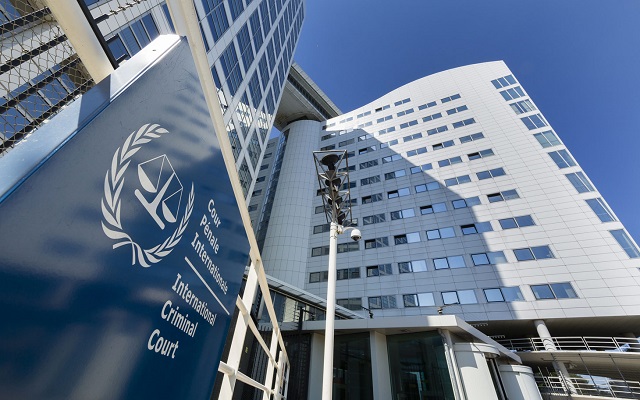
 cc
cc
Russian President Vladimir Putin has signed a decree to withdraw Russia from the International Criminal Court (ICC), which prosecutes war crimes, genocide and crimes against humanity.
Russia in 2000 signed the Rome treaty which established the Hague-based court, but never ratified it.
Putin’s decree, published on the Kremlin’s website on Wednesday, comes a day after the UN General Assembly’s human rights committee approved a resolution condemning Russia’s “temporary occupation of Crimea”, and blamed Moscow for rights abuses and discrimination against some Crimean residents, such as Tatars.
Dmitry Peskov, Putin’s spokesman, said the withdrawal is based on “national interests” and argued that since Russia never ratified the creation of the court, Wednesday’s decree was just a formality.
Peskov also dismissed the ICC’s accusations of an “armed conflict” in Crimea, arguing that Crimea joined Russia after a legitimate popular vote.
Russia annexed Crimea in March 2014 from Ukraine after a hastily called referendum, a move that led to crippling Western sanctions.
A separatist armed conflict later erupted in eastern Ukraine the following month, backed by Russia.
On Monday, the ICC issued a preliminary report in which it described what happened in Crimea as “an international armed conflict between Ukraine and the Russian Federation”.
Russia’s foreign ministry insisted in a statement that Russia wants everyone implicated in grave international crimes to face justice but expressed frustration over the court’s work in recent years.
“The court has unfortunately failed to match the hopes one had and did not become a truly independent and respected body of international justice,” the ministry said, adding that in the ICC’s 14 years of work “only four verdicts” have been passed, while $1bn was spent on expenses.
Just hours before Russia’s announcement, the UN human rights chief made a spirited defence of the ICC, entreating countries not to leave it.
The tribunal is already facing a major pushback from African countries, who say it’s a Western institution focused on trying nations from the continent.
Burundi was the first country to withdraw in October. Three days later, South Africa also announced that it planned to leave the ICC, followed by Gambia.
The ICC has been investigating cases against Sudanese and Kenyan leaders, and issued an arrest warrant against Sudan’s President Omar al-Bashir.
The ICC was established in 1998 and has over 100 member states. It is the world’s first permanent court mandated to bring to justice people responsible for war crimes, crimes against humanity, and genocide.
Meanwhile, the United States insisted on Tuesday its soldiers and spies in Afghanistan are not subject to prosecution by the International Criminal Court and any war crimes probe into their actions would be “unwarranted”.
On Monday, ICC chief prosecutor Fatou Bensouda said she is considering whether to launch a full investigation into allegations that US troops and CIA operators tortured Afghan prisoners between 2003 and 2004. But Washington has not ratified the Hague-based court’s founding Rome Statute, and State Department spokesperson Elizabeth Trudeau said the United States thoroughly investigates allegations against its personnel.
“We have a robust national system of investigation and accountability that is as good as any country in the world,” she said. “We do not believe that an ICC examination or investigation with respect to the actions of US personnel in relation to the situation in Afghanistan is warranted or appropriate,” she added.
“As we previously noted, the United States is not a party to the Rome Statute and has not consented to ICC jurisdiction.”
While the US has been leading calls for those behind atrocities in the Syrian conflict to be brought to justice in The Hague, there is no chance of any US soldiers ending up in the dock.
Last month, criticising moves by some African countries to pull out of the court, State Department spokesperson John Kirby said Washington thinks the “ICC has made valuable contributions in the service of accountability”.
But it has never been suggested that the United States itself, the world’s superpower, would accept international accountability.
The administration of former president George W Bush authorised the use of so-called enhanced interrogation techniques — including waterboarding – after the September 11, 2001 attacks on the United States.
Those techniques were abolished by President Barack Obama when he took over the White House in January 2009, and he has since candidly admitted “We tortured some folks,” but no CIA officer or political leader has been prosecuted. — AFP


 Online Reporter