Online Reporter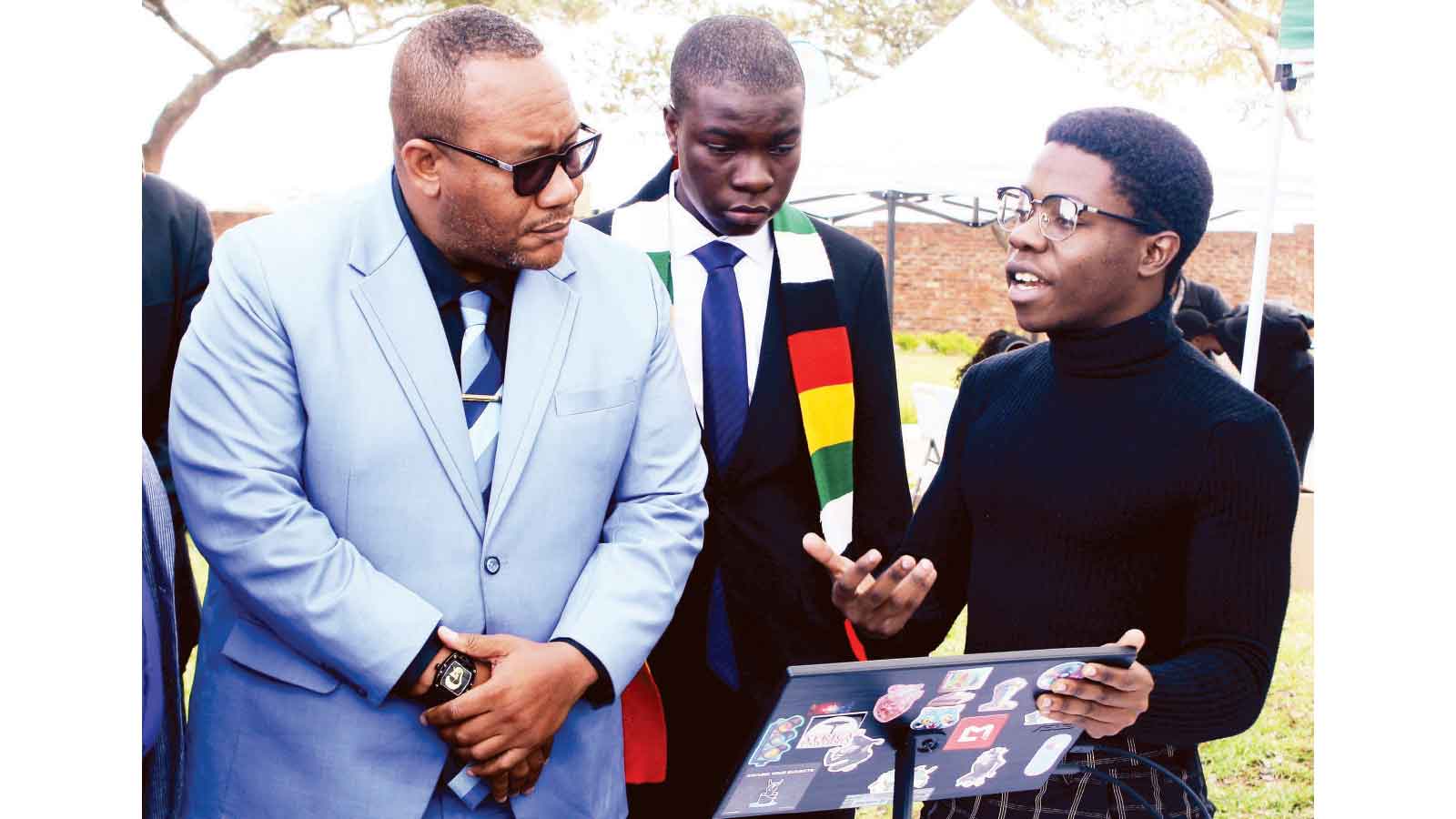
Sekai Manyere
Herald Reporter
RUWA Vocational Training Centre has been hailed as a beacon of hope and innovation, as at this year’s International Youth Day celebrations, with AI-driven research and inclusivity taking centre stage.
Speaking at the event recently, the Deputy Minister of Youth Empowerment, Development and Vocational Training, Kudakwashe Mupamhanga, said the people who will build the country’s economy over the next 30 years are already “among us”.
“To our young innovators, Zimbabwe is not waiting for your generation to arrive,” he said.
“Your generation is already here, already building, already producing solutions to problems this country needs solved. Our task is to back you properly.”
Deputy Minister Mupamhanga said 150 young innovators had participated in an innovation challenge, adding that Government was being deliberate in responding to youth development challenges through major national frameworks.
He said the country’s development direction is anchored in Vision 2030 and the National Development Strategy 2 (NDS2), which prioritise innovation, industrialisation and digital transformation.
“The core question facing the country is not whether young Zimbabweans will influence national development, but whether the country will equip them to do so effectively, particularly as the world of work undergoes rapid change,” Deputy Minister Mupamhanga said.
He added that AI, digital technologies, automation and the green economy are reshaping labour markets at a pace faster than anticipated, leading to the redefinition of categories of work and the emergence of industries that were not visible a decade ago.
“For a country with our demographic profile, this is not a threat but an opening. AI does not require a young Zimbabwean to wait for permission.
“It does not require a factory. Instead, AI requires skills, connectivity, imagination and the confidence to build,” Deputy Minister Mupamhanga said.
While acknowledging Zimbabwe’s ingenuity in generating ideas, the Deputy Minister said the real challenge lies in taking innovations beyond the prototype stage.
“Zimbabwe does not have an innovation problem. Our universities, our polytechnics, our vocational training centres and our innovation hubs are producing ideas in impressive volume. What we have is a transition problem”.
Government initiatives, including the National Youth Empowerment Strategy, were cited as steps aimed at providing mentorship and access to finance for young entrepreneurs.
“Solve real problems. Your market is not only this country. It’s a continental market of over a billion people,” Deputy Minister Mupamhanga said.
The deputy minister also called for inclusivity measures to ensure that young women, young people with disabilities and youths from rural areas are not excluded from the benefits of digital transformation.
“Let us recommit to one principle, that every young person in Zimbabwe, regardless of background or location, must have a fair and equal opportunity to innovate, to work and to lead,” he said.
Deputy director for Youth Empowerment in Harare Province, Mr Victor Mazvuma, said the solutions that the country requires should be created locally by youths, rather than imported.