admin
admin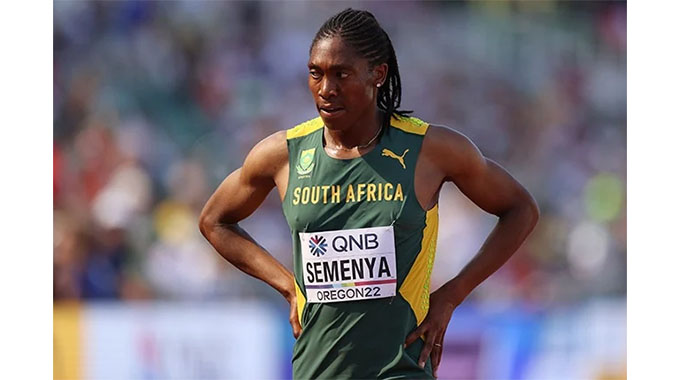
CAPE TOWN. — South African sporting stars, not just from the athletics world, have taken to social media to rally behind Olympic 800m champion Caster Semenya after she lost her appeal against the IAAF.
On Wednesday, Semenya lost her court challenge, which saw the Court of Arbitration for Sport (CAS) judges, by a 2-1 majority dismiss Semenya’s appeal against the measures imposed by the International Association of Athletics Federations (IAAF) that compel “hyperandrogenic” athletes — or those with “differences of sexual development” (DSD) — to artificially lower their testosterone levels.
The decision by CAS means going forward with immediate effect, women with elevated testosterone will have to take suppressive treatment if they wish to compete against women in certain events.
Semenya and her legal team have 30 days to appeal the decision and they are understood to be considering their options currently.
The outcry following the CAS’ decision was enormous as thousands took to social media to express their shock and disappointment in the IAAF and the ruling.
South African athlete and former IAAF World Championships medallist Anaso Jobodwana was vocal on Twitter, calling the IAAF “useless”.
Meanwhile, banned former Proteas opener Alviro Petersen shared his thoughts on Twitter, commenting that “what is legal isn’t always fair” and wished Semenya well on our tough road ahead.
Indian gender-row sprinter Dutee Chand yesterday said Semenya’s court defeat over testosterone rules was “wrong”, but backed the Olympic 800m champion to overcome the potentially far-reaching ruling.
Chand, who fought and won a long battle over her own hyperandrogenism, or elevated levels of male sex hormones, said she felt sorry for the South African star, whose career has been plagued by controversy.
“This is wrong. I feel sad for her, she has been made to suffer like me,” Chand (23) said.
Chand, who was subjected to humiliating gender-testing as a teenager, was finally cleared to compete last year after winning a court appeal against International Association of Athletics Federations (IAAF) regulations.
Chand successfully challenged the IAAF’s stance on hyperandrogenism, prompting the world governing body to change its rules to target only middle-distance events, arguing these were most affected by elevated testosterone.
But on Wednesday, the Court of Arbitration for Sport in Lausanne dismissed Semenya’s appeal against the IAAF measures, triggering an angry response in South Africa.
The decision means that women with elevated testosterone will have to take suppressive treatment if they wish to compete as females in certain events.
To defend her 800m title at the IAAF World Championships in September, Semenya will now have to take medication, probably including birth control pills. She is now weighing up an appeal.
Chand, who won 100m and 200m silver at last year’s Asian Games,
her first major event since returning to competition, was hopeful that Semenya’s legal team will find a way to succeed.
“It was my legal team that handled her case. The team that fought my case, I handed them over to Caster Semenya,” Chand said.
“I think she and her team will find a way out. She is an Olympic medallist and her country is behind her.” — Sport24


 Online Reporter