admin
admin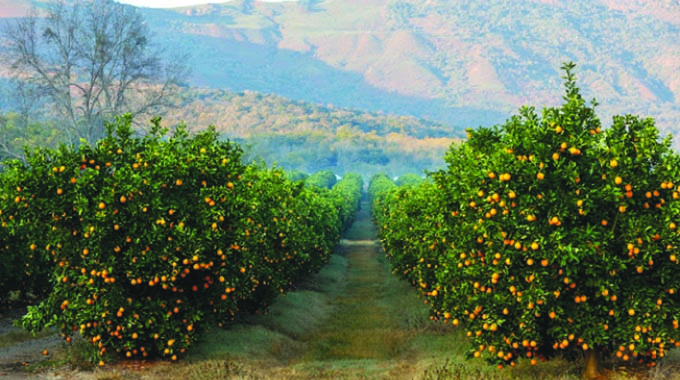
Consultations between South Africa and the European Union (EU) on the financially debilitating phytosanitary trade regulations imposed on it citrus are set to take place before the World Trade Organisation (WTO).
SA has declared a second dispute before the WTO after its citrus farmers have been at loggerheads with their European counterparts for the best part of a decade.
The EU claims that two diseases — citrus black spot (CBS) and false codling moth (FCM) – threaten itsorchards. It also claims that SA citrus is impacting European domestic sales.
It is currently costing the local industry close to R2 billion to comply with the EU’s trade regulations. The measures involve a detailed spray programme and inspections at orchard and packhouse level.
CBS is a fungal infection that can result in cosmetic blemishes on the affected fruit.
“Despite the world’s leading scientists proving that CBS cannot be transmitted through the actual fruit as a pathway, the EU has continued to enforce measures on South African citrus growers,” says Minister of Trade, Industry and Competition Ebrahim Patel.
The EU market makes up one third of all SA citrus exports. It is central to the profitability of the citrus industry. The EU’s volumes cannot be absorbed by other markets.
“The consultations are a critical step in the WTO towards effective resolution of South Africa’s concerns,” says Patel.
Trade advisor Gustav Brink says the allegations appear to be driven by Spanish producers.
They appear to be false, he writes in an article published by XA Global Trade Advisors.Brink said that SA’s production season complements that of Spain, as we are in opposing hemispheres. When their season is over, ours just begins. There is also no scientific evidence to show that either CBS or FCM could spread to orchards in the EU.
“The EU’s measures appear to be discriminatory,” he said.
Industry players noticed that more shipments from East Africa are flagged for especially FCM on much lower volumes than from South Africa, yet the regulations do not apply to their shipments.
“Thus, the regulations are viewed to be political, rather than science-based,” said Brink.
The dispute relating to FCM was declared in July 2022. SA is arguing that the EU discriminates between products from different origins.
Brink said it is unclear why the dispute was only brought in relation to FCM, when SA’s exporters have faced problems with CBS over a much longer period of time. -Moneyweb
Even if SA is successful in the FCM dispute, it will not address the concerns about the CBS trade restrictions.
“South Africa wasted 21 months and cost the country hundreds of millions of rands worth of exports by not declaring the original dispute in relation to both FCM and CBS.”
Rian Geldenhuys, a trade attorney and director of Trade Law Chambers, says the EU is entitled to take sanitary and phytosanitary (SPS) measures if it believes the health of its consumers or its orchards is under threat from imported products from SA.
However, these measures cannot be implemented simply on the back of allegations. “You must scientifically prove the negative impact of CBS in your market,” says Geldenhuys. “I think it is high time that SA takes this matter a step closer to resolution.”
Countries generally want a solution when there is a dispute, particularly since the WTO’s appellate body is no longer functioning. It was ‘killed’ after the Trump administration in the US blocked the appointment of new members. The Biden administration has not reversed it.
The process
Geldenhuys explains that once a dispute has been declared the parties have 30 days in which to consult, but this can take longer since the dispute rules allow requests for extensions by both parties.
SA and the EU have only now entered the consultation phase.
Although most consultations result in a favourable outcome, a party, generally the country that declared the dispute, can request the establishment of a WTO panel if the outcome is not acceptable.
This panel can consist of members from the WTO and independent experts, particularly in the citrus industry, who are also familiar with international trade law and the science behind the SPS measures. This panel will decide whether the measures implemented by the EU were appropriate or not.
Tit for tat
Brink warns that while SA’s claims are “more than likely valid”, they are also “dangerous and could backfire”.
He refers to SA’s handling of chicken imports from the EU.
The EU has regularly complained that SA does not apply regionalism as regards highly pathogenic avian influenza (HPAI) outbreaks in the EU. This has resulted in total country bans on poultry exports even where the exporter may be situated hundreds of kilometres from the nearest HPAI outbreak.
Even after dealing with the outbreak, SA sometimes takes two years – rather than the more internationally accepted three months – to declare a country disease-free and to allow imports to resume.
Declaring a dispute on citrus may result in a retaliation, with the EU declaring a dispute against SA’s SPS and anti-dumping measures on frozen poultry.
“South Africa should realise that it lives in a glass house that can shatter if it starts throwing stones,” warns Brink – Moneyweb



 Online Reporter