admin
admin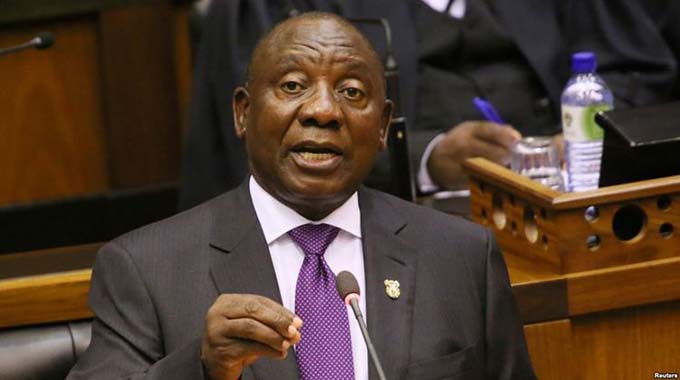
Regina Jane Jere Correspondent
In his maiden State of the Nation Address last week, South Africa’s new President Cyril Ramaphosa referring to the question of black land ownership (or lack the of it), promised his new government will move to “redress a grave historical injustice” – making the land issue one of the hottest topics as the new leadership gets set to reform the economy and meet its promise of empowering more black South Africans economically .
On Tuesday February 27, the South African parliament adopted a motion on Land Reform by 241 votes in support and 83 against. This resolution to allow land expropriation without compensation, has now paved way for a Constitutional Review Committee, which has been asked to follow up the issue and report its findings back to parliament by August 30.
According a statement from the South African Government News Agency released on Wednesday February 28, detailed below, the move follows Tuesday’s resolution by Members of Parliament to assign the Constitutional Review Committee to review section 25 of the constitution, which speaks to the right of property ownership.
Section 25(2) of the constitution currently states that property may be expropriated only in terms of law of general application for a public purpose or in the public interest and subject to compensation. Section 25(3) makes clear that the amount of the compensation and the time and manner of payment must be just and equitable, reflecting an equitable balance between the public interest and the interests of those affected, having regard to all relevant circumstances, in the current use of the property; the history of the acquisition and use of the property; the market value of the property; the extent of direct state investment and subsidy in the acquisition and beneficial capital improvement of the property.
The Economic Freedom Fighters (EFF) led a debate on this motion, which the majority party, the African National Congress (ANC), amended before it was later adopted following a vote in the NA.
The land issue also formed part of a significant shift in the ANC, as the December conference marked the first time the ruling party adopted the policy of land expropriation without compensation.
In his maiden State of the Nation Address, President Cyril Ramaphosa promised to ensure that national government moves ahead with the policy to “redress a grave historical injustice”.
In its motion, the EFF moved that the NA, in terms of Rule 253, establish an ad hoc committee to review and amend section 25 of the constitution to make it possible for the state to expropriate land in the public interest without compensation.
The ANC amended parts of the motion to read as such: “With the concurrence of the National Council of Provinces (NCOP), (we) instruct the Constitutional Review Committee to review section 25 of the constitution and other clauses where necessary to make it possible for the state to expropriate land in the public interest without compensation.”
The motion was adopted following a vote where 241 MPs voted for the amended motion, with 83 MPs voting against it.
The Constitutional Review Committee has been given until August 30 2018 to report back to the NA.
The land issue also formed part of a significant shift in the ANC, as the December conference marked the first time the ruling party adopted the policy of land expropriation without compensation.
While government’s land reform and redistribution programmes have yielded some successes since 1994, large tracts of land still remain in the hands of a few people. Only eight million hectares of arable land have been transferred to black people, which is only 9,8 percent of the 82 million hectares of arable land in South Africa.
In his maiden State of the Nation Address, President Cyril Ramaphosa indicated that expropriation without compensation should be implemented in a way that increases agricultural production, improves food security and ensures that the land is returned to those from whom it was taken under colonialism and apartheid.
While government’s land reform and redistribution programmes have yielded some successes since 1994, large tracts of land still remain in the hands of a few people. Statistics show that only eight million hectares of arable land have been transferred to black people, which is only 9,8 percent of the 82 million hectares of arable land in South Africa.
Gina Jane Jere is a Zambian-born London-based journalist and founding editor of the New African Woman magazine the sister-publication of the New African magazine of which she was the deputy editor for over a decade. This article is reproduced from New African magazine.


 Online Reporter