happiness Chikwanha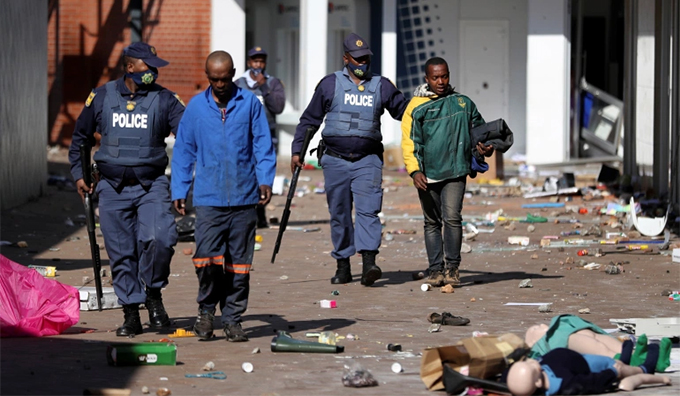
Business Writer
VIOLENT demonstrations that unfolded in South Africa over the last two weeks, which resulted in the death of more than 200 people while businesses were torched, looted, attacked and properties destroyed, amplify calls and need for expedited development and strengthening of domestic value chains.
Zimbabwean industries get majority of their key raw materials used in manufacturing and production from South Africa, but also Europe, The United Arab Emirates, China, Zambia, Kenya, Turkey and the Middle East. Normalcy may have returned to most of South Africa,
Zimbabwe’s single largest trading partner, but the events of the last fortnight left the country with so much to ponder in terms of the state of its value chains, especially relating to production of key raw materials.
Trade between countries is good, but in essence it must only be to the extent of covering each other’s needs or deficiencies in order to promote and advance economic growth and development in individual jurisdictions. While trade channels have reopened after relative calm returned to South Africa that, however, is still counting the extensive cost of the damage to domestic businesses and its economy, economic observers say the impact on Zimbabwe will linger for a while.
Admittedly, trade is a global phenomenon, but the interdependence should not cripple other markets when the other part sneezes. Instead, trade should be anchored in mutual exchanges that support sustainable development of industries and economies.
The reality of the need to develop strong domestic value chains for raw materials and other basic goods has also been exposed by disruptions to trade and global supply chains necessitated by the outbreak of the Covid-19 pandemic, which forced economies across the world to shut down in order to contain the virus.
The International Monetary Fund (IMF) estimated that Zimbabwe may have been forced into a 4 percent contraction last year due to Covid-19, after drought and cyclone Ida induced a 6 percent recession in 2019.
The long shadow of Covid-19 remains regardless, Finance and Economic Development Professor Minister Mthuli believes that Zimbabwe will still be able to realise its growth target of 7.4 percent this year. Minister Ncube cited the bumper harvest the country achieved this year, following a good rainy season, anticipated commodity super-cycle, investments in power and booming construction among the reasons.
Zimbabwe will do more good to shield its fledgling recovery from exogenous shocks after nearly two decades of economic down spiral, only punctuated by brief intermittent growth; it developed its value chains, for both raw materials and finished products.
The good thing is the country already has a well-crafted development path, the Zimbabwe National Industrialisation Development Policy, which also proposes development of a local content policy.



 Online Reporter