Online Reporter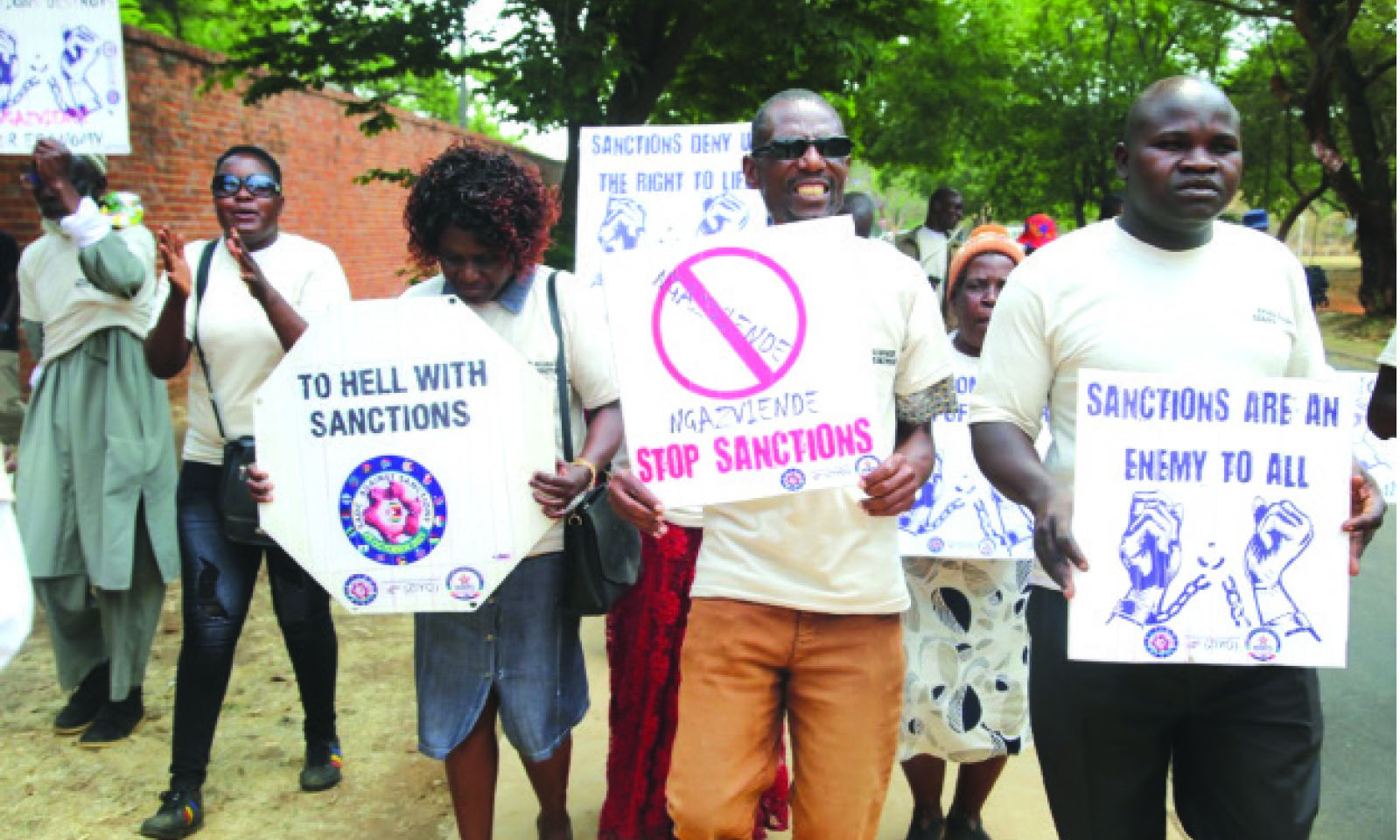
Gibson Mhaka
Zimpapers Politics Hub
AS Zimbabwe prepares to observe the SADC Anti-Sanctions Solidarity Day on October 25, it marks a crucial moment for the nation to unite in the call for the unconditional lifting of the illegal sanctions.
This collective action, amplified by Zimbabweans both within the country and across the diaspora, is essential to address the tangible economic pain and lagging national growth caused by the sanctions. Regardless of political affiliation, religious beliefs, or social status, the consensus must be “enough is enough; sanctions must go.”
While citizens have the constitutional and democratic right to support a political party of their choice, the call for the unconditional removal of economic sanctions, imposed primarily by the United States and its allies, necessitates prioritising the national interest over political party inclinations, ambitions and egos.
Zimbabwe will be joined by the Southern African Development Community (SADC), which, in 2019, set aside October 25 to protest against the imposition of these measures by the US and its Western allies, including Britain and the European Union.
The country has reportedly lost billions of United States dollars in potential revenue and missed opportunities due to these unilateral measures.
The imposition of sanctions under the Zimbabwe Democracy and Economic Recovery Act (ZIDERA) of 2001 followed the fast-track land reform programme in 2000.
This programme was undertaken to address a historical land tenure imbalance, where a few minority white commercial farmers held an estimated 75 percent of the land, while the majority of the black population was relegated to communal lands.
Today, the sanctions’ effects are widespread, particularly hindering the country’s access to lines of credit.
The regional and continental support for Anti-Sanctions Day underscores the intrinsic value of this moment: a call for all Zimbabweans to voice their decision on a matter that profoundly affects the quality of their lives.
Collective action from all progressive actors is paramount, demanding that energy be redirected toward an unequivocal call for the sanctions’ removal. It is critical for politicians to work together with a shared vision, recognising that sanctions brought challenges larger than mere political egos.
It is, therefore, unwise for any political parties to derail this opportunity by not joining the widespread call for unconditional removal of restrictive measures.
Moving beyond party politics is necessary to embrace an image of togetherness as one people with similar aspirations, beginning the long process of rebuilding the country.
The nation cannot afford to be held hostage by ambitious politicians prioritising their own political mileage over national welfare.
The goal is unity. There should be no minority; there should be no majority; there should just be one people working for the common national cause.
Sanctions are a palpable thorn in the flesh, crippling the economy and affecting every citizen, regardless of the terminology such as ‘targeted’ used to describe them.
The removal of sanctions is essential for achieving the nation’s Vision 2030 plan, which charts a course toward becoming an upper-middle-income economy. Rising against sanctions, therefore, must be everyone’s responsibility, as they are destructive across all sectors.
The future of the country lies in integration and coming together, replacing the vicious cycles of political ambition and power-hunger, with the virtuous cycles of unity, love, togetherness and peace.
This is no longer merely a political or economic crisis; it is a crisis of the soul. Sanctions are fundamentally detrimental to the development of Zimbabwe and its citizens. The nation should be allowed to compete in the global village on an equal footing without the baggage of these imposed measures.
Every Zimbabwean—in business, education, healthcare, or the arts—must recognise that the success of Vision 2030 is directly dependent on lifting these debilitating sanctions.
Amplifying the call for removal means participating in public dialogue, raising awareness on social media, and engaging in peaceful advocacy both locally and internationally.
By uniting, Zimbabweans can send a powerful message that the sanctions are unjust and counterproductive, hindering the people’s right to economic self-determination.
Despite the challenges, Zimbabwe has recorded a number of successes. However, should the embargo be totally removed, the country would undoubtedly scale greater heights and achieve the prosperity envisioned by the Second Republic.
Indeed, under the leadership of President Mnangagwa, we are in safe hands, and only those “blind in mind” would fail to appreciate the tremendous progress taking root under the watch of an astute and pragmatic leader, who is leading from the front in rebuilding Zimbabwe.
This call to unity transcends partisan divides, emphasising that the economic well-being of every Zimbabwean hinges on the removal of these debilitating measures.
The SADC Anti-Sanctions Day must be embraced as a moment for collective action, where national interests decisively supersede political ambitions.
By uniting in this shared goal, Zimbabweans can amplify a powerful, undeniable message to the global community: that sanctions are unjust, counterproductive, and directly impede the people’s fundamental right to economic self-determination and the successful realisation of Vision 2030.
Therefore, every citizen, regardless of their background or political leaning, has a responsibility to actively participate in this advocacy, ensuring that the country is allowed to compete on an equal footing in the global village and achieve the widespread prosperity that the nation deserves.