Online Reporter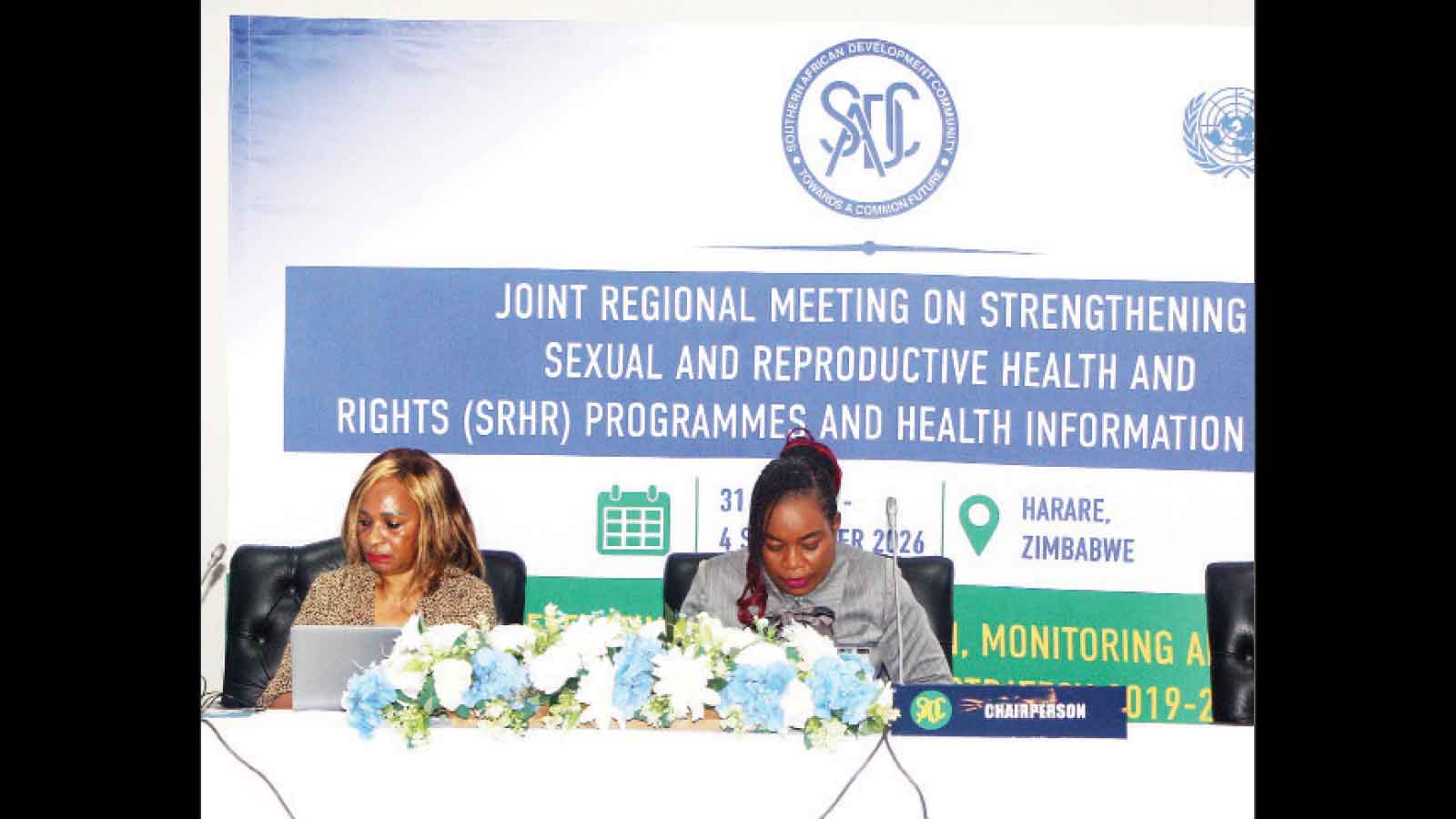
Rumbidzayi Zinyuke-Senior Health Reporter
SOUTHERN African countries are being pushed to turn regional commitments on sexual and reproductive health and rights into measurable action, with member states expected to develop country-specific plans, strengthen accountability and improve the use of data to close persistent gaps in access to services.
The push comes as SADC countries meet in Harare this week to accelerate implementation, monitoring and reporting of the SADC Sexual and Reproductive Health and Rights (SRHR) Strategy 2019-2030, with the region facing mounting pressure from climate change, conflict, economic difficulties and shrinking fiscal space.
The five-day meeting is expected to produce concrete actions and measurable commitments by member states ahead of the next meeting of SADC Ministers responsible for health and HIV and AIDS in November.
Deputy Director for Women’s Health in South Africa’s Ministry of Health, Ms Thembi Zulu, who is chairing the meeting, said the region was confronting a “colliding crisis” that was placing additional pressure on already stretched health systems.
“We are experiencing what I will describe as a colliding crisis. Climate change is intensifying our risk, conflict is disrupting our systems and displacing populations, while economic pressure and debt are shrinking the space for health,” she said.
Ms Zulu said SADC could no longer focus mainly on developing policies, arguing that the priority should now be ensuring that existing commitments were implemented.
“When 2019 gave us a regional political and policy framework, our challenge is not just whether we have the rights, but our challenge is implementation of this,” she said.
The meeting is, therefore, focusing on how member states can translate the regional strategy into practical programmes, with stronger mechanisms for tracking who is responsible for specific actions, when they should be completed and what resources are available to implement them.
Ms Zulu also called for greater use of disaggregated data to expose inequalities that can be hidden by regional or national averages.
SADC SRHR Coordinator Dr Manasa Dzirikure said the Harare meeting provided an opportunity to turn decisions taken by SADC Ministers responsible for health and HIV in February 2026 into concrete programmes before their next meeting in November.
“This is a defining moment, and we have very little time to indicate where we have progressed in achieving certain targets in our programmes, particularly sexual and reproductive health and rights,” he said.
Member states will work on country-specific implementation roadmaps, while also strengthening accountability systems and health information systems so that policymakers can access timely and reliable information.
Dr Dzirikure said the region also needed to change the way it viewed adolescent sexual and reproductive health, education and rights, arguing that investment in young people was directly linked to future economic development.
The SADC SRHR Strategy 2019-2030 was endorsed by Ministers of Health and Ministers responsible for HIV and AIDS in 2018 as a regional policy and programming framework for accelerating progress in sexual and reproductive health and rights across member states.