Chronicle Editor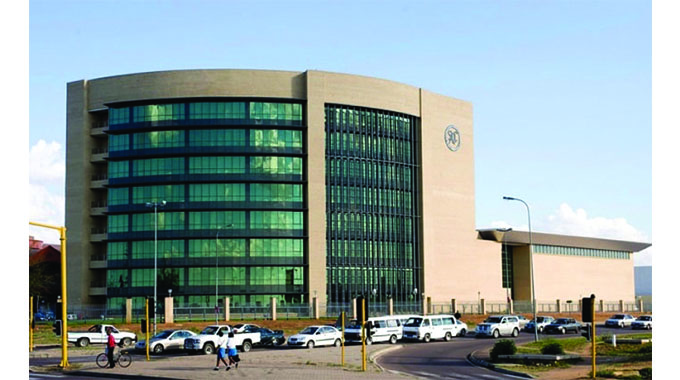
Harare Bureau
THE Government has begun compensating more than 300 farmers whose land was repossessed for the development of the new capital city in Mt Hampden, with priority being given to those whose properties lie on the site where infrastructure for the upcoming 44th Sadc Summit is being developed.
A total of 301 farmers, primarily from Mashonaland West and Mashonaland Central provinces, are receiving compensation for 47 farms straddling over 15 500 hectares. All the farmers have received withdrawal letters, while evaluations of the improvements made to their properties have been concluded.
The Ministry of Finance, Economic Development and Investment Promotion has begun compensating some of the farmers, particularly those whose land will be used for the construction of 18 villas to house VVIP delegates attending the regional indaba.
Public consultations for the new city’s name are also underway, with the Government seeking input from various stakeholders. The concept for the new city was approved by Cabinet in December 2018, with the recently opened Parliament building serving as the nucleus for the future metropolis.
Chief director of spatial planning and development in the Ministry of Local Government and Public Works Mr Shingirayi Mushamba told our Harare Bureau that the upcoming Sadc (Southern African Development Community) Summit has accelerated construction of the new city.
“Through the Ministry of Lands, Agriculture, Water, Fisheries and Rural Development, the previous farm owners, numbering 301, were properly and legally served with notices of withdrawal of their offer letters, as well as requests for them to vacate the land to make way for urban development,” he said.
“Consequent to those notices, improvements which the farmers had made on the land were valued and the valuations were submitted to Treasury for payment of compensation. “We are reliably informed that some farmers have already received compensation and others will be duly compensated in due course.
“Priority for compensation was made on the farmers who were previously located on land which was urgently required for developments that are already occurring in the new city.”
The Government, he said, was undertaking a comprehensive infrastructure development programme in the new city and surrounding areas in preparation for hosting of the summit. This includes upgrades to the Parliament building itself, improved access roads, a dedicated power line, enhanced information and communication technology (ICT) connectivity, construction of villas for delegates, water augmentation projects and landscaping initiatives.
These upgrades are seen as the foundation for the development of the new city. “For the summit to be successfully hosted, the Government has embarked on a transformative infrastructure development programme in the twin cities of Harare and the new city in Mt Hampden,” he added.
“Further, there are many improvements that are being made around Parliament (building), especially to accommodate the expected increased demand for parking during the summit. “Access routes have been opened and widened. “These include Mazowe Road, the boulevard and traffic circle.
“Old Mazowe Road, which links the new city to the Westgate traffic circle, has also been upgraded.
“Further, a dedicated power line is being constructed through the Ministry of Energy and Power Development by Zimbabwe Electricity Transmission and Distribution Company.
“Through the Ministry of Information and Communication Technologies, ICT connectivity infrastructure is being laid down, which will guarantee 2G, 3G, 4G and 5G connectivity.” State-of-the-art villas, Mr Mushamba said, are being developed to accommodate high-profile delegates. Boreholes have been drilled to supply potable water.
“Storage tanks have also been erected on the hill to ensure adequate supplies of the precious liquid,” he continued.
“There are also programmes aimed at landscaping as a means to enhance the beauty and aesthetics of the surroundings.
“The point to be made about all this infrastructure and improvements is that they form the spinal cord around which development of the new city is going to occur.
“It is expected that the momentum gained with these improvements to the infrastructure in the new city will be sustained, as His Excellency (President Mnangagwa)’s vision of a new city is becoming a reality.” According to the master plan, the city will be developed in four distinct phases spanning a 10-year period. The first phase, which will run for two years, will entail creation of traction and development infrastructure.
Phase two will involve development of baseline infrastructure through funding from Treasury, public-private partnerships (PPPs), loans and issuance of bonds, debentures or bills. The next phase, running from year five to 10, will witness the development of commercial, residential and industrial areas through PPPs, foreign direct investment (FDI), syndicated loans, development finance and export credit finance, among other instruments.
The final phase will entail continued development of commercial, residential and industrial areas from year 10 going forward through private equity, PPPs, FDI and syndicated loans.


 Online Reporter