


 Sundaymail Editor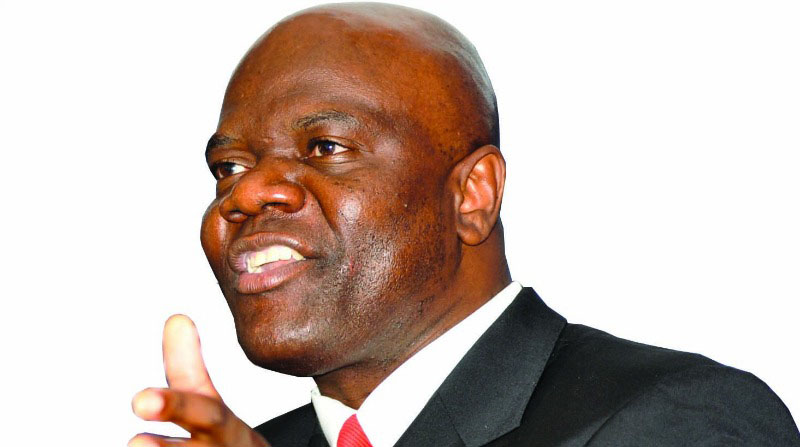
Sunday Mail Reporter
ENERGY sector experts have called on Southern African Development Community (SADC) countries to immediately work towards expanding their electricity generation capacity to match the region’s envisaged economic growth.
The region is presently plagued by load shedding, especially in countries such as Zimbabwe, Zambia and South Africa.
Speaking during a virtual discussion titled “Insights and Perspectives on Global Energy Crisis with Special Reference to the SADC region”, organised by the Public Policy and Research Institute of Zimbabwe, Professor Arthur Mutambara said there was need for concerted regional efforts to link economic growth to energy development.
He also urged the region to explore power generation options through renewable energy sources.
“Energy poverty is just as critical as general poverty and food insecurity,” said Prof Mutambara, who is the director and full professor at the Institute for the Future of Knowledge at the University of Johannesburg.
“We as Africans are saying there is a concept called energy poverty in Africa; most of our people are not on the grid. So, in addition to discussing climate change, let us address energy poverty.”
The regional energy crisis, he said, must be treated as an existential threat to Africa, which
necessitates the continued use of power generated from coal, gas and oil while transitioning
to green energy sources.
“The Europeans have been exposed by the Russia-Ukraine war, because, after they lost access to gas and oil from Russia, they started to mine more coal and drill more oil because they saw that they were faced with an existential threat.
“And they threw out the climate change agenda,” he said.
“So, we are saying geopolitics matter. The climate agenda depends on geopolitics and in Europe, we can see a regression from the clean energy agenda back to coal because they are in trouble.
“As Africans, we are saying we already have an existential problem around which is energy poverty. So, the migration from coal to clean energy will be done by us on our terms, not American or European terms.”
He said the transition to renewable energy sources such as solar, hydro-electricity, geothermal, biomass, nuclear and green hydrogens should see the region recovering from the crisis.
Energy efficiency and conservation policies that include developing smart power grids and smart cities are also being considered a viable option.
A gas distribution network straddling Zimbabwe, South Africa and Mozambique that leverages on liquefied natural gas found in Mozambique should also be considered, he added.
Installed capacity at the Zimbabwe Electricity Supply Authority’s five power stations – Munyati, Hwange, Harare, Kariba and Bulawayo — stands at around 2 000 megawatts (MW), against peak demand of 2 200MW.
The country’s largest source of electricity, the Kariba Hydro Power Station, can generate up to 1 050MW, while the Hwange Thermal Power Station can produce 920MW when fully functional.
However, ageing infrastructure at Hwange has weakened power generation, with the station producing less than half of its installed capacity. But two new units – 7 and 8 – are expected to add a umulactive 600MW.
Unit 7 is 99 percent complete and its connection to the grid is now imminent.
Successive droughts linked to climate change mean water levels in Kariba Dam cannot sustain generation at full throttle.


 Bongani Ndlovu
 Online Reporter