Online Reporter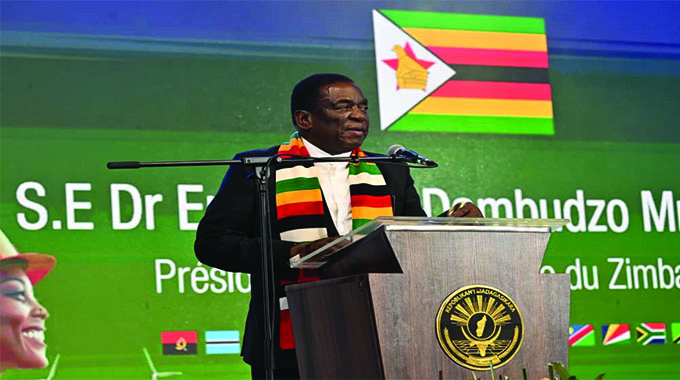
PRESIDENT Mnangagwa’s one-year tenure as SADC Chairperson marked a period of active engagement and strategic leadership across key regional priorities.
His reign was defined by a strong emphasis on regional peace, food security, infrastructure development, and environmental sustainability.
Notably, President Mnangagwa convened critical summits addressing the security crisis in eastern DRC, advocating for African-led solutions and a dignified withdrawal of SADC troops while maintaining diplomatic engagement.
His leadership in co-chairing the Joint EAC–SADC Summit helped lay the groundwork for a unified peace framework, showcasing his commitment to continental stability.
On the development front, President Mnangagwa championed food security as a cornerstone of regional resilience. He promoted Zimbabwe’s Pfumvudza/Intwasa climate-proofed agriculture model as a blueprint for SADC, earning regional and global recognition.
His push for infrastructure development, including the commissioning of the Trabablas Interchange and Hwange Units 7 and 8, demonstrated a practical approach to enhancing regional connectivity and energy stability.
Furthermore, his philosophy of “Nyika inovakwa nevene vayo” (a country is built by its people) resonated across the bloc, encouraging community-driven development and self-reliance.
President Mnangagwa’s tenure was not without attempts to soil his name and Zimbabwe’s international credibility — particularly laughable claims of interference in regional elections — but his leadership was still largely seen as visionary and pragmatic.
Yesterday, President Mnangagwa passed on the baton to his Madagascan counterpart, Andry Rajoelina, at the 45th SADC Summit of Heads of State in Madagascar.
The new Chair faces a complex landscape of challenges that require strategic leadership and regional solidarity.
Eastern DRC and Northern Mozambique remain hotspots of instability.
While SADC missions have made progress, especially in Cabo Delgado, the situation in the DRC is still volatile.
The new Chair must navigate post-conflict recovery, support peacekeeping efforts, and promote inclusive dialogue to prevent the resurgence of violence.
On climate-related issues, the region is increasingly vulnerable to climate extremes, including droughts and floods, exacerbated by El Niño events. President Rajoelina must accelerate early warning systems, climate adaptation, and resilient infrastructure development.
Less than half of SADC’s regional projects are funded by Member States; the rest rely on international partners. Operationalising the SADC Regional Development Fund (RDF) is critical to ensure long-term sustainability and regional autonomy.
President Rajoelina must balance urgent humanitarian needs with long-term development goals. Their success will depend on fostering unity among member states, securing sustainable financing, and driving innovation in governance and resilience.
Fortunately for President Rajoelina, President Mnangagwa has laid a strong foundation.

He leaves behind a legacy of strategic diplomacy, regional solidarity, and a blueprint for sustainable development that all future SADC leaders can build upon.