Chronicle Editor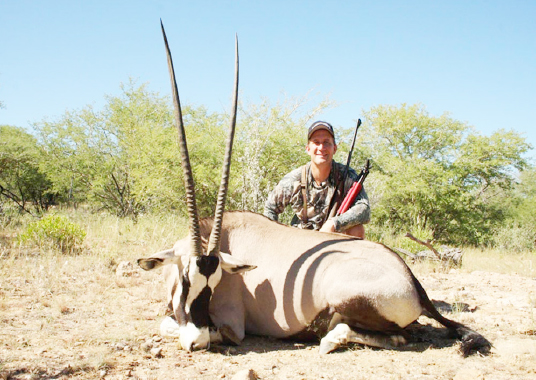
Judith Phiri, Business Reporter
THE country’s safari and hunting industry is on an unprecedented growth trajectory, with projections showing its revenue levels are set to revert to the pre-Covid-19 pandemic levels by end of this year.
The industry reported to have lost US$100 million in revenue per year in 2020 and 2021, went on a rebound in 2022 following the opening up of global markets and relaxed travel restrictions owing to reduced Covid-19 pandemic infections.
In 2023, the safari and hunting industry began to witness positive performance and revenue gradually picking up.
Traditionally, the industry is dependent on international tourists, with many coming from the United States of America (USA) among other countries.
Safari Operators Association of Zimbabwe (SOAZ) president Dr Emmanuel Fundira who is visiting Dallas, a city in Texas and Nashville a city in Tennessee both in the USA to market the industry told Sunday News Business that the industry has also witnessed increased investment in conservation.

“The safari and hunting industry has registered considerable growth post-Covid-19 period and has been further boosted by increased investment into conservation. With this kind of trajectory experienced, we expect to have more than equal revenue levels to pre-Covid-19 levels by the end of 2024,” he said.
He said in 2022 the industry had to slowly move from a zero-base post-Covid-19 pandemic and was on a rebound in 2023, while it was promising that this year it would fully recover to get back to pre-Covid levels where it was doing extremely well and contributing close to US$100 million towards the country’s Gross Domestic Product (GDP).
Dr Fundira said there has been quite a bit of push and incentives from all sorts of angles to ensure that the same industry can be able to return to its former glory.
In terms of poaching, which is becoming the greatest threat to wildlife, he said it was a global menace that necessitates communities that live with wildlife to be incentivised and rewarded for anti-poaching initiatives.
He said in addition, tax credits should be awarded to industry champions who have invested more in anti-poaching activities and have become success stories.
The development comes amid a visit last year by Russian oligarchs — extremely wealthy business leaders controlling huge companies across the globe who were in the country to get an appreciation of high-end African safaris, after being slapped with sanctions by Western countries over Moscow’s military operation in Ukraine.
Oligarchs are wealthy elites, who do not just hold power and money, but who control enough resources to influence politics or governments in a meaningful way.
Zimbabwe hosted a delegation of Russian oligarchs led by its Foreign Affairs and Economic Relations from the Sverdlovsk Region of the Federation, Yarin Vyacheslav.
He was accompanied by Igor Zelenkin, the Deputy Minister of Industry and Trade in the Sverdlovsk Region.
During the visit, Dr Fundira said: “We are seeing a trend of the sanctioned oligarchs looking at African safaris as an alternative destination where they can spend their money and Zimbabwe, having some classic safari destinations; we see that as a big opportunity.”
In Zimbabwe, safari operators often attract high-spending hunters. Zimbabwe offers hunts for animals including, elephant, buffalo, lion and leopard.
In addition to paying for the licence to track them down, tourists pay professional hunters to guide them. Elephants make up the bulk of the nation’s hunting licences, according to Zimbabwe Parks and Wildlife Management Authority.


 Online Reporter