

 admin
admin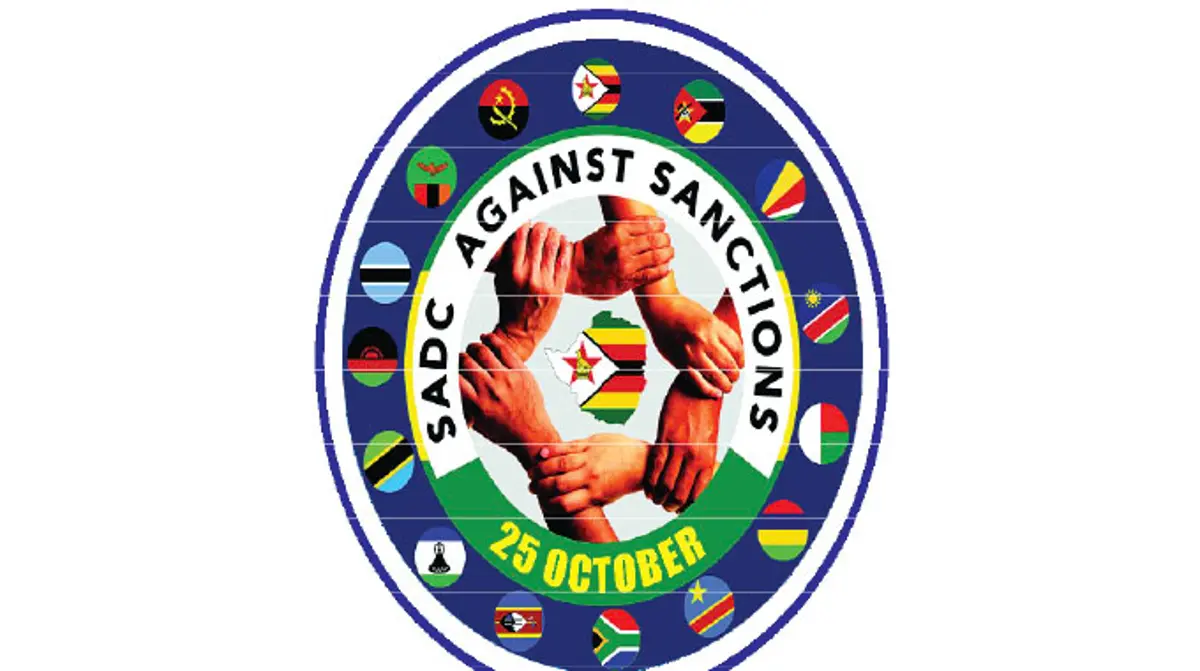
Gibson Nyikadzino
Correspondent
The world is going through a cycle in which the Western capitalist empire continues to base the attainment of its goals using capture, subjugation and conquest to convert all resources for its use.
Where military intervention was once used, sanctions are now a legitimate instrument to seize the modern state’s ability to embark on free trade.
They are a blueprint of conquest.
It therefore becomes easy to understand why the SADC bloc set aside October 25 as an anti-sanctions day in solidarity with Zimbabwe.
The bloc understands that sanctions against Zimbabwe were used as an alternative to military intervention at the turn of the millennium.
They are a tool of modern conquest.
In their landmark book titled Economic Sanctions Reconsidered, Gary Hufbauer and his colleagues revealed that the poor design and implementation of sanctions policies often mean that they fall short of their desired effects.
In Zimbabwe, since 2001, the main objective is to effect regime change and install a puppet government.
At times sanctions can work, but, that depends on what one country is trying to achieve.
For smaller objectives, they can be quite effective, especially when the targeted country wants to be labelled a pariah state. To some extent, the US-led alliance against Zimbabwe may have succeeded in such context.
The effects have been devastating.
In the case of Zimbabwe, a 2021 preliminary report by the Special Rapporteur on the negative impact of unilateral coercive measures on the enjoyment of human rights, Ms Alena Douhan, gave a summary conclusion that sanctions defeat the essence of democracy and lead to social ills like corruption and mass migration of citizens as economic refugees.
These are the same consequences people face in a time of military intervention.
Against Zimbabwe, the West eagerly used sanctions as a cover-up for their pending military intervention that was blocked by South Africa and revolutionary governments in the region because of their strong position against intervention and militarism.
When the first call for sanctions as a form of warfare was applied against Zimbabwe by the US and the EU in 2001 and 2002, respectively, some thought the idea and intention was to “help Zimbabweans achieve democracy”.
However, sanctions are just a new form of intervention in the domestic affairs of sovereign states through bureaucratic plots and strategies.
No justification
On countries the US imposed sanctions, it does not care what international law says.
For Cuba, Zimbabwe and other states sanctioned without justification, the US does not concern itself about international opinion.
For 30 years now, the UN General Assembly has voted overwhelmingly to adopt the resolution condemning the US embargo on Cuba.
Only two countries have voted against the adoption, that is the US and Israel.
More than 185 countries have voted in favour of adopting it, but the US has just been turning a blind eye to the will of the international community for three decades now.
Cuba’s embargo has lasted for over six decades now and is the longest in modern history.
Prominent writer and academic, Nicholas Mulder (in his book, The Economic Weapon: The Rise of Sanctions as a Tool of Modern Warfare), explained how economic sanctions, though meant to function as an alternative to war, are modelled on devastating techniques of warfare.
These techniques include preventing businesses from investing in the targeted country and prohibiting financial institutions from embarking on trade with the sanctioned state.
This deeply affects every aspect of life by damaging the economy, hindering development and isolating citizens from the global community.
This makes sanctions the most insidious and pervasive form of warfare by the Pentagon and Wall Street.
Without doubt, they are a form of war with shocking consequences. Remember, in Iraq, a direct consequence of sanctions led to the deaths of an estimated 500 000 children between 2003 and 2009 while in Venezuela an estimated 70 000 people died between 2017 and 2022 from such.
These sanctions are illegal and have no justification unless they are mandated by the United Nations (UN).
It means the US is contravening international law. The US and the EU, when it comes to Zimbabwe, they have no idea on the devastation they are causing to women, children and the elderly at a time the world is working towards the attainment of the UN sustainable development goals (SDGs) in almost seven years.
Zimbabwe will not fall
Sanctions are administered with the pretence of soft coercion, but the reality is that they are a declaration of war.
This US system of financial and economic weaponry has grown with extreme precision as this power is now largely undefined, uncapped and unbound.
Between 2005 and 2021, the use of sanctions by the US has increased to nearly 1000 percent against states. America looks at this with jaundiced and disparaging eyes. This mechanism is being employed to make countries fall in line.
Through the imposition of sanctions, the US is perpetuating daily violence and continued subjugation of independent and sovereign states, not to spread democracy and human rights, but to find ways to extract resources and protect its capital.
This global empire does not only use brute military force to impose capitalism’s world order, but also sanctions and economic warfare through mass propaganda that describes such heinous acts as soft power initiatives.
In the face of restrictions on economic, capital, technological, scientific, trade and data flows in this modern era, Zimbabwe has stumbled but not fallen.
At the implementation of the three stages of sanctions, Zimbabwe could have fallen had it not been a strong State.
Zimbabwe survived the first sanctions, the threat stage, then came the second stage when Western states propped the limited use of sanctions by sending serious signals to apply sanctions and the third stage became an economic warfare.
This is when there are travel bans, asset freezes and trade restrictions.
At this stage, citizens are restricted in the goods they can buy, there is capital flight, living standards and currency value fall, all this was experienced by Zimbabwe.
This appeared to work in the favour of the sanction imposing coalition of states, for it was difficult for the Zimbabwe to come around or circumvent them.
Sovereignty above all
The US is no longer the power it once was. It has failed to rally African countries against Zimbabwe.
In some way, African countries by sticking with Zimbabwe have expressed how their power flows. It may neither be military nor economic, but morally upright as in international politics truth is always on the side of the oppressed.
Power is not only the capacity to have others do what you want them to do, it is also the ability to resist what others want you to do.
Zimbabwe has not done what the Western countries wanted to force it to do. It means the Western world is becoming illiterate about what power is in their failure to understand, in the context of Zimbabwe, how it operates and flows.
It should be known that a country is unlikely to stop an action that it views as vital to its national interest and security no matter how heavy the economic costs are. This explains why Zimbabwe had to bite the bullet and embark, successfully, on its land redistribution exercise.
Once a country decides to preserve its national sovereignty when threatened, it will have already shown its willingness to face the economic consequences, so it usually takes stronger action to achieve the desired result.
The stronger action that Zimbabwe took was to maintain its sovereignty and despite the consequences, the state remains a sovereign.
Gibson Nyikadzino is a Media and International Politics Researcher. He holds a MSc in Politics and International Relations.



 Peter Tanyanyiwa
 Online Reporter