Vusumuzi Dube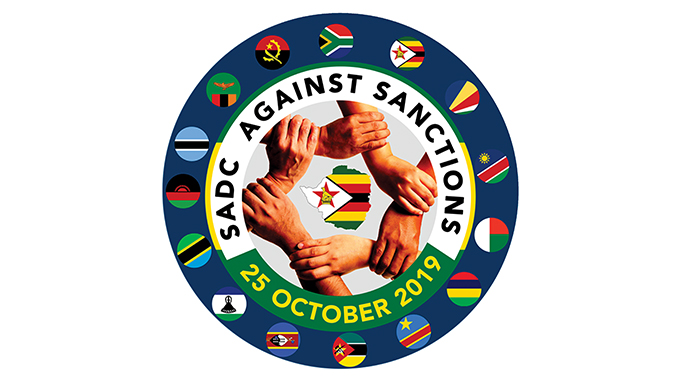
Tongai Dana, Correspondent
Advocacy efforts to lift or ease sanctions are not uncommon, as governments and organisations affected by sanctions often seek to highlight the negative consequences and argue for their removal. This can involve diplomatic negotiations, lobbying, public campaigns, and designating specific periods to draw attention to the issue, such as an “advocacy month”. Since 2021, at the behest of Sadc, Zimbabwe designated October as “Anti-sanctions Advocacy Month”.
The country has actively promoted the region’s position and its stance against the sanctions imposed on the country and seeking support from the international community to have them lifted unconditionally. The efforts have seen Sadc member-states committing themselves to speak against sanctions specifically on the 25th of October every year.
As a country, we have implemented various activities and events aimed at raising awareness about the negative effects of the sanctions especially on the ordinary Zimbabwean on the streets and in the villages. The fact that sanctions and economic embargoes have negative consequences is a view shared by all Zimbabweans across the political divide, it is no longer debatable.
Economic limitations
Sanctions often target specific individuals, entities, or industries, such as restrictions on trade, financial transactions, or access to international markets. In the case of Zimbabwe, these measures have resulted in a decline in foreign direct investment, reduced economic growth, and limited job opportunities which have seen an overall economic decline leading to reduced incomes and increased poverty levels among ordinary citizens. It is ordinary Zimbabweans suffering the most.
High inflation and currency instability
Economic sanctions can contribute to high inflation rates and currency instability. When sanctions limit access to international markets, it becomes challenging to import essential goods, including food, fuel, and medicine. The scarcity of these goods can drive up prices and erode the purchasing power of ordinary citizens, making it difficult to afford basic necessities.
Unemployment and informal economy
Economic sanctions imposed on Zimbabwe by the West have seen a rise in job losses and unemployment as businesses struggle to operate under restricted conditions. In response, many citizens have turned to the informal economy, which often lacks job security, fair wages, and legal protections. This informal sector has provided a safety net for some, but it also perpetuates a cycle of poverty and vulnerability for many Zimbabweans.
Healthcare
Sanctions hinder the availability and affordability of healthcare services. Restricted access to international funding and resources owing to sanctions imposed on Zimbabwe has limited the Government’s ability to invest in public healthcare. This has resulted in inadequate infrastructure, shortages of medical supplies, equipment, and pharmaceuticals. On this basis, sanctions have exacerbated the healthcare crisis in Zimbabwe owing to limited access to foreign currency and international markets. Additionally, healthcare professionals have been leaving the country attracted to opportunities abroad, causing a shortage of skilled personnel within the country.
Migration and brain drain
Economic hardship caused by sanctions can drive individuals to seek better opportunities abroad and this has been the case with Zimbabwe. This brain drain has seen skilled professionals leaving the country which has further negatively impacted the country’s development and the provision of essential services. Additionally, the increased migration of ordinary citizens can strain resources in neighbouring countries and create social and economic challenges for both Zimbabwe and its neighbours as has been the case in Zimbabwe’s neighbouring countries like South Africa and Botswana where Zimbabweans have been migrating for greener pastures and have had to endure the horrors of xenophobic attacks and discrimination.
Food security
Sanctions have had a severely negative impact on food security in Zimbabwe. Restrictions on trade, financial transactions, and access to agricultural inputs can hinder agricultural productivity and disrupt the food supply chain. This has led to food shortages, price hikes, and increased vulnerability to hunger and malnutrition, particularly among the most vulnerable populations such as children and rural communities. However, the Government has made strides to ensure the country is food secure.
Education system
The education sector in Zimbabwe has also been affected by sanctions. Limited access to international funding and resources can hamper the development of educational infrastructure, curriculum development, and teacher training programmes. This has seen a challenge of overcrowded classrooms, inadequate resources, and a decline in the quality of education, ultimately affecting the overall well-being, future prospects and opportunities for Zimbabwean youth and ordinary citizens in general.
Infrastructure development
Limited access to international financing and technology have hindered the construction and maintenance of critical infrastructure, including roads, bridges, energy systems, and water supply networks. This has limited economic development, hindered regional connectivity, and negatively impacted the daily lives of ordinary citizens who rely on these services. The Government has however, used internal resources to push ahead the infrastructure development agenda.
Social and political implications
Sanctions have also seen negative social and political implications in Zimbabwe. The economic hardships caused by sanctions have led to political polarisation and increased social inequality in the country. The sanctions induced hardships that Zimbabwe has experienced has strained social cohesion and contributed to the erosion of trust in government institutions among citizens. The Government has had to divert resources towards managing the impact of sanctions, potentially affecting public service and social welfare programmes as a survival strategy.
Based on the above facts on the impact of sanctions and economic measures imposed on Zimbabwe by the West, the deduction is that; While sanctions are often designed to target specific individuals or regimes, their consequences inadvertently affect ordinary citizens, exacerbating poverty, inequality, and socio-economic challenges. It is ordinary Zimbabweans suffering the most. Over and above all, sanctions are often implemented with political motivations, their impact on the economy can be far-reaching and affects the livelihoods of ordinary citizens, exacerbating poverty, unemployment, and inequality. On the economy of Zimbabwe, sanctions have caused negative investor sentiments about Zimbabwe.
Sanctions have created a negative perception of Zimbabwe as an investment destination. The country’s reputation has suffered, leading to a loss of investor confidence and reluctance to engage in long-term economic activities. This further impedes economic growth and development, as well as hinders the country’s ability to attract foreign investment and technology transfer.
Drawing inference from how the sanctions and economic measures imposed on Zimbabwe by the West have affected ordinary Zimbabweans the most, a call for their lifting is justified. Other countries have done it, Zimbabwe can do it too. In 2015, Iran reached a landmark agreement known as the Joint Comprehensive Plan of Action (JCPOA) with the United States, the European Union, and other world powers. Under the JCPOA, Iran agreed to limit its nuclear programme in exchange for the lifting of nuclear-related sanctions. As a result, significant economic sanctions were lifted, allowing Iran to regain access to international financial systems, trade, and investment.
While an embargo on Cuba remains in place, there have been efforts to ease certain restrictions in recent years. In 2014, the US and Cuba announced a historic shift of some of the sanctions. This has opened up opportunities for increased engagement and economic co-operation between the two countries. This is possible for Zimbabwe if we speak with one voice as Zimbabweans for Zimbabwe, irrespective of political opinion or affiliation.
The October Anti-Sanctions campaign can compel those who imposed the sanctions to come to the negotiation table for reconsideration. Zimbabwe has repeatedly reiterated that it is “a friend to all and enemy to none”.


 Online Reporter