dyton mupawaenda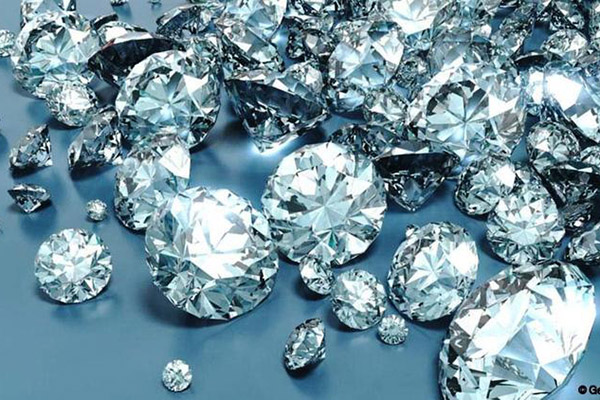
Fungai Lupande and Ivan Zhakata
ZIMBABWE is struggling to unlock a value of US$80 billion that lies in the cutting and polishing of diamonds as well as jewellery manufacturing sector due to sanctions imposed on the country by some Western countries.
Thus the sanctions have become an albatross around the neck of the diamond industry and have hindered it from penetrating the billion-dollar value addition chain. Africa produces 65 percent of rough diamonds with Botswana the leading nation followed by Angola, South Africa, Namibia and Zimbabwe.
Zimbabwe has a 2,16 percent market share among the global rough diamond producers but 50 percent of the diamonds end up in the United States which has 51 percent of the market share. China has 16 percent, India 10 percent, the Gulf nations 6 percent, Japan 5 percent and the rest of the world share the remaining 12 percent.
Although Zimbabwe is sitting at number 7 globally as a producer of rough diamonds generating a revenue of US$424 million in 2022, the country is struggling to unlock a value of US$80 billion that lies in the cutting and polishing as well as jewellery manufacturing sector because of the illegal sanctions.
Addressing the media during a sensitisation workshop in Mutare last week, Zimbabwe Consolidated Diamond Company (ZCDC) finance and business analyst, Mr Albert Norumedzo, said they have tried to capacitate the cutting and polishing industry but faced challenges in certification due to the debilitating economic sanctions.
“When you want to sell polished diamonds, the GIA (Geomological Institute of America) and HYDRA have to certify that the diamonds are conflict-free and if they are, they fetch the highest price,” he said. “GIA is an American company and they are not willing to do business with Zimbabwe. Some of our cutting and polishing companies are well equipped, like Aurex owned by the Reserve Bank of Zimbabwe. Aurex has knowledge transfer with India and they have state-of-the-art equipment with laser technology. The market perception and the players we need to make it work in the industry, it is not possible.”
Mr Norumedzo said due to sanctions, some foreign players in the diamond industry were not willing to partner with Zimbabwe.
“Therefore, the country is stuck with cut and polished diamonds with nowhere and no one to sell to,” he said.
“There are other geo-political issues which are beyond skills and capacity. Other countries like Botswana and Namibia have established big cutting and polishing industries.”
Mr Norumedzo said the diamond industry is still young and there is a need for the manufacturing sector to come to the table for optimum benefits.
“All the equipment and inputs that we are using are coming from foreign countries. This is why the mining sector contributes 70 percent of the forex but only 16 percent of the GDP,” he said. “This is because we have to invest in the whole value chain for the country to expect mega-size returns. We are producing diamonds but we need to retain the wealth locally in the manufacturing industry. From 2016 to date we have grown the diamond industry from US$40 million to over US$420 million. This is significant and we need to do more to see the footprint.”
Speaking at the same workshop, Mineral Marketing Corporation of Zimbabwe representative Mr Ezekiel Mafara said the viability of the Zimbabwe diamond industry was also affected by market forces, geo-politics and the global economy.
“The local economic environment is compounded by what is happening on the global market. Prices of diamonds have been nosediving by more than 60 percent since February 2022,” he said.
“If you bought rough diamonds before February then you are stuck with them or you join the market. This is a combination of geo-politics, what is happening in the Russia-Ukraine war. The LGDs (lab grown diamonds), these are synthetic diamonds and they have flooded the market and they are as good as the real diamonds.”
Mr Mafara said the real value of diamonds is when they are 90 percent gem but Zimbabwe is exporting industrial diamonds which are between 60 to 70 percent gem because of the economic sanctions that were imposed by the West as punishment for the land reform programme.
Due to President Mnangagwa’s Engagement and Re-engagement drive, tomorrow the progressive world will join the SADC Anti-Sanctions Day that was adopted by regional leaders in 2019 to pile up pressure on the US and her allies to unconditionally lift the illegal sanctions.


 Online Reporter