Online Reporter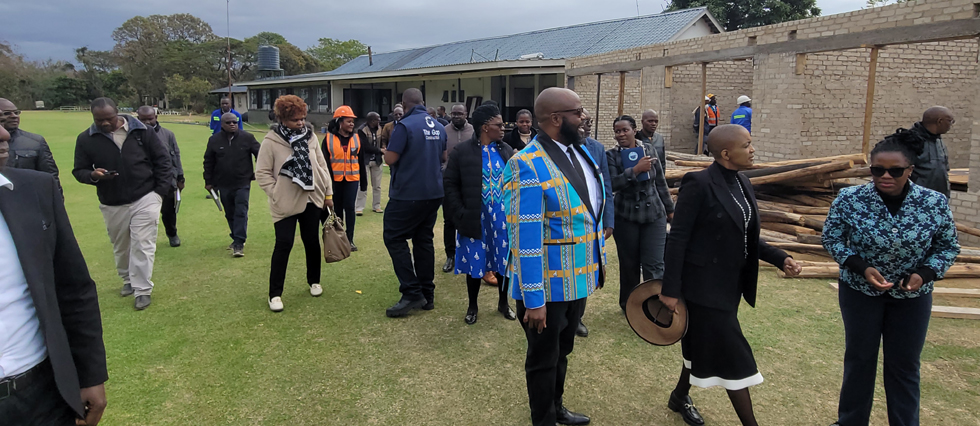
Lloyd Makonya
Correspondent
MANICALAND Province is on the cusp of a transformational moment.
In the coming weeks, the region will play host to two major national events, the Sanganai/Hlanganani/Kumbanayi World Tourism Expo in September, followed closely by the 22nd ZANU PF People’s Conference in October.
Together, these events are proving to be powerful catalysts for economic development, infrastructure renewal, and a bold reintroduction of Mutare as a national hub for tourism, transport, and trade.
Already, the effects of these forthcoming gatherings are rippling through the city.
Perhaps the most striking is the announcement that Grand Reef Aerodrome, located just outside Mutare, is being upgraded to accommodate a 50-seater Air Zimbabwe plane.
The move effectively restores the once-defunct air link between Harare and Mutare, promising faster and more efficient travel for both businesspeople and tourists.
For years, the lack of a commercial flight option between these cities has hindered connectivity and commerce.
Now, with a clear air corridor opening, Manicaland’s accessibility and attractiveness as a destination are poised to take flight.
Tourism and Hospitality Minister, Honourable Barbara Rwodzi confirmed the development during a stakeholders’ meeting at Mutare Hall this week, stating that following a feasibility study, it was deemed more practical to refurbish Grand Reef within the limited timeframe than to attempt works on the Sakubva Aerodrome.
The decision marks a pragmatic and visionary step forward. It also signals Government’s confidence in Manicaland’s potential to become a critical player in national economic development.
“After a feasibility assessment, it was determined that upgrading Grand Reef Aerodrome was the most practical and time-efficient option within the available window.
“This development will, not only facilitate travel during the Expo, but create lasting efficiency in the tourism and business sectors going forward,” said Minister Rwodzi.
But the skies are not the only route being revitalised.
Plans are already underway to introduce a comfortable and reliable train service between Harare and Mutare.
If realised, the rail option will, not only provide an alternative for travellers during the Expo and People’s Conference, but could permanently expand Zimbabwe’s public transport network.
On the ground, the facelift is already visible. Mutare Sports Club, the venue for the Sanganai/Hlanganani/Kumbanayi Expo, is currently undergoing extensive renovations to accommodate national and international exhibitors, buyers, government officials, and local attendees.
The improvements include enhanced infrastructure, improved access roads, upgraded sanitation facilities, and digital connectivity all essential for a modern Expo environment.
The transformation of the venue reflects a broader Government ambition, not only to stage a successful event, but to leave behind lasting infrastructure for the city and its residents.
Beyond Mutare Sports Club, attention has also turned to the problematic flyover near Murahwa People’s Green Market area which has been a notorious traffic bottleneck for motorists entering or exiting Mutare’s CBD.
While the project may not be completed in time for the Expo, Minister Rwodzi assured stakeholders that the upgrade has been prioritised and in collaboration with Minister of State for Manicaland ProvincialAffairs and Devolution, Advocate Misheck Mugadza, there is optimism that the flyover will be complete ahead of the October People’s Conference.
One of the most exciting announcements came with news of a major upgrade to the iconic Hot Springs Resort in Chimanimani.
Known for its healing waters and sacred significance to local communities, the Hot Springs have long drawn interest, but lacked the facilities to match global expectations.
Now, with Government intervention and private sector interest, the site will be transformed into a world-class wellness destination.
Taken together, these developments suggest a broader, deeper strategy and one that sees tourism, not only as entertainment, but as economic infrastructure.
The improvement of transport networks, the upgrading of hospitality venues, the attention to urban planning bundled together feeds into a vision where Manicaland is not left behind, but leads the way.
Indeed, this aligns with President Mnangagwa’s mantra that “no one and no place shall be left behind.” And for many in the province, this is no longer rhetoric. It is reality unfolding on the ground. Beyond the immediate economic returns for participants, the legacy impact is significant.
The arrival of thousands of guests, delegates, exhibitors, and party supporters will no doubt put pressure on local systems.
But it will also test and prove the province’s capacity to respond, adapt, and rise to the occasion. And when the dust settles, the roads remain, the aerodrome will serve, and the opportunities seeded will continue to grow.
For Manicaland, these are not just events. They are a turning point.