admin
admin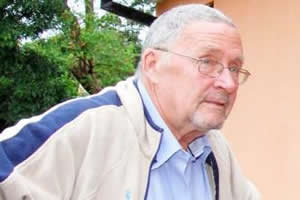
Commandments will form the guiding principles for his government.
Scott is Sata’s close ally and deputy in the Patriotic Front.
Born in 1944 in Livingstone, Scott did his education in Zambia and the then Southern Rhodesia (now Zimbabwe).
His late father, an ally of Zambia’s nationalists founded the African Mail, which is now the Zambia Daily Mail.
He studied economics at Cambridge University and holds a PhD in cognitive science from the University of Sussex in England.
After leaving Cambridge University, Scott joined Zambia’s public service as a planner in the Ministry of Finance.
During the same period, he was also deputy editor of the Business and Economy of East and Central Africa.
RELATED STORIES
He left the public service in 1970 to start his own business.
Scott joined active politics in 1990 when he joined the Movement for Multiparty Democracy.
At its first convention, the MMD elected him chairperson of the agriculture committee.
After the general election in 1991, Scott was appointed Minister of Agriculture, Food and Fisheries.
He resigned from the MMD in 1996 and formed his own political party – the Lima Party together with Ben Kapita, then president of the Zambia National Farmers Union.
After the collapse of the coalition parties, Scott joined the Patriotic Front, where he became a National Assembly member when elected member for Lusaka Central in the 2006 general election.
President Sata’s other key appointments include Edgar Lungu, deputy minister in the vice president’s office.
He also appointed businessman Alexander Chikwanda as finance minister.
DISCUSS THIS STORY ON FACEBOOK
Godfrey Mwamba is defence minister.
He will be deputised by Colonel Panji Kaunda, son to Zambia’s first president, Dr Kenneth Kaunda.
The Foreign Affairs ministry will be headed by Chishimba Kambwili.
Willie Nsanda is the transport minister.
Below is a list of the other members of Zambia’s new cabinet:
Ministry of Justice – Sebastian Zulu; Home Affairs – Kennedy Sakeni; Health – Dr Joseph Kasonde; Agriculture and Livestock – Emmanuel Chenda; Labour, Sports, Youth and Gender – Fackson Shamenda (a former
ZCTU president); Commerce, Trade and Industry – Robert Sichinga; Mines – Wilbur Simuusa; Information, Broadcasting and Tourism – Given Lubinda; Education, Science and Vocational Training – Dr J T N Phiri; Lands, Energy and Water Development – C Yaluma; Local Government, Housing, Early Education and Environment – Professor Nkandu Luo; Community Development, Mother and Child Health – Dr Joseph Katema; Chiefs and Traditional Affairs – Inonge Wina; Transport, Works, Supply and Communications – W Nsanda.
President Sata also brought on board George Chella a journalist from the Post stable as his spokesperson. The Post is a pro-PF newspaper.
Gender activists are already complaining that women who form the bulk of the population have been sidelined in the new cabinet.
They argue that the appointments do not adhere to Sadc’s guidelines on mainstreaming gender in politics and decision-making.
President Sata is also being accused of nominating more MPs than he is allowed to by Zambia’s constitution.
The current constitution allows the president to nominate at most 8 MPs at any given time, but Sata appointed 10.
The constitution says, “the President may, at any time after a general election to the National Assembly and before the National Assembly is next dissolved, appoint such number of persons as he considers necessary to enhance the representation in the National Assembly as regards special interests or skills, to be nominated members of the National Assembly, so, however, that there are not more than eight such members at any onetime.”
President Sata defeated former president Rupiah Banda in a tripartite election held on September 20.
Banda, who was Zambia’s deputy president, took over the presidency after Levy Mwanawasa’s death in July 2008.


 Online Reporter