admin
admin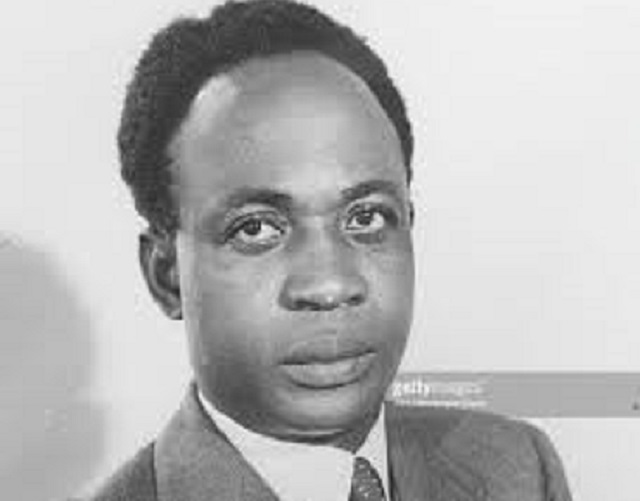
Micheal Mhlanga
One thing that Zimbabwe has confronted in its post 2017 politics is the paradigm shift from enigma politics to policy politics.
In the newly found discourse of policy politics, one thing that has re-emerged is the mischaracterisations of policy structure to capture the attention of an unsuspecting voter who wishes to experience change regardless of where it is coming from.
In this debate, one group that is increasingly becoming problematic, is the working class, it has shaped a rare breed of political competition.
Is the working class genuine?
The working class in Zimbabwe is increasingly turning into a threat to the fibre of Zimbabwe’s democracy. Through its aspirations and struggles, it is increasingly reducing the prospects of non-middleclass citizens, to make independent judgments when calculating the variables of democracy and development.
Zimbabwe in its diversity, the ascendancy of the middle class has complicated the chances of attaining a complete democracy that is founded on meeting genuine categorical imperatives.
So far in our discussion of politics and democracy, we have been focusing on different versions of working class struggles; we have neglected the possibility of having a significant other direction that does not subscribe to working class aspirations.
The structure for these civil exclusions is similar in Africa, in Zimbabwe they have been re-emerging along the same framework. Alleged “civilised” citizens who are predominantly in urban areas, are swift to declare, nationalistically, that the “masses” (rural dwellers) emanate to delay and derail the path to democracy and development.
The difference in resource ownership, beliefs and definitions to freedom has complicated the notion even beyond the lens of political economy.
Nevertheless, when evaluating this debate in decolonial lens, it is worth going beyond this simplistic mantra.
While it is a fact that the working class is the vanguard of the post-colonial state in Zimbabwe, little intellectual effort has been presented to investigate the correctness or the incorrectness of this phenomenon. It has been abstractly neglected that although the working class is in control of mainstream national discourse, does it reflect the acute wholesome exigencies of Zimbabwe’s diverse constituencies.
Does your “town” opinion matter?
I mean constituencies in class terms not in factors like age, sex and ethnicity which seem to be at the power point of the working class’s fake national carpet.
One question that re-emerges in this debate is the inquiry; is there is an absolute homogenous template of national development, one that cuts across all the national fragmentations.
Another question that should appear is, are we really fighting a national battle against economic recovery, or Zimbabwe is fighting for the working class economic re-establishment?
Does everyone in Zimbabwe really aspire to be caught in the working class intricacies or the working class has just monopolised discretion and captured the means knowledge distribution for national consumption?
One factor that remains is slowly being positioned in the working class corner, where even democratic participation can only be valid if it resonates around working class interests, aspirations of being “Western like’ in terms of governance, an aspiration that is only functional in working class civilisations.
The working class in its ill conceived ascendancy of power has failed to account for the existence of other social classes’ aspirations, continuously this has created a fragmented approach to national interests and national aspirations.
While it is just for the working class to advance its unique aspirations, failure to account for the existence of other social classes has frequently amounted in conflict.
In crucial times like elections, the working class being at the centre of discourse formulation, has frequently misled itself into believing that its national aspirations are absolute, as such it has criminalised other aspirations from non-working class groups into echoes of backwardness and has often labelled it savagery to the fibre of Zimbabwe’s democracy.
The working class in its arrogance usually calculates political variables from an urbanite perspective, scheduling political innuendos prevalent in urban spaces as being the absolute direction to be adopted by the nation.
Although the working class has monopolised the definition of national virtue, it does not mean it has erased the existence of other categorical national expectations. In 2018, this is a crucial year for Zimbabwe, a year that will give the diverse Zimbabweans a chance to express their opinion in the ballot.
It is worth forecasting the quality of decision making by evaluating the manner in which the candidate appreciates the question of class distinction in Zimbabwe.
Ignored dichotomies by manifestoes
The structure of any manifesto by now should reflect if the candidate is aware of class conflict in Zimbabwe, and that same manifesto should be used as a determinant of reflecting if the candidate is willing to be inclusive in capturing the aspirations of Zimbabwe, or if that candidate is just following the patterns of hegemonic working class tendencies.
The bulk of Zimbabwe’s class conflict is shared between two; the working class and the “others”. The dualisation of this bulk is not a result of Zimbabwe being fragmented into two, but rather the hegemonic conceptions of the working class that only sees itself but fails to listen to anything outside the working class bracket.
To understand the debate on class in Zimbabwe, it should be understood that one factor that weighs heavily in this debate is the distinction between those who reside in urban areas and those that reside in rural areas.
While the working class occupies the urban space, its sole conviction is to earn a living through wages and salaries, sustain itself through structural means that guarantee social security. It calculates the debate of national development along modernist stances that usually strives to transform the global south into being another global north. All this in the name of democracy and development.
On the contrary the majority of Zimbabwe resides in the rural areas, this group is usually referred to as the POVO. Its aspirations are entirely different from those of the working class. It calculates national virtue along the patterns of national stability, peace and most importantly state ownership.
Voting starts and ends with POVO
In a tête-à-tête with Tedious Ncube, a political sage, he presented that this group; unlike the working class, does not respond to modernist popular rhetoric such as bullet trains, it responds to feasible polices like Command Agriculture that eclipse the gap between macro-economic management and the common man.
Therefore, in most of Zimbabwe’s polls, the masses have always freely expressed their aspirations by voting Zanu-PF so as to defend their hard earned state independence.
Nhlansi’s (Tedious’ totem) reflects the long term implications of working class hegemony over national opinion; he replicates that usually the working class goes to elections with the sole intention to punish the Government which it accuses of being the breadbasket of its problems.
Unfortunately, i-Party Yabantu being a party that identifies with majority aspirations including part of the working class is usually immune from the hegemonic pitfalls of the working class. Kwame Nkrumah advises in his book Class Struggles in Africa when he retorts that “The rural proletariat are workers in the Marxist sense of the word.
They are part of the working class and the most revolutionary of the African rural strata”.
Since the masses will obviously vote in defence of revolutionary benefits and its democratic approach to national development, Nhlansi and I concluded with an interesting remark that development itself, no matter how critical it is, it ranks below the value of democracy.
Therefore the realisation of democracy should come first before development. As such the “Povo” being the majority should determine the speed of national development, although some may accuse it of being backward, we maintain that backwardness is a synonym for disempowerment, therefore part of empowering the masses is availing them the opportunity to reflect the urgency of their situation in the ballot, by choosing a candidate who represents their aspirations.
Till next week.
Yikho Khona lokhu!



 Online Reporter