Online Reporter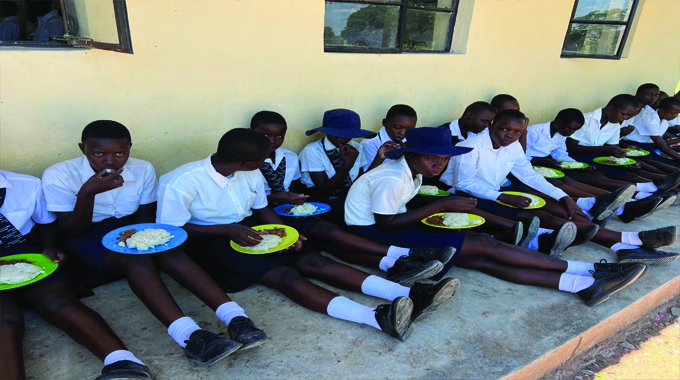
Sukulwenkosi Dube-Matutu, Matabeleland South Bureau
HAVING to walk 17 kilometres to school is no easy task for Ntalale Secondary School Form One learner in Gwanda District, Langelihle Moyo.
Such a taxing experience has had a negative influence on her perception of the learning process and its effects on her life.
To provide a lifeline to learners like Langelihle, the Government last year introduced the school feeding programme which has brought huge relief to learners at a crucial time when many households were affected by the El Nino-induced drought.
The impact of this intervention has seen improved school attendance by learners as some learners were now missing out on school to escape the burden of having to walk long distances on an empty stomach. Providing one hot meal daily to school children, the programme has not only alleviated hunger but significantly improved educational outcomes.
Having a meal served at school has proven crucial especially now that learners are writing their end-of-term examinations.

Langelihle said walking a long distance to school and spending the day on an empty stomach makes it difficult to concentrate in class. “I have to leave home at 5am and arrive at school around half 7.30am. This distance on its own is taxing and it becomes worse if I haven’t eaten. It makes it difficult for me to attend school and learning becomes a burden. But with the food that we are getting here at school, we can get the energy we need to get through the day especially now that we are writing our end-of-term examinations. We have to eat so that we can concentrate. We also have to stay longer in school so that we can study. This term we were also doing sports and having a meal at school has been helpful,” she said.
Mbekezeli Sibanda who is a Form Four pupil at the school said having a meal at school also helps those who stay close by to remain behind for their studies.
Ntalale Secondary School Form Four pupil, Ruth Mpofu who is also Ward 11, Gwanda District junior councillor said the school feeding programme has brought the much-needed empowerment to learners. She said rural learners are at a disadvantage compared to their urban counterparts due to the long distances walked to school and limited resources.
“When looking at rural learners and urban learners, there is a huge difference as rural learners are disadvantaged. Rural learners have to walk long distances to reach school and the schools are poorly resourced. There is limited infrastructure, stationery, limited learning space, a shortage of teachers, shortage of facilities and equipment such as computers and laboratories which make the learning process difficult.
“The school feeding programme is covering a significant gap in creating a conducive learning environment for the rural learners. We hope this programme will continue because even if we realise a good harvest this year, there will be some children who will be in serious need,” she said.
Ntalale Secondary School Development Committee chairperson, Ms Agnes Mathe said the school has recorded significant improvement in attendance following the introduction of the school feeding programme. She said learners are now attending school and their nutrition condition has improved. Ms Mathe said before the programme, the attendance had at some point dropped to below 70 percent but now it is above 90 percent.

A parent with a child at Ntalale Secondary School, Ms Vanessa Moyo said the school feeding programme had come at the right time when guardians are still experiencing the effects of the El Niño induced drought.
She said it had become difficult to instruct children to go to school on an empty stomach. “We will be having the desire to send our children to school but sometimes we feel we will be burdening them if we send them to school on an empty stomach and without pocket money.
“This has a net effect of putting the girl child under pressure to look for men to support her needs. To protect our children, we had resorted to keeping them at home.
“With the school feeding programme, we now have the push to send them to school and we are confident that they will perform better,” she said.
Social scientist Reverend Muiti Sibanda said access to adequate resources and welfare support can have a positive impact on learners at school, influencing their psychological well-being and academic success in several key ways.
He said hunger and poverty can have psychological effects on learners at school. Hunger can distract a learner’s attention, memory, and problem-solving skills. He said hungry learners may struggle to concentrate, process information and retain what they learn leading to poorer academic performance.

“When students have access to sufficient resources, such as nutritious food, stable housing, and necessary school supplies, they are better able to focus on their studies. This reduces distractions and allows them to engage more fully in the learning process.
“Adequate resources contribute to a sense of security and stability in students’ lives. This can lead to lower levels of anxiety and stress, fostering a more positive emotional state that is conducive to learning.
“Hunger and lack of resources can lead to increased levels of stress, and depression among students. The constant worry about food security and financial instability can create a sense of hopelessness and despair, negatively affecting their mood and outlook on life. Usually, students experiencing hunger and limited resources may exhibit behavioural problems, including aggression, withdrawal, or acting out in class. These behaviours can stem from frustration, irritation, or a lack of coping mechanisms to deal with their circumstances,” he said.
Reverend Sibanda said learners from low-income backgrounds usually feel socially isolated or stigmatised due to their circumstances. This leads to difficulties in forming friendships and participating in group activities, further exacerbating feelings of loneliness and low self-esteem.
He said programmes like school feeding can help cover some of these gaps.

Primary and Secondary Education Ministry spokesperson Mr Taungana Ndoro said the impact of the school feeding programme had been significant and the ministry was continually monitoring and evaluating the programme to ensure its effectiveness and to make necessary adjustments.
“The ministry has conducted assessments to evaluate the impact of the school feeding programme. The results have been encouraging, showing a significant correlation between the provision of meals and improved school attendance, especially in rural areas. Students who receive regular meals are more focused and engaged in their studies, leading to better academic performance and overall well-being,” he said.
The programme has been the entry point to contribute to improved education, food and nutrition security. Informed by the Zimbabwe Livelihoods Assessment Committee (ZimLAC)’s 2024 report, which revealed the urgent need for food aid and nutrition support, the Government’s feeding programme has proven to be transformative.
Under the programme, Government has been providing grain while parents have been mobilising funds to buy relish. The programme has boosted attendance and nutrition for learners, some of whom had long abandoned school, resulting in authorities taking advantage to maximise the provision of education to learners. Research has shown that providing meals in schools increases children’s ability to concentrate and perform at better standards. – @DubeMatutu.