


 malvernmugadzikwa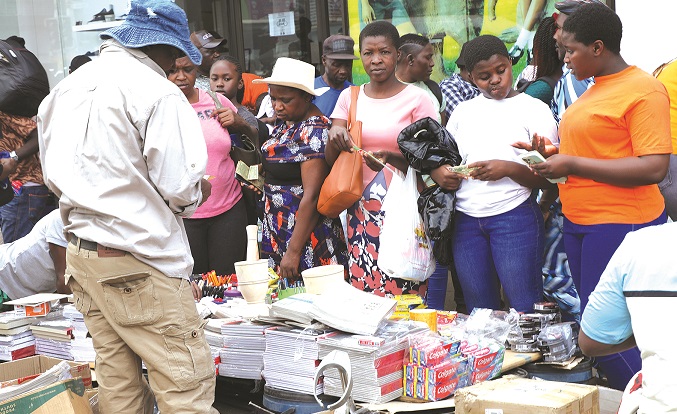
Sunday Mail Reporters
SCHOOLS have been directed to maintain strict hygiene and health protocols when they open this week as part of mpox preventive measures.
The third term begins on Tuesday.
The Government has also reiterated that schools should not compel parents to pay fees or levies exclusively in foreign currency, as Zimbabwe operates under a multi-currency regime.
Parents, therefore, have the discretion to pay in the currency of their choice.

As the Government ups mpox surveillance measures, schools have been directed to use some of the guidelines implemented at the peak of the Covid-19 pandemic.
Various awareness campaigns will also be conducted in schools to educate learners and teachers on mpox. To date, no case of mpox has been confirmed locally, but the authorities continue to monitor the situation for any suspected cases of the viral disease.
Ministry of Primary and Secondary Education director of communications and advocacy Mr Taungana Ndoro said the Government is committed to creating a safe learning environment as schools open for the third term.
“In light of health concerns, we are implementing awareness campaigns, in collaboration with health authorities. Schools will receive guidelines on preventive measures to ensure the safety of pupils and staff,” he said.
“Covid-19 taught us how to implement SOPs (standard operating procedures) in the advent of communicable diseases; therefore, we stand ready to implement our SOPs, which we did not abandon entirely.
“These are the same SOPs we used for Covid-19 precautionary and preventive measures.”
SOPs require each classroom to have a functional hand-washing facility with running water and soap, while ablution facilities need to be cleaned and disinfected thrice a day.
Learners will be sanitised at points of entry and exit while distance will also be prioritised in classrooms.
School feeding programme
This term, primary schoolchildren, predominantly in rural areas and a few in urban areas, will be provided with one meal per day during learning hours under the Government’s school feeding programme.
The scheme is aimed at cushioning learners from the effects of the El Niño-induced drought, while promoting high nutrition levels.
Mr Ndoro said 27 000 tonnes of maize meal had been distributed to schools across the country.
“The school feeding programme is set to benefit approximately our under-resourced rural and remote primary schools, with 27 000 tonnes of maize already dispatched for this term, ensuring that they receive nutritious meals to support their growth and learning,” Mr Ndoro said.
“The meals provided will be balanced and nutritious, typically including staples such as maize porridge, beans and vegetables, along with fruits, where possible. This aims to promote healthy eating habits and improve overall pupil well-being.”
Also, preparations for the 2024 national examinations are at an advanced stage, and the Government anticipates better pass rates after teachers underwent training to equip them for the upcoming term.
The training included professional development workshops that focused on effective teaching strategies and classroom management.
“We expect that our pupils will pass their upcoming November examinations with flying colours, and it is our clarion call as a ministry that pupils must not rush to answer questions, without taking time to read and understand what the question requires of them. That way, we will surpass our previous pass rates by huge margins.”
Payments in ZiG
Mr Ndoro urged schools to desist from compelling parents to pay fees in foreign currency.
“The ministry would like to reiterate an important policy regarding the payment of school fees. In accordance with the Secretary’s Circular No. 10 of 2022, the Government’s position is that school fees should be paid in the local currency, now referred to as ZIG,” he said.
“It is crucial to note that schools should not compel parents to pay fees or levies exclusively in foreign currency, as Zimbabwe operates under a multi-currency regime. Parents have the freedom to pay in a currency of their choice. In cases where fees are pegged in foreign currency for the purpose of value preservation, parents can make their payments in the local currency at the prevailing interbank rate on the day of the transaction.”
Although parents and guardians have an obligation to pay the approved school fees and levies required by schools to cover operating costs and overheads, Mr Ndoro added, learners should not be barred from classes.
“No child should be sent away from school due to non-payment of fees and levies. The responsibility for payment of approved fees and levies remains with the parents or guardians and the school, as outlined in the contractual agreement.”
Zimbabwe Teachers Association secretary-general Mr Godwills Taderera called on the Government to assist schools with detergents, which will be used for sanitation as part of the mpox prevention measures.
National Association of School Heads president Arthur Maphosa said the feeding programme should not leave out secondary schools in affected areas.
“We call upon all stakeholders to come in and move with the Government so that feeding will be very visible in secondary schools too more than before. In primary schools, the feeding programme has been going on well.”
Last week, there was a hive of activity in towns and cities across the country as parents and guardians were paying fees, buying uniforms and other relevant materials ahead of the opening of schools.


 Bongani Ndlovu
 Online Reporter