Online Reporter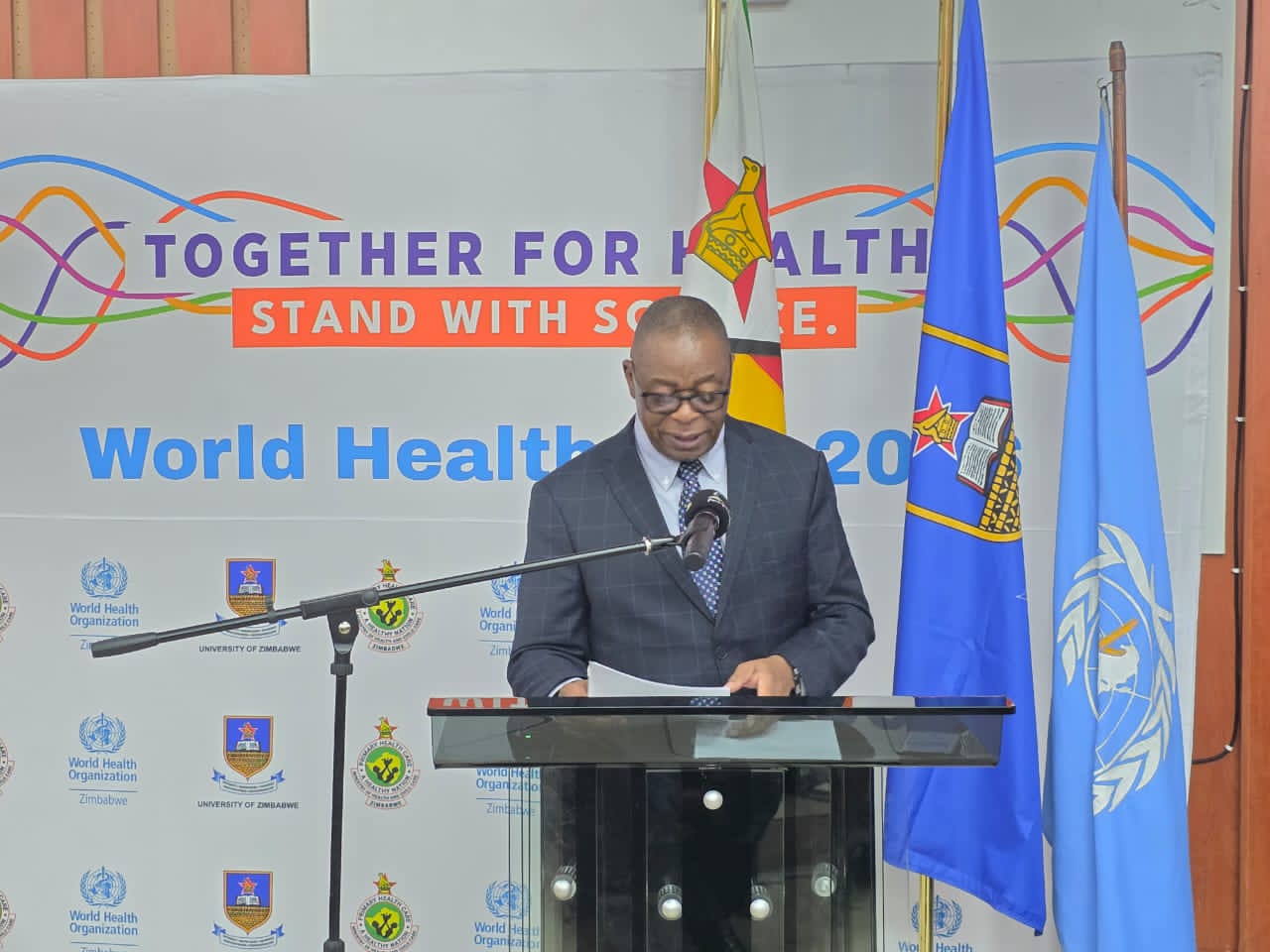
Robin Muchetu, [email protected]
Scientific collaboration across countries, institutions and disciplines has been identified as essential in building a healthier and safer future for all, and single governments cannot do it alone.
This came out during the commemoration of World Health Day this Friday afternoon. World Health Day is observed globally on 7 April each year to mark the founding of the World Health Organization in 1948.
The Minister of Health and Child Care Dr Douglas Mombeshora said this important day provides an opportunity for the global community to reflect on pressing health challenges and renew collective commitment to improving the health and well-being of all people.
“This year’s theme, “Together for health. Stand with science,” reminds us that science, evidence and collaboration are the foundations of strong and resilient health systems. It calls upon governments, scientists, health professionals, and communities to work together to support science-driven solutions that protect and improve health,” he said.
He noted that throughout history, science has transformed the landscape of public health.
“Vaccines have eliminated deadly diseases, modern diagnostics have enabled early detection and innovative treatments have saved millions of lives. Scientific research has guided our responses to outbreaks, improved maternal and child health, and strengthened health systems worldwide,” he said.
Dr Mombeshora said science thrives where collaboration exists saying that Governments, researchers, health workers, and communities must work hand in hand to transform knowledge into action.
“By standing with science, we ensure that our health systems remain resilient, our policies remain informed, and our people remain protected,” he added.
Dr Mombeshora said this year’s theme “Together for health. Stand with science” highlights an important truth, that science alone is not enough.
“For scientific knowledge to make a difference, it must be embraced by governments, trusted by communities, and translated into policies and actions that improve people’s lives. Scientific collaboration across countries, institutions, and disciplines is therefore essential in building a healthier and safer future for all,” he said.
He said Zimbabwe has made significant strides in improving health outcomes through science-based interventions.
“Our immunisation programs, disease surveillance systems, laboratory networks and health research initiatives continue to play a vital role in protecting the health of our citizens. Today, we also recognise the importance of the One Health approach, which acknowledges the deep connection between human health, animal health, and the health of our environment,” he said.
“Many of the health threats we face today-such as emerging infectious diseases, antimicrobial resistance and climate-related health risks, require coordinated scientific action across multiple sectors.”
He also underscored the burden of communicable and non-communicable diseases, emerging health threats, and inequalities in access to healthcare which require sustained effort, innovation, and partnership.
He however said as a country and Ministry, they reaffirm their commitment to strengthening health research and innovation to address national health priorities, promoting evidence-based policies and decision-making across the health sector and building strong partnerships with academic institutions, development partners, and communities.
Furthermore, he said the country recommits to investing in the health workforce, whose dedication and expertise translates scientific knowledge into lifesaving care.
He encouraged public trust in science by ensuring transparency, communication, and community engagement, also calling for the renewal of a shared responsibility to support research, innovation, and evidence-based health interventions.
@NyembeziMu



 Bongani Ndlovu