admin
admin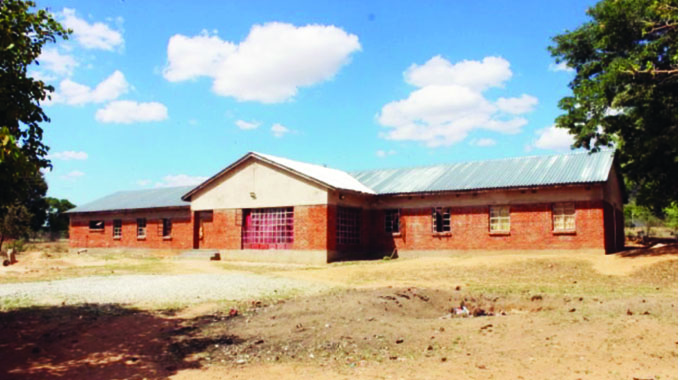
Ranson Madzamba Correspondent
A number of Vocational Training Centres (VTCs) are in dire need of better infrastructure.
It is upon this background that the Government is tirelessly working to transform these life skills training institutions.
VTCs are indeed proving to be essential institutions that can help in the development of communities, not mentioning how they are transforming lives of many youths.
In his State of the Nation Address at the official opening of the First Session of the 10th Parliament of Zimbabwe recently, President Mnangagwa revealed how vital VTCs are to the development of communities, as well as youth empowerment and development.
“Government is developing a National Youth Bill, which will be considered during this session,” he said.
“The Bill will provide for mechanisms to facilitate mainstreaming of the youth in social, economic and political spaces as well as the sustenance of VTCs as hubs for local community development.
“I challenge the private sector to play a part in support of our ongoing initiatives for youth development and empowerment.”
The Second Republic is capacitating a number of VTCs so they contribute to the impactful development of communities around them.
A number of infrastructure development programmes are taking place at various VTCs and this includes the construction of students’ hostels at Marange and Nyahoni VTCs.
Government’s move to quickly finalise the construction of students’ hostels at Marange and Nyahoni VTCs will definitely boost enrolment at the institutions next year.
VTCs are thus empowering the youths in various capacities. They are indeed a solution to youth unemployment. The centres are also a solution to early childhood marriages as well as drug and substance abuse among the youths.
Speaking at Chaminuka VTC graduation ceremony recently, the Minister of Youth Empowerment, Development and Vocational Training Tino Machakaire explored how life skills training can be a big solution to drug and substance abuse among the youths as well as early childhood marriages.
“Vocational Training and Skills Development is key in the fight against drug and substance abuse,” he said. “VTCs provide affordable, technical, vocational education training and Community Skills Outreach Programmes (CSOP) while also providing guidance and counselling services to ensure that the youth are engaged in beneficial economic activities and refrain from destructive behaviours such as drug and substance abuse.
“The gradual increase in the number of female students who are participating in the skills training initiatives being undertaken by my Ministry is encouraging. Over the years, early childhood marriages have affected the girl child. This sad development call for a robust and deliberate approach to ensure that the girl child is empowered. Imparting the girl child with skills can make them self-reliant and reduce economic dependency and cycles of poverty which have been identified as some of the driving factors for child marriages.”
Speaking at the same occasion, Deputy Minister of Youth Empowerment, Development and Vocational Training and Mt Darwin Member of Parliament Kudakwashe Mupamhanga urged girls to prioritise empowering themselves rather than rushing to get married.
“Let us shun all forms of early childhood marriages,” he said.
“This is the time to support our girl child. These VTCs belong to them and let them come and acquire life skills training. Marriage must catch up with them when they are grown-ups and self-reliant,” he said.
Zimbabwe has 68 VTCs with 15 of them being satellite.
Government intends to have a vocational training centre in every district.
Selection of courses to offer at VTCs is mostly informed by the existing resource endowments within their locality.
Courses on offer at VTCs include, brick and block laying, clothing and textile, cosmetology, metal fabrication, tourism and hospitality, business studies, carpentry and joinery, agriculture, electrical engineering and motor vehicle mechanics.
Training at VTCs is needs driven and lasts from six months for competency certificate level and up to three years for diploma level.
Who can enrol VTC?
Anyone with passion and interest for a certain course is actually given the opportunity to enrol at any VTC.
Some courses offered are affiliated to the HEXCO examinations board hence they require one to have 5 ‘O’ levels inclusive of mathematics, English and science.
Ranson Madzamba is the Communication and Advocacy Deputy Director for the Ministry of Youth Empowerment, Development and Vocational Training


 Online Reporter