Chronicle Editor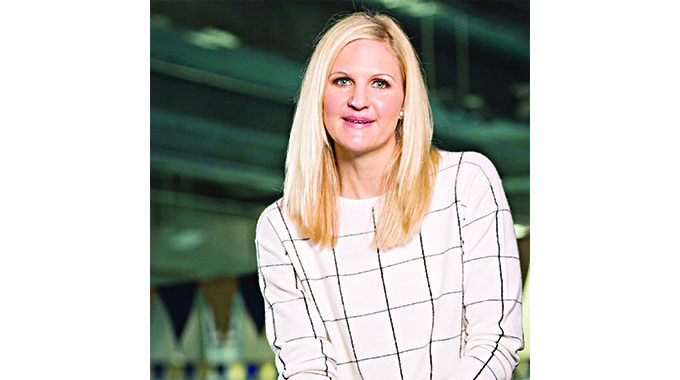
Ricky Zililo
LAST week, Zimbabwe marked 43 years of independence and one of the country’s proud moments is the emergence of women as sporting greats and excellent sport administrators.
Kudos to the Second Republic led by President Mnangagwa who has been pushing for the empowerment of women at all levels.
The developing sports industry has seen more women taking leading roles in the growing billion dollar sports industry.
In the past, a few women participated in decision-making especially in the sports industry that was dominated by men.
However, President Mnangagwa’s Government has taken a leading role in creating equal opportunities, with more women assuming positions of authority not because they are women, but because they deserve the responsibilities and have the leadership qualities.
The country’s 43rd independence celebrations came just as the local sports industry got a major shake when the supreme sports body, the Sports and Recreation Commission (SRC) announced the appointment of Elleta Nengomasha as the director-general.
Before her appointment, Nengomasha was SRC’s director of business development, marketing and corporate communications. The substantive appointment came three years after SRC suspended Prince Mupazviriho.
Nengomasha’s ascendancy is worth celebrating, not only because a woman has been given the responsibility to drive the supreme sports body, but also because it is in line with the Government’s commitment to creating equal opportunities.
About being the first female DG, Nengomasha said: “This is a key milestone in terms of the Sports and Recreation Commission having a female Director General. It cements the strides taken by the industry in recognising and acknowledging the capabilities of women in sport.”
Some of the women who have been in key leadership roles in sports under the Second Republic include the Youth, Sport, Arts and Recreation Minister Kirsty Coventry.
Arguably the most decorated Olympian from Africa, the multi-Olympics gold medallist, Minister Coventry has been member of Cabinet since 2018, championing the improvement of sport in the country.
Even in her Ministry, Minister Coventry has women support staff of valour who include the Director of Sport and Recreation in the Youth, Sport, Arts and Recreation Ministry, Eugenia Chidhakwa.
These women driving the local sports industry inspire a number of females.
Zimbabwe National Boxing and Wrestling Board (ZNBWCB) Matabeleland South Provincial co-ordinator Maculwamahle Nkomo is inspired by the gains of independence that have afforded more women an opportunity to be involved in sport.
“A lot has changed since independence but it’s only now that we’re seeing more women being involved in key decision areas in sport. Even the ZNBWCB is led by a woman, Vee Chibanda. These are some of the gains of independence we celebrate.
“Looking at combat sports, we’re also seeing the dominance of women and an increase in females competing. The trend is even visible in schools and parents are receptive that a girl child can take part in combat sport.
“So, as we celebrate independence, we also celebrate the ascendancy of women in sport,” Nkomo said.
Many people particularly in developing countries and Zimbabwe to be specific did not view ladies as a fountain of ability in various sporting disciplines. Generally, as men continued to dream of playing in major tournaments and platforms, Zimbabwean women were quick to achieve those dreams and set examples that the country’s flag can be lifted even on global stages.
With the patriarchal nature dominating society in most facets of life, sport was not to be spared. The continued dominance of males in various sectors of society saw amplified calls for the emancipation of women and the promotion of gender equality.
So amplified were these calls that they became a priority among key global goals that included the Millennium Development Goals (MDGs) and subsequently the Sustainable Development Goals. At the turn of the millennium, the United Nations set women’s emancipation and promotion of gender equality as the third goal among the 15 MDGs. Zimbabwe committed herself to three of the goals. Goal 1, which was to ensure the country eradicates extreme poverty and hunger while goal 3 and goal 6 sought to combat HIV/Aids, malaria, and other diseases.
While significant strides were made in ensuring this was achieved, the promotion of gender equality and women’s emancipation has proven to be one of the country’s biggest achievements.
Women in sport in Zimbabwe had been looked down upon due to the gender stereotype that men performed better than women. However, the nation’s thrust to empower women and particularly those in sport drove a long overdue reality that women, whether as individuals or in teams can perform better than men.
The pace was set by the women’s hockey team in 1982 when they won gold at the Olympics. For the country, it was the only team to win a gold medal since independence. This was followed by Cara Black who won several tennis awards as an individual and with her doubles partner.
In football, the Zimbabwe women’s football national team is the only team to qualify for the Olympics with more Africa Cup of Nations (Afcon) appearances than the men’s team and five gold medals at the Zone Six Tournament.
These achievements by women have not only been confined between boundary lines in the various fields of play but as Zimbabwean women, they have also taken up management positions, opening up opportunities for other women to take part in sport. — @ZililoR


 Online Reporter