Online Reporter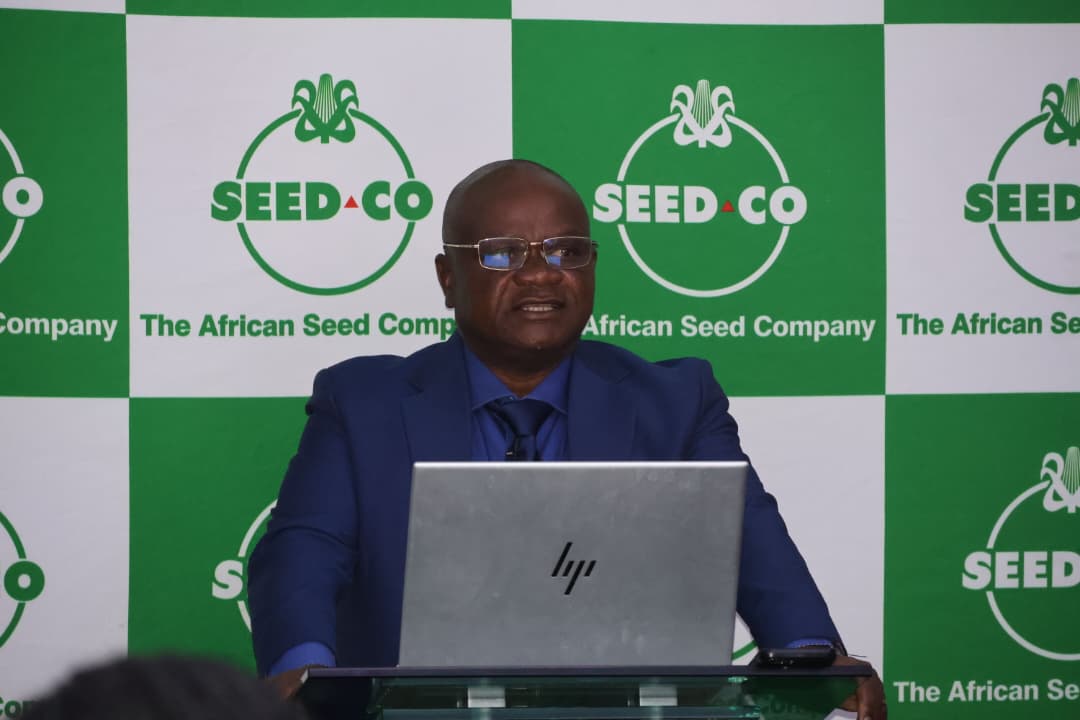
Theseus Mauruki Shambare
ZIMBABWE’S drive to reduce dependence on imported wheat is set for a boost following the introduction of new wheat varieties by Seed Co, with the company targeting improved productivity, climate resilience and increased local production.
The announcements were made during the Seed Co Limited and Seed Co International analyst briefing for the year ended 31 March 2026, held on Tuesday in Harare at the Standards Association of Zimbabwe (SAZ), where the company outlined new product developments and performance highlights.
This comes at a time Government is intensifying efforts to wean itself from import dependence through increased domestic production of strategic crops, with wheat remaining critical in strengthening food security.
Seed Co International chief executive officer Mr Morgan Nzwere said the company had launched a new white wheat variety in Zimbabwe aimed at responding to changing requirements from the baking industry while improving the competitiveness of local wheat production.
“We also launched a new wheat variety in Zimbabwe which is whiter than traditional wheat that we have been producing, to address specific requirements that are coming from the bakers, as they try to reduce the blending to make more and more whiter wheat,” said Mr Nzwere.
He said the new release was part of the company’s broader research and development programme aimed at continuously replacing older varieties with improved seed technologies.
“Our business is very much based on maize, white and yellow, wheat, soybeans, sorghum and rice. Our germplasm portfolio is over 85 years old. Every year, we always have new materials that we are releasing, replacing the materials that are getting older to give farmers advantage in terms of yield,” he said.
Mr Nzwere said Seed Co’s research focus was increasingly being shaped by climate change and emerging production challenges affecting farmers.
“The focus areas in our search are mainly cob rot, fall armyworm, maize streak and other challenges that affect production,” he said.
The company said climate resilience had become a major priority as farmers continue facing changing weather patterns.
Mr Nzwere said Seed Co was investing in irrigation and production infrastructure to reduce reliance on rainfall.
“We have been working on irrigation facilities, making sure that all our producers have got irrigation facilities and trying to reduce the dependence on rain-fed production. The production that we are now doing, 70 percent of that is under irrigation,” he said.
The company is also strengthening its supply chain systems to ensure improved access to seed by farmers.
Mr Nzwere said investments in processing technology, including colour sorters at its Zimbabwe facility, had helped improve efficiency and speed up seed availability.
“We recently commissioned colour sorters here in Zimbabwe to reduce the amount that is paid on hand-picking. Where we used to employ about 200 women who used to come in to help picking on a daily basis, this activity has almost entirely been changed to a mechanical process,” he said.
He said the technology was helping the company process seed faster and deliver products to the market on time.
The Seed Co developments come as Zimbabwe continues to promote climate-smart wheat production through improved varieties such as Save, developed under the Crop Breeding Institute’s Technologies for African Agricultural Transformation (TAAT) Wheat Project.
Wheat breeder Mr Jairos Masawi said Save was designed to withstand heat, drought and other climate-related challenges.
“It is white-seeded, early maturing and rust tolerant, with an average yield potential of 6,4 tonnes per hectare,” said Mr Masawi.
“It flowers in 84 days and reaches maturity in about 134 days. Beyond yield, it is premium quality, with high flour extraction, rich grain protein and gluten content.”
He said the variety could also be grown under rain-fed conditions, giving farmers flexibility amid erratic rainfall.
Seed Co Group finance officer Mr Tinei Chatiza said the company’s performance continued to be supported by demand for improved seed varieties across the region.
He said the group recorded revenue growth to US$161,3 million, with improved margins driven by pricing and product mix.
“From a gross profit margin perspective, 53 percent is an improvement compared to 50 percent prior year. We did not see significant movement in volume, but it was the mix as well as pricing that contributed to the growth,” said Mr Chatiza.
Community Action and Development Solutions (CADS) director Ms Lillian Machivenyika said sustainable agriculture remained important in building long-term food security.
“Sustainable agriculture is not just about growing more crops; it is about ensuring that communities can feed themselves year after year,” she said.
The rollout of improved wheat varieties is expected to complement Government efforts to increase local wheat production through irrigation expansion, climate-smart agriculture and improved access to quality seed.