Online Reporter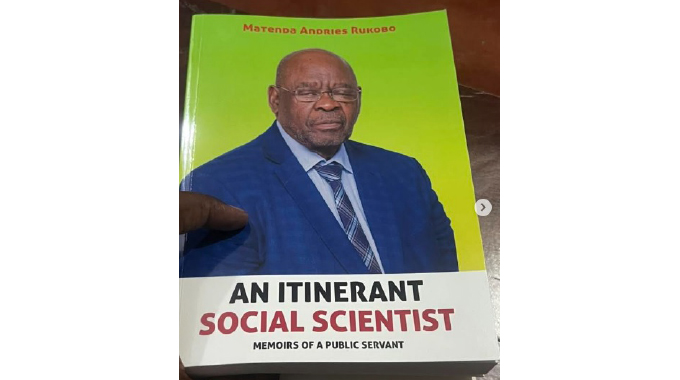
Richard Runyararo Mahomva
Nationalists and National Memory
With Morris Nyagumbo (1980) and Joshua Nkomo (1984) setting the stage for the autobiography genre in post-independent Zimbabwe, motives to self-writing have elicited generous academic curiosity.
Javangwe (2015;2016) and Sabao (2022) have interrogated why nationalists or those belonging to the nationalist generation have keenly engaged in self-writing.
However, with more autobiographies which were published after the first decade of independence, it is increasingly evident that self-writing is a preserve of political elites in Zimbabwe.
In the aftermath of the land reform which is neo-liberally framed as the “crisis period”, the Zimbabwean autobiography space continued to depict a relative sample of political elite domination with works from Edgar Tekere (2007), Wilfred Mhanda (2011) among other self-political narrators of the country’s story.
In the post-GNU period and the subsequent birth of the Second Republic Cephas Msipa (2015), Tshinga Dube (2019), Obert Moses Mpofu (2021) and Happyton Bonyongwe (2024) made their contribution in this area.
To the pleasure of anti-nationalist forces, the public domain is awash with pro-West biographing of Zimbabwe’s former president Robert Gabriel Mugabe.
Consequently, this justifies the concern by Vice President Dr General (Rtd) Chiwenga about our ethical bankruptcy and commitment for heritage preservation even at the family level.
Chiwenga (2022) argues that the “…failure to reconnect to the ideological foundation of our existence through memorialisation will wipe away the keenness to safeguard our liberation values”.
This scholarly insight from a key player in Zimbabwean politics (who owes the nation an autobiography) depicts the intricate nexus between self-recollection and nation-building. The failure to “write or to find the nation in writing” is a travesty to the efforts by the Government to benchmark and safeguard our national heritage. With this predicament also comes the need for the national story to be also told by ordinary men and women of our great country — Zimbabwe.
Ordinary people making extra-ordinary history
“An Itinerant Social Scientist: Memoirs of a Public Servant” by Dr Matenda Andries Rukobo is a refreshing alternative to counter elite domination in Zimbabwe’s self-writing terrain. To prove this point, Rukobo writes, “My life has not been high profile; it is not different from that of the majority of the people. In fact, I have lived an anonymous and fairly pedestrian life. I have no accolades or awards to my name.
I am a very ordinary person, part of the broader section of society” (p 11). While this modest disclaimer is crucial to readers of Rukobo’s close to four decades of bona fide service to the Government of Zimbabwe, it is noteworthy that even those who consider themselves as politically small members of society having a big mandate in the making of our national history.
To buttress this point, Rukobo posits, “After all, it is the sum total of individual experiences and events that make up memories that constitute history” (p 13). This validates what Garlake and Proctor (1992) conceptualise as People Making History.
In other words the political and economic activities of a nation are a product of its people’s efforts. Consequently, the people have an obligation to compellingly tell stories about their nation. Rukobo’s latest offering effectively performs this creative and philosophical duty of all who call Zimbabwe home.
The itinerant footpath
Like a majority of indigenous Zimbabweans in colonial Rhodesian, Rukobo’s life journey starts in Gurachena Village, Zimuto Masvingo Province.
Thereafter, his pursuit for self-liberation from colonial disenfranchisement sends him to then Salisbury -now Harare, Calcuta, New Delhi. His sojourn in India, Russia, China and many African countries represent an ideological pilgrimage which shaped his service to the nation’s academia and public administration.
Russia and China’s mutual ideological adherence to socialism is sharply pronounced in Rukobo’s writing. He was part of the Zimbabwean diaspora intelligentsia who returned to serve the country after independence.
“As a first-generation public administrator in independent Zimbabwe”, Rukobo (p 466) is not preoccupied with being only associated with the good which Zimbabwe has experienced in the last 45 years of independence. Instead, he takes responsibility, “I humbly accept culpability for things that did not go well, even if most of them were beyond my remit”.
For me, the itinerant notion of Rukobo’s recollection is not ordinarily centred on his expeditions in the quest for knowledge and professional development as may narrowly be read or misread in his biography.
The pedagogic footprint of his Indian experience is noted through his exceptional governance service record in the then Ministry of Information Postal and Telecommunication Services, later in the Public Service Commission (PSC) and the Parliament of Zimbabwe.
His distinct role in the establishment of the first post-independence policy research organ — the then Zimbabwe Institute of Development Studies (ZIDS) also demonstrated the inherent social science rigour which his career borrows from India. This is because India has produced highly reputable political scientists and economists.
His analysis of power relations particularly the asymmetrical chasm between the Global North and Global South is uniquely attention-grabbing throughout his 475 paged memoir (reference pages included). The scholarly precision and ideological pivoting of Rukobo’s self-narration gives a pristine view of the decolonisation agenda’s successes and challenges.
Ideological contours
Owing to his ideological crystallisation in the mid-70s at the Jawaharial Nehru University — a hub of leftist pedagogy, Rukobo imbibed Global-South redemptive literature.
Themes of his self-account depict a loyal discipleship to the thinking of Walter Rodney, Amilcar Cabral, Che Guevera, Agostinto Neto, Frantz Fanon and other anti-colonial philosophers. Rukobo’s book also mirrors the thinking of respectable anti-imperialist theoreticians from the Western world particularly Andre Gunder Frank, Immanuel Wallerstein and Giovanni Arrighi to mention, but a few.
The trans-continental theoretical rooting of the book under review substantiates that imperialism is equally condemned by philosophers from the homeland of its origins.
Likewise, due to the “… pillage and plunder of natural resources in Africa, Asia and Latin America” (p 204), imperialism remains abhorred in these sections of the globe. This is initially and poignantly illustrated in Walter Rodney (1972)’s seminal work, How Europe Under-Developed Africa.
From this perspective the West’s development should be seen as a product of Africa’s under-development. The poverty in Africa should be assessed in the context of Euro-North American decapitation of African governance systems.
Just like Fanon (1961), Rukobo submits that “… anti-liberation and pro-foreign forces have metamorphised in the post-independence period to human rights and democratic tendencies as well a militant activism, championing anti-nationalist and pro-Western neo-liberal ideologies. Yet their reactionary antecedents are obvious and should not be forgotten. Their vital role in aiding and abetting neo-colonial interests, no matter how it is masked should be stripped bare”. (p 435)
To reverse or even to obliterate the foothold of neo-colonialism in Africa, Rukobo recommends:
“… a revolutionary socialist transformation in the neo-colonies is essential. This transformation involves rapid industrialisation, control of the financial sector and discernible socio-economic trajectory leading to economic independence and prosperity. Resulting from this would be a broad-based economy that would lead to a reduction in inequalities.
Critically and related, there is a need for a shift in power relations, with the preponderance of economic levers under the control of progressive social classes and not the surrogates of imperialism” (p 206-207).
This clear locus of enunciation by Rukobo makes his memoir an international political-economy handbook centred on perspectives of a Zimbabwean critical thinker. His emphasis on the need for adherence to Pan-Africanism and respect for the national liberation legacy in all designs of governance is very key.
Rukobo’s allegiance to the nationalist movement and its evolution from “NDP, ZAPU, ZANU and ZANU PF”, (p 466) is unapologetically narrated. In the process, he deconstructs the view that civil servants must abdicate membership to ZANU PF. Instead, he states that there is nothing wrong with having party cadres in Government.
However, in the course of their public duties they must not show biases to their party at the expense of non-ZANU PF members.
Such civil servants (myself included) must earnestly show our allegiance to ZANU PF without fear of being disenfranchised of the constitutional right to freedom of association at the behest of hallow neo-liberal impositions.
Shouldered by the Great
While presenting himself as an ordinary citizen, Rukobo is entangled in high-level professional associations. Without his explicit declaration, one cannot ignore that his genius was also spotted by President Mnangagwa. Rukobo narrates being invited for a job consideration at the Parliament of Zimbabwe in 2002 courtesy of the then Speaker of Parliament and ZANU PF Secretary for Administration, Cde ED Mnangagwa.
While this is something warranting self-importance, Rukobo doesn’t brag about this experience as how an average person would have done.
With all due humility, he also recalls his rare moments of meeting up with the late former President of Namibia Sam Nujoma, the founding father of modern Zambia, Dr Kenneth Kaunda, and Tanzania’s former head of state and respected pan-Africanist Mwalimu Julius Nyerere.
Among notable figures in the architecture of governance in Zimbabwe, Rukobo reminisces his interactions with Zimbabwe’s former Vice President, Dr John Landa Nkomo, the former Chief Secretary to the Cabinet, Dr Misheck Sibanda, and the current chairman of the Public Service Commission Vincent Hungwe.
Outside the context of his memoir, Rukobo is a respected bureaucrat within the party and Government circles. Dr Obert Mpofu, the current Secretary General of the party of Zimbabwe’s permanent revolution, ZANU PF, recollects his interactions with Dr Rukobo during their years of study in India.
Both of them were actively involved in the political happenings in Rhodesia.
After independence both of them, including Dr Mavis Sibanda, the current Permanent Secretary in the Ministry of Women Affairs, came back to offer their skills to the newly independent Zimbabwean state.
“An Itinerant Social Scientist: Memoirs of a Public Servant” is a welcome contribution to Zimbabwe’s growing auto/biography archive.
Apart from the author’s very articulate predisposition, his zero obsession for self-lionisation makes his ‘smooth to read’ autobiography worth reading countlessly.
For the record, I read the book two times and I would mind reading it again.
Richard Mahomva is the director, International Communication Services, in the Ministry of Information Publicity and Broadcasting Services. This instalment is inspired by his avid interest in the study of national memory, political philosophy, governance in Africa and policy studies. Contact: [email protected] <mailto:[email protected].