Online Reporter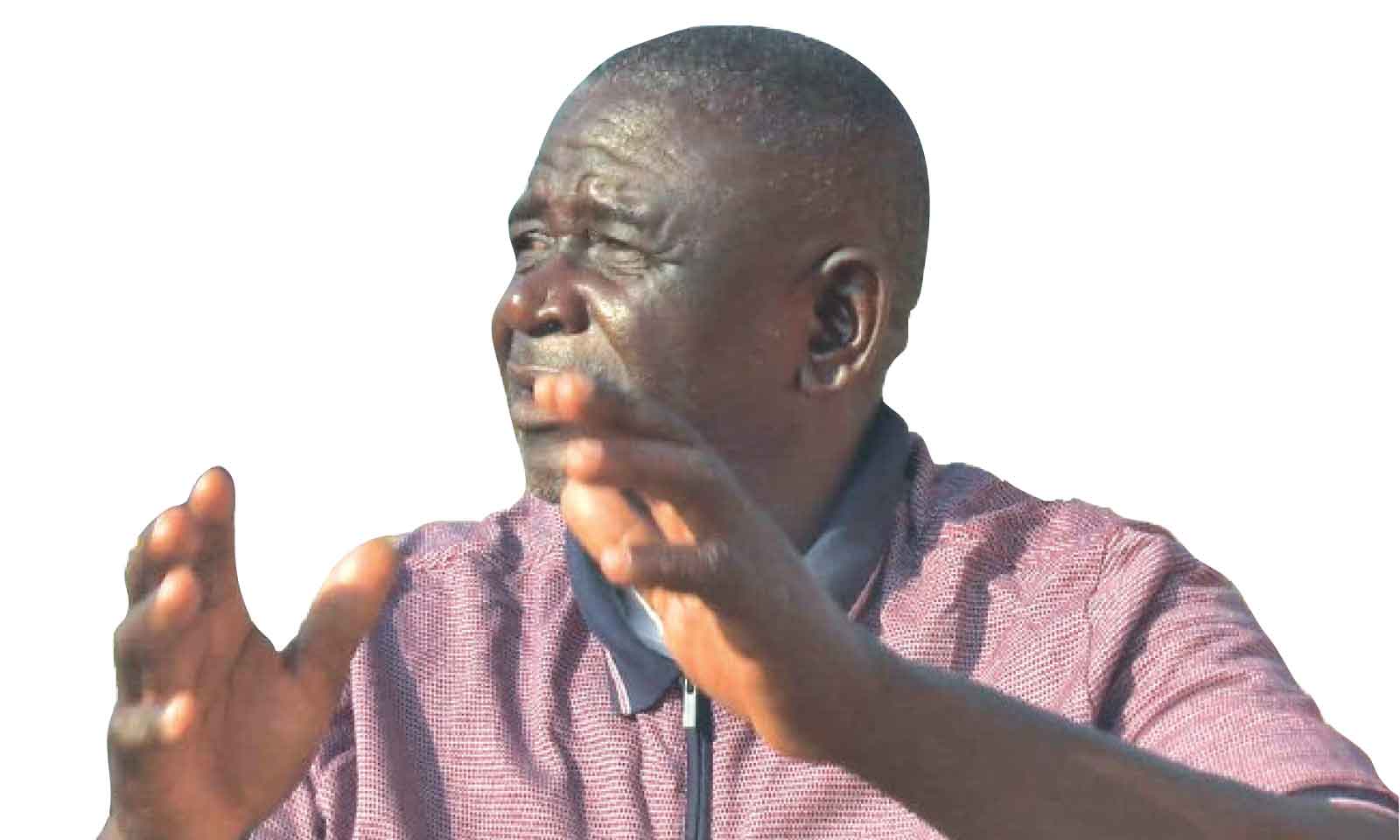
Chronicles from the 2nd Chimurenga
CDE DAVISON JOHN TAKAWIRA MUPFUNYA, whose nom de guerre was Red Number Mapondera Dzinopfuta, concludes his account by giving finer details about the Dzvova battle. He also briefly recounts to our Society Editor PRINCE MUSHAWEVATO his experiences during and after independence
***************
Q: Last week, we ended our discussion when you had arrived at Dzvova, in Hwedza, walking into what appeared to be an ambush once again. Can you carry on from there?
A: When we got to Dzvova, we bumped into a couple of villagers tilling the land and questioned them about the footmarks we had seen, which appeared to be those of Rhodesian soldiers. One of them calmly responded that they had not seen any white people in the area. Meanwhile, as we tried to gather information, little did we know that one of the enemy soldiers lay concealed in leaves not more than five metres from where we stood.
There were 28 of us who walked into the killing bag. Our commander was Jambajecha.
When the Rhodesian commander realised we were in the trap, he fired his pistol, signalling his troops to open fire. They caught us off guard, so we retreated, running for a few metres before going into a prone position and crawling.
The moment you hear a gunshot, you should know that you have survived. The next reaction for you should be going down to the ground, taking cover — which is prone and crawling. That makes it difficult for someone to aim at you. After successfully taking cover, we returned fire. The attack happened at 10am.
Q: Was it safe to stop and fight when you did not know the number of enemy fighters that surrounded you?
A: We had to stop and fight; that was the best way to avoid casualties on our part. Our firepower proved to be mighty in the end, as the white men eventually stopped firing and retreated.
After noticing they were no longer firing at us, we left our positions and vanished. We did not even search the base because this was a surprise attack. Besides, some of our colleagues had disappeared just after the attack commenced. Fortunately, no one died or was seriously injured from our group.
However, my wide-brimmed hat was lost during the battle — it was hit by a bullet in a near miss — and I also lost one of my shoes, which was tightly fastened. Up to now, I do not know what happened or how we all survived.
The enemy had all the time to aim and fire at us before we noticed them, but we still came out of the battle unscathed. After the encounter, I walked to a nearby village; I wanted to see if I could get someone to assist me with shoes since I was now walking barefoot
Q: What happened next?
A: The issue of sellouts was a problem throughout the struggle, especially those that used mobile communication radios.
They would send intel in real-time. We often cautioned them and sometimes disciplined repeated offenders.
When we got to the GP (gathering point), we became worried about one of our comrades who was part of our group but was now missing. No one knew his whereabouts. We were worried because, after the attack, there were no casualties from our group, but he was missing.
The ambush was so well-planned that the whole group was supposed to be wiped out. I think I am the only one who was slightly bruised.
After the attack, we did a post-mortem of the whole situation. We wanted to understand if the villagers had genuinely not noticed the presence of the Rhodesian soldiers or if they had been compromised by the enemy.
It troubled us because the white soldiers were in a thicket close to where the villagers were working the fields. So, some of our comrades went back to interrogate the villagers.
However, I proceeded to Gandamasungo and returned later. I was told the missing comrade returned later that night. When we came back from Gandamasungo, we set base at Mukanwa, where sadza was prepared and we had a night vigil before going to sleep.
Early in the morning, while still there, I tested an M90 that had come from Yugoslavia in the nearby mountains. The Rhodesians heard the noise and knew they had not experienced the sound of that weapon before. So, they came close or perhaps they were already waiting for us. On our way to the base, a landmine went off.
Q: Who triggered it?
A: We assumed it was one of Blackson’s traps that had hit the enemy. Meanwhile, the Rhodesian soldiers were making advances and had surrounded our base. As soon as we walked in, guns blazed. And that is where we lost one of our comrades from Nyanga.
He was shot and killed on the spot. Bullets were flying all over and so did dust. Again, I do not even know how I survived that assault. I am happy to be here, especially after the two serious battles I mentioned. I am grateful my ancestors and God protected me.
Q: Did you ever consult spirit mediums during the struggle?
A: Yes, we did; very much so, especially when we changed our operational zone. For instance, in this area, we had Sekuru Makechemu. He was the head traditionalist in the area.
We also worked with others from Betera, close to Dzvova. We used to consult them and they would guide us on how best to operate in the area.
Q: As we conclude our discussion, can you tell us how the ceasefire message was communicated to you and what was your reaction?
A: We got the message when we were in Gangarwe. The message came through Maputo Broadcast, where Cde Webster Shamu operated from.
When they came from Lancaster House in November, that is when we heard the news. In Russia, there was Joseph Mutimukhulu, who was broadcasting on the shortwave- and medium-wave radio channels.
That is where the ceasefire message was also spread. They told us that we were going to be transferred to some newly established assembly points.
However, we did not read much into the ceasefire message; we actually assumed they were planning a détente, which had happened earlier on in 1975.
We thought it was a trick for us to let our guard down so they could attack.
There was also a United Nations (UN) team that was moving around telling people that the war was over.
The standing instruction was that we were not to shoot down any plane that had white flags.
They were flying at low levels and throwing pamphlets. We were disciplined and followed instruction.
Later on, we were dragged to the Dzapasi Assembly Point.
Our platoon commanders ordered us to follow instructions but urged us to remain vigilant.
They chose a group to go, but others were told to maintain base for a while as we monitored the situation.
Q: You can carry on.
A: We moved to St Anne’s and were ferried by trucks to Dzapasi. When I got to Dzapasi, I went into Base One and it became full.
Then they established Base Two, which consisted mainly of comrades from Bocha, and Base Three, which accommodated comrades who were coming from training in Tanzania, the Mariza Mariza group. Life at Dzapasi was not that difficult since it was now under the UN.
Food supply was okay, but we were not that focused on food since we had become used to finding our own way in that regard. We also had a strategy to rotate our stay in the camps with our colleagues whom we had left behind manning the bases.
The ground had to be manned all the time. Getting out of the base was not due to being naughty, but we were scared of being bombed.
It had happened in another African country after attaining independence. We did not trust the white forces.
A normal day in the assembly point involved going about routine tasks in the camp. But when we went out, we would travel to faraway places.
The problem that developed at Dzapasi was a water shortage since there were many comrades there.
We ended up changing base to Nyazvidzi, where there was plenty of water.
During that time, comrades were leaving in batches to join the ZNA (Zimbabwe National Army), the police, et cetera.
When I moved from Dzapasi, I did not stay at the new camp for more than two weeks before I was taken on a mission to go outside the country.
This troubled me because it was more like confirming the war was not yet over. However, I was reassured that it was a training that had nothing to do with war.
I was transferred to Chitungwiza before being transferred to another assembly point in Rushinga.
After that, we boarded a plane to Romania and I only came back in 1981. We went through some drills while still in assembly points as a way to maintain discipline among fighters. Besides, we had to remain fit because we understood the nature of the enemy we were fighting.
They could attack you anytime.