Online Reporter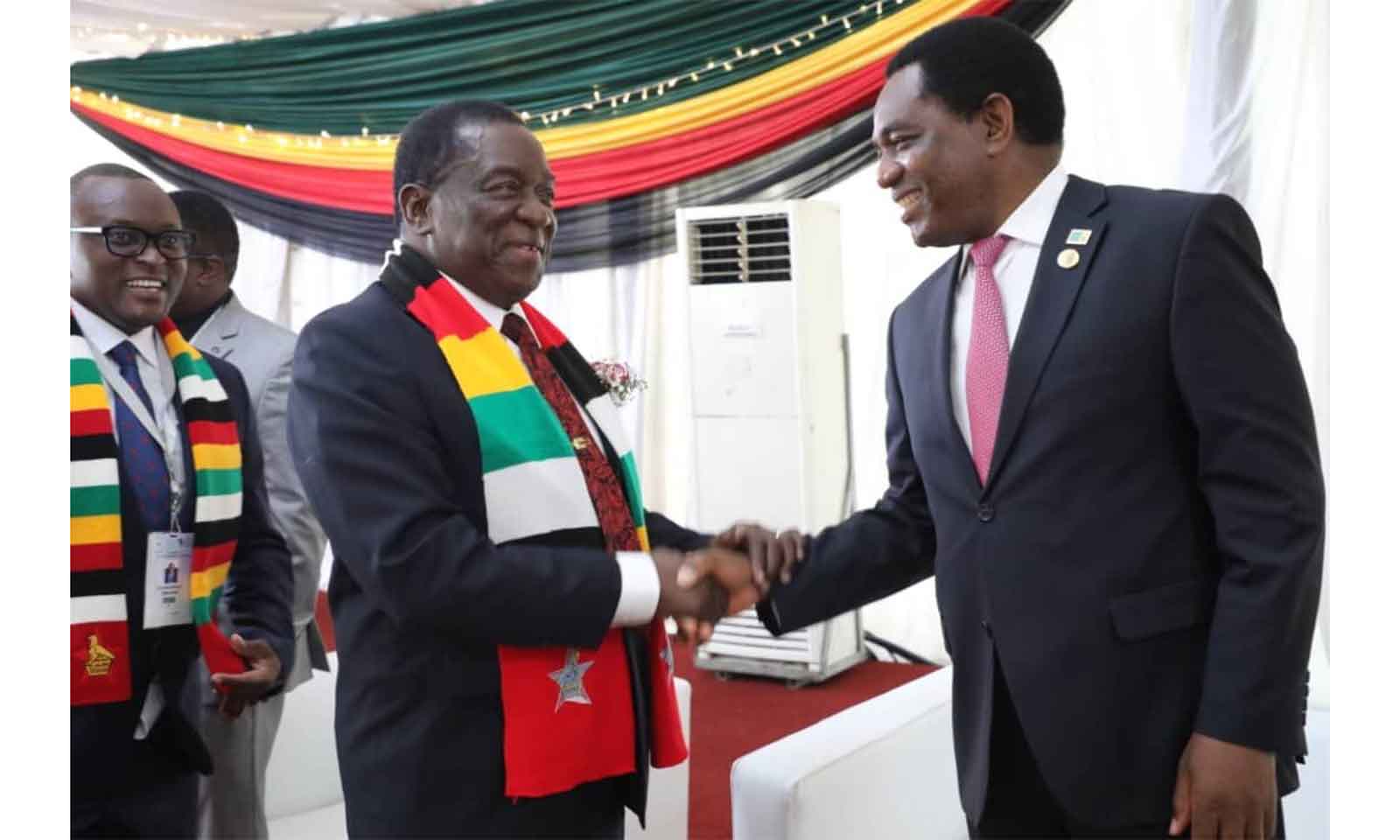
Africa Moyo
The relationship between Zimbabwe and Zambia dates back to pre-independence, rooted in a shared history, cultural ties and regional cooperation.
Both nations have long been intertwined through their geographical proximity, with the Zambezi River serving as a natural border and a vital trade route.
This enduring partnership has facilitated numerous collaborative efforts, particularly in sectors such as energy, agriculture, mining and tourism, where both countries benefit from their shared natural resources.
Key infrastructures such as the iconic Victoria Falls, a UNESCO World Heritage site, highlight the potential for tourism development and economic synergy. The falls not only serve as a breathtaking natural wonder, but also as a crucial economic asset for both nations, attracting millions of tourists each year.
Further, the two countries, often described as inseparable twins, share the Kariba Dam and they both generate hydroelectricity from the water that is shared equally by the Zambezi River Authority. There are also essential transport links such as roads and railways, which connect towns and cities across the border, facilitating trade and movement of goods, while the Batoka Gorge Hydroelectric Scheme represents a gigantic joint infrastructure initiative aimed at harnessing renewable energy to power both economies.
This deep-rooted relationship, characterised by mutual benefit, offers a promising foundation for future cooperation as Zimbabwe and Zambia seek to harness their shared resources for the prosperity of their citizens.
At the inaugural session of the Bi-National Commission (BNC) held in Harare on Friday, President Mnangagwa and Zambian President Hakainde Hichilema articulated a compelling vision for collaboration that leverages the shared resources of both nations.
The BNC marked a significant step towards fostering closer ties aimed at not only enhancing bilateral relations, but also maximally benefitting the citizens of the two countries through joint initiatives.
Resources management
President Mnangagwa said there is significant potential for cooperation in agriculture and mining, noting that both sectors hold immense promise, especially given the growing global demand for minerals and food.
The notion of resource endowment is critical in this context. Both Zimbabwe and Zambia are blessed with rich natural resources, ranging from fertile agricultural land to valuable minerals such as gold, copper and nickel.
The leaders’ recognition of this shared potential reflects a strategic pivot towards changing the narrative by transforming natural wealth into tangible benefits for their people.
Tourism emerged as another vital sector during the BNC session, particularly concerning the iconic Victoria Falls, which straddles the border between the two nations.
President Mnangagwa’s calls for improved cooperation in enhancing tourist products and services highlights a dual opportunity: to boost revenue for both countries while ensuring that local communities also reap benefits.
“Positive spill-offs from increased tourist arrivals must accrue to the communities, which are the immediate stewards of the Victoria Falls,” said President Mnangagwa.
The focus on community benefits underlines a growing recognition that sustainable development cannot occur in isolation.
The well-being of local populations must be prioritised to create a multiplier effect, where economic gains lead to improved living standards, educational opportunities and sustainable environmental practices.
Education and skills development
Both leaders reiterated the importance of education and skills development as essential ingredients for unlocking their nations’ potential. President Mnangagwa said vocational and technical training should be prioritised, arguing that “our young people must be equipped to modernise and industrialise our countries through their own innovations”.
This insight taps into a broader narrative that for Zimbabwe and Zambia to flourish, it is imperative that their youth are not just recipients of education, but active participants in driving innovation.
President Hichilema echoed these sentiments when he spoke about the historical ties between Zimbabwe and Zambia.
He reminded delegates that “the people of Zimbabwe and the people of Zambia, at a people-to-people level”, must deepen their partnership. By focusing on educational collaboration, both countries stand to benefit from shared knowledge and experiences.
Presently, there is a significant number of Zimbabweans and Zambians learning in tertiary institutions across the Zambezi River.
Economic integration and trade
On the subject of trade, President Hichilema pushed for the removal of tariffs between the two nations to facilitate a smoother exchange of goods and services. He said the African Continental Free Trade Area should begin with the Zimbabwe-Zambia partnership; collaboration between the two countries. By reducing or eliminating trade barriers, both countries could enhance cross-border investments, thereby rejuvenating their economies and creating jobs.
The call for “joint investments” is particularly salient in light of increasing foreign direct investment interests in Africa.
Both leaders urged their business communities to look inward, fostering a sense of local pride and ownership over the economic transformation process. “When we talk of foreign direct investments, let’s not think of Europe, let’s think of Zim-Zam,” emphasised President Hichilema, reflecting a conscious effort to build a more self-reliant economic framework.
It is worth noting that a number of Zambians have opened shops in central Harare, with some indicating that, given their level of profitability, they may consider expanding to other cities and towns in Zimbabwe. Similarly, some Zimbabweans have businesses in Zambia while traders from both countries cross the one-stop-border daily or weekly to buy affordable goods and resell back home.
During Vice President Kembo Mohadi’s tour of liberation shrines in Zambia, Mozambique, Angola and Tanzania recently, President Hichilema raised the same issue, calling on the two countries to do more to boost trade and empower young people with valuable education that will not only improve their skills, but also remind them of the two countries’ relations.
Said President Hichilema when VP Mohadi paid a courtesy call on him at the Zambia State House: “We have a lot of work to do together. Zimbabwe and Zambia have a lot to do on the economic front.
“We need to do more to manage our common assets; we need to develop our two countries’ economies’ infrastructure such as Kariba Dam, to increase electricity generation given the negative effects of climate change.
“We can derive more value from those assets. But also energy diversification; what you (Zimbabwe) are doing on your coal, thermal power stations, Vice President, on our side of the border, we are doing the same because that is a resource God gave us. I think nobody should tell us not to invest in the resource God gave us while we have no energy.”
The entire SADC region, to which both Zambia and Zimbabwe belong, is short of energy partially because of climate change as rains no longer fall at the same level as in the past, affecting generation of hydroelectricity at Kariba Dam. There is an agreement between the two countries and others in SADC and beyond to ensure they exploit their coal resources to produce electricity for their economies
This is despite calls by groups of people lobbying for the phasing out of or an outright ban on electricity generation from coal in light of the adverse effects of climate change due to use of fossil fuels. However, most developing countries say developed countries cannot dictate how they can use their coal deposits given that those nations developed through the use of coal as an energy source. Said President Hichilema back in August: “The coal resources we have should be available for power stations on both sides of the river, if necessary. “I would also want us to look at a couple of other joint assets that we have. But that’s for our teams to work on. There’s a lot on the table for Zambians and Zimbabweans to help us create jobs for our populations, business opportunities for our populations, businesses and also to enhance our Treasury incomes.
“So, Vice President Mohadi, please take the message to my elder brother (President Mnangagwa) that we want to accelerate a lot more things on the economic front, and there are a lot of them.” President Hichilema also said the issue of the liberation struggle that VP Mohadi was in Zambia for was equally important.
He said there was a need to “get our institutions on both sides of the river to really send some educational capacity building or messaging to get our young populations” to understand that a war was fought to liberate the two countries.
“I see that (liberation history) waning a little bit as the years go by, which is normal, on both sides and probably as part of the Bi-National Commission, we can try and work out, put in there some of the activities to include education, not just intellectual education, but education around history, and exchange for younger people, students from both sides of the river so that we can retain this important knowledge,” he said.
In response, VP Mohadi said President Hichilema’s views on strengthening the knowledge of young people on their countries’ histories was critical. “Thank you Mr President for those remarks which are going to cement the relationship between the two countries, which date back to time immemorial.
“We defeated the enemy together and now we are embarking on another struggle, which is what you are saying, that our young people must be in a position to exchange notes.
“We have got a struggle before us, that is one of being economically independent,” said VP Mohadi.
Going forward
As President Hichilema noted at the BNC session in Harare, both nations need to “walk the path that those who came before us walked”.
This historical perspective is essential, as it speaks to an enduring relationship that can be revitalised through strategic collaboration.
The shared vision of Presidents Mnangagwa and Hichilema encapsulates more than just economic indicators; it embodies a profound partnership aimed at improving the lives of their citizens. At the heart of these discussions is the conviction that by effectively harnessing and sharing their natural resources, Zimbabwe and Zambia can build a brighter future for their people. The collaborative spirit exhibited at this inaugural BNC meeting is promising and offers a blueprint for how African nations can work together to overcome shared challenges.
It is a call to action for both governments and their citizens to engage actively in realising the potential of this partnership, ensuring that shared resources translate into meaningful benefits for all.
Africa Moyo is the Deputy National Editor of Zimpapers.