


 Online Reporter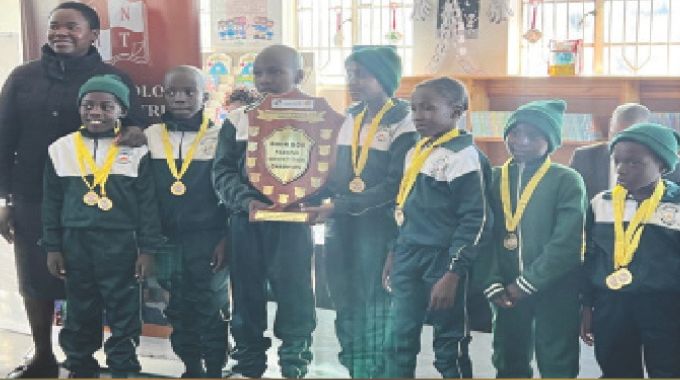
Sukulwenkosi Dube-Matutu, [email protected]
SENGEZANE Primary School has won the Gwanda District Book Box Reading Competition, emerging tops among six finalists in a contest aimed at promoting literacy and nurturing a reading culture among learners in rural schools.
The recent competitions brought together Sengezane, Garanyemba, Dombo, Lumene, Dambashoko and Wililisa primary schools after they progressed through cluster-level contests involving 37 schools from the district’s six education clusters.
Learners competed across three categories, with infant classes (ECD A to Grade Two) taking part in picture reading and word-building exercises, juniors (Grades Three and Four) contesting in vocabulary bees and quizzes, while senior learners (Grades Five to Seven) participated in spelling bees, spelling relays and jumbled-word challenges.
Participants were also tested on English vocabulary, sentence construction, pronunciation, fluency, voice projection and story reading in both English and Ndebele, as well as general knowledge.
Sengezane Primary walked away with the championship shield, gold medals and a Starlink internet kit, while runners-up Garanyemba Primary received silver medals and a set of reading books.
The competitions are part of the Book Box Programme being implemented by the Edward Ndlovu Memorial Trust (ENMT) to improve literacy in rural schools.
ENMT director Mr Michael Moyo said the reading competitions, introduced in 2022, are aimed at narrowing the literacy gap between rural and urban learners.
“As ENMT, we have come in to assist in developing the education sector through various programmes and one of them is the Book Box Programme. Under this programme, we have distributed books to various schools to promote literacy among learners and to promote a reading culture,” he said.
“As a follow-up to this intervention, we then introduced a reading competition programme for the learners. The competitions are held at various levels, which are infant for ECD A up to Grade Two, junior for Grades Three and Four and senior for Grades Five to Seven.”
Mr Moyo said each age group competes in activities tailored to their learning level, allowing learners to enjoy reading while developing critical literacy skills.
He said the initiative complements Government efforts to improve education outcomes and supports Sustainable Development Goal Four, which advocates inclusive and equitable quality education.
Mr Moyo said the programme seeks to eliminate instances of poor literacy levels reported in some rural schools and ensure rural learners enjoy the same opportunities as their urban counterparts.
Schools have also been encouraged to hold reading competitions at class, school and cluster levels before district finals to broaden participation.
“Our main target as an organisation is the children, as we want them to develop. The impact has been significant as participating schools now report improved reading habits among learners, greater engagement in lessons and increased teacher confidence in managing library resources,” said Mr Moyo.
“By encouraging literacy and a love of reading from an early age, the programme is not only bridging the education divide but also nurturing a generation of curious, confident learners.”
Speaking at the event, World Vision cluster programme officer Mrs Tendai Charlie said the organisation’s partnership with ENMT is helping improve literacy levels and academic performance among primary school learners.
She said World Vision plans to expand the programme to all its area programmes to ensure more children have access to quality reading materials.
“As World Vision, we remain committed to our partnership with the Edward Ndlovu Memorial Trust in promoting a strong reading culture in our communities. Through this collaboration, book boxes have been distributed to all 17 primary schools, providing a lasting resource that is already improving classroom reading and learner confidence,” she said.
“The partnership has also strengthened reading competitions, making them more impactful and motivating for learners. With 90 functional reading camps serving 1 914 learners — 975 girls and 939 boys — and the support of teachers, parents and School Development Committees, we are ensuring that every child, including learners with disabilities, has the opportunity to develop strong literacy skills.”
Mrs Charlie said literacy remains the foundation for lifelong learning and socio-economic development.
“It is through literacy that people are empowered, access opportunities and build a foundation for long-term economic development, health, food security and child protection,” she said.



 Bongani Ndlovu