Online Reporter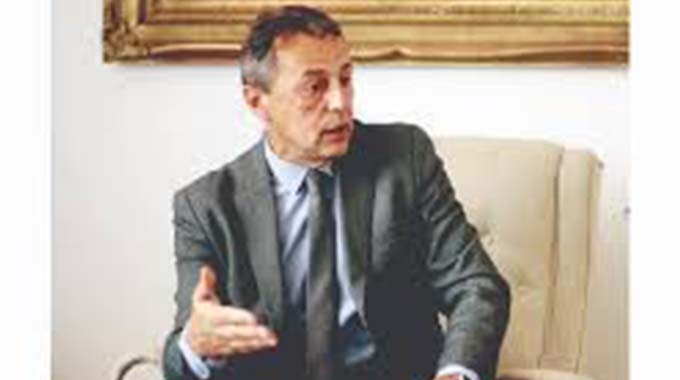
SERBIA, which recently celebrated its national day, says it is keen to strengthen bilateral relations with Zimbabwe.
The Balkan nation — one of the countries that emerged after the disintegration of Yugoslavia — re-opened its embassy in Zimbabwe in 2022. The embassy previously operated in Harare from 1980 to 2001. Zimpapers Politics Hub Senior Reporter, Joseph Madzimure, interviewed Serbia’s Ambassador to Zimbabwe Mr Radish Grujic on relations between Harare and Belgrade.
Q: Can you give us an overview of your stay in Zimbabwe?
A: I have been impressed that Zimbabwe is making enormous efforts to deal with global risks and challenges, be it political, economic, climatic or ecological. With the mobilisation of each member of the nation and local community, by focusing on its own resources and capacities, knowledge and energy, Zimbabwe has shown me that it can succeed and go beyond the line in the development of the country.
At the same time, I have to emphasise the role of Zimbabwe within the SADC (Southern African Development Community), as the President of Zimbabwe, in his capacity as SADC chair, made extraordinary efforts to achieve peace in the entire region of Southern Africa, mainly in the DRC (Democratic Republic of Congo), to cease hostilities and sufferings of civilians, and to stabilise the tragic and long-lasting conflict. This is commendable.
Q: Your country celebrated the Serbian Statehood Day on February 15. Tell us more about this day.
A: The Serbian Statehood Day celebrations are a testament to the country’s rich history and its people’s centuries-old struggle for independence and self-determination.
The 15th of February every year, since 2002, Serbia commemorates the Statehood Day and, at the same time, the Constitution Day.
The First Serbian Uprising on February 15, 1804 marked the beginning of the Serbian Revolution against Ottoman rule and Serbia’s fight for independence from the Ottoman Empire. The uprising ultimately led to the establishment of the Principality of Serbia in 1835.
Q: What is the state of bilateral relations between Zimbabwe and Serbia?
A: Currently, we are focusing on economic co-operation between the two countries. There is room for further enhancement in investments and an increase in the volume of trade in terms of export and import, from both nations.
Q: Since you were appointed Serbia’s Ambassador to Zimbabwe, what has been your major focus?
A: I would like to express my opinion that Zimbabwe could become an important economic partner, maybe one of the leading African countries for investors from Serbia, as we can further strengthen co-operation by expanding from traditional areas of trade and investment to new technological sectors.
My intention and main focus during the mandate here will be to send a significant number of delegations of Zimbabwean officials and businessmen to Serbia and also to organise frequent visits of delegations of Serbian officials and businessmen to Zimbabwe.
Q: Are you satisfied with the state of bilateral relations between Zimbabwe and Serbia?
A: Having in mind those longstanding and deeply rooted relations, I have to underline that Serbia, then Yugoslavia, was among the first foreign states with which Zimbabwe established a diplomatic relation, 45 years ago, exactly on the day of independence, on April 18, 1980.
This friendship has been confirmed in many good and difficult times in the past and is also forged in our countries’ desire to lead sovereign and independent foreign and domestic policies.
Unfortunately, Serbia had to close its embassy in Harare in 2001 due to budgetary constraints and internal difficulties after the years of sanctions and international isolation imposed by the most powerful Western countries.
The embassy reopened about three years ago, in August 2022, and during the long absence from Harare, Serbia was represented in Zimbabwe on a non-residential basis from the embassy in Pretoria, South Africa.
This return to Harare represents strong evidence that Serbia wants to continue the development of the friendship and partnership based on the legacy of Yugoslavia to which it belonged until its disintegration.
Q: How can relations between the two countries be improved?
A: While current bilateral relations between Serbia and Zimbabwe are good, there is still great potential and common readiness for further engagement in rebuilding and renovating relations in all areas of mutual interest and benefit.
Q: I understand that Serbia will host an international event in 2027 where Zimbabwe has been invited. Please explain the significance of this expo?
A: It is one of the most important global events for that year. It is called the Specialised Exhibition Expo 2027, organised under the auspices of the International Bureau for Expositions. It is an excellent occasion for presentation of national potentials and capacities.
This is recognised by the government, and Zimbabwe has already accepted and confirmed its participation at this significant international event.
The expo is scheduled to take place from May 15 to August 15, 2027.
This will be the first world exposition to be held in the former Yugoslavia.
Expo 2027 is earmarked not only to be a successful story and efficient project of the Serbian government, but also an excellent opportunity for each country to engage with not just Serbia and the countries of the Balkan region but also Europe as a whole and beyond.
It is an opportunity to present your economy, culture, sport and ideas about the future. Zimbabwe is most welcome in Belgrade.
Q: Serbia is experiencing relative economic success. What are some of Serbia’s strengths and challenges faced in its economic development?
A: Relating to Serbia’s significant economic progress over the past decade, it is internationally verified that our country is at the very top of Europe in terms of economic growth, despite all crises and global challenges.
The Republic of Serbia enjoys significant economic advantages through numerous free trade agreements, making it one of the few countries in Europe, alongside Switzerland, with such extensive trade benefits.
Despite being a small country, Serbia is highly open to economic investments and business co-operation and successfully managed to maintain consistent and stable economic growth and attract foreign investors.
Aiming to modernise the industry and to stimulate the growth, Serbia is investing significant funds in the IT (information technology) sector and national research centres, with exports from this sector having increased nearly eightfold in recent years.
With that approach, Serbia is firmly resolved to become a regional leader in using innovative technologies and a new European hub for research and development.
For example, major global companies like Microsoft are opening their regional centres in Serbia and recruiting our local experts.
Also, there are a lot of other important areas to be taken into consideration.
These include education, sports, scientific and technological development, energy and mining, infrastructure and IT, culture and art, as well as health and pharmacy.
If we highlight, for example, education, I would like to point out that Serbia, like Zimbabwe, also has a strong commitment to investment in education on the national and international levels.
Following this commitment, in 2012, we initiated the government scholarship project titled “World in Serbia”, under which we are providing scholarships for students from members of the Non-Aligned Movement.
Q: What are the most important national priorities for Serbia currently and in the near future?
A: The most important national priority for Serbia is the issue of our southern province Kosovo and Metohija and protection of the territorial integrity and sovereignty according to the international law and the UN (United Nations) Charter principles.
Regarding that, we are appealing to our friends and partners in the international community to keep their position of non-recognition of the unilaterally proclaimed independence by ethnic Albanians.
Q: On the international arena, what are Serbia’s primary areas of focus?
A: I would like to emphasise that Serbia remains committed to maintaining peace and stability in the world, strengthening its business environment and economy, enhancing co-operation and good neighbourly relations, as well as respecting the sovereignty and territorial integrity, national interests and values of all states on the globe.
It is of special importance, also, to underline the fact that Serbia’s foreign policy is significantly influenced by its historical role as one of the key capitals of the Non-Aligned Movement, which continues to benefit the country in its relations with Asian, African and Latin American nations.