Judith Phiri [email protected]
AGRICULTURE, Mechanisation and Water Resources Development Mininster Dr Anxious Jongwe Masuka has said the country is targeting Strategic Grain Reserve of 600 000 metric tonnes by August 2027, to cushion food security ahead of the predicted El Niño-induced drought in the 2026/27 agricultural season.
This is part of Government’s comprehensive six-pillar drought-mitigation strategy designed to cushion the nation against the adverse impacts of the El Niño-induced dry spell.
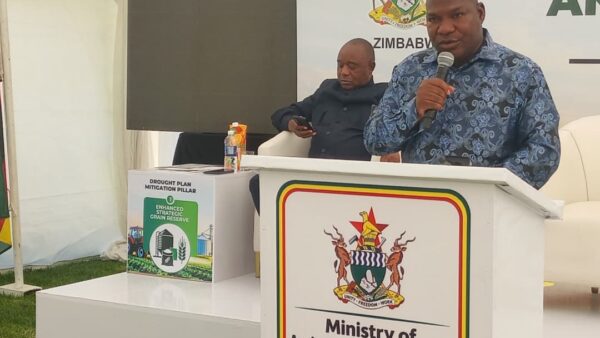
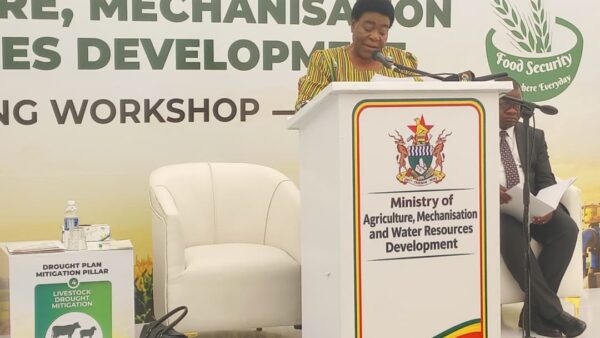
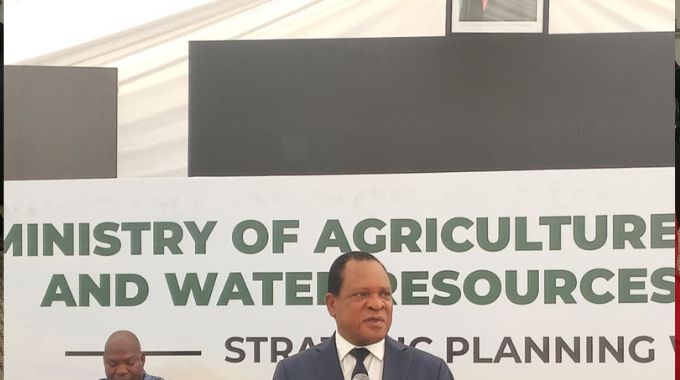
In a keynote address at the Ministry’s five-day strategic planning workshop in Bulawayo on Monday, the Minister said the multi-pronged framework aimed at safeguarding both national and household food security through meticulous forward planning.
“I would like to emphasize that regarding the strategic grain reserve at national level we are already at 352 000 metric tonnes as of yesterday (Sunday) and our target is 600 000 metric tonnes.
“In the worst drought year, in living memory in 2024 we gave food to 6.5 million people and we fed 328 000 metric tonnes, already we have surpassed that. We also gave 4.5 million learners a meal during term time and another 33 000 metric tonnes,” he said.
“The exit plan by 30 December is that we will have 450 000 metric tonnes and the rate at which we are harvesting this wheat, I actually see us surpassing that. I’m told as of yesterday (Sunday) we had harvested just over 114 000 hectares and we now have over 106 000 metric tonnes of wheat so again we are headed for a record wheat crop.”
He said this was the essence of the Second Republic where records must be celebrated, as they go to Vision 2030 every record must be broken.
Minister Masuka said Zimbabwe and Ethiopia are the only two jurisdictions that have some self-sufficiency in terms of wheat, but Zimbabwe has gone further.
“That is pride that we gave the wheat-based food security strategy that we injected in 2024 led us to where we are 92 percent of social welfare was supplied by Government, only eight percent by development partners. In the past it used to be the opposite.
“We have been removed from the world hotspots for hunger and in the global hunger index we have climbed so many places which must be for Vision 2030,” he added.
He said drought mitigation centres are being established across 1 527 rural wards to support livestock and protect farmers from distress sales, while calling for proactive and people-centred strategies to prepare Zimbabwe for the possible El Niño-induced drought in the 2026/27 agricultural season.
The Minister emphasised that agriculture must be a business at every scale, with farmers encouraged to adopt climate-smart practices and value-chain approaches that maximise returns.
He challenged decision-makers to sharpen strategies and translate them into practical action that protects livelihoods, strengthens household resilience and puts people at the centre of drought preparedness.