

 Chronicle Editor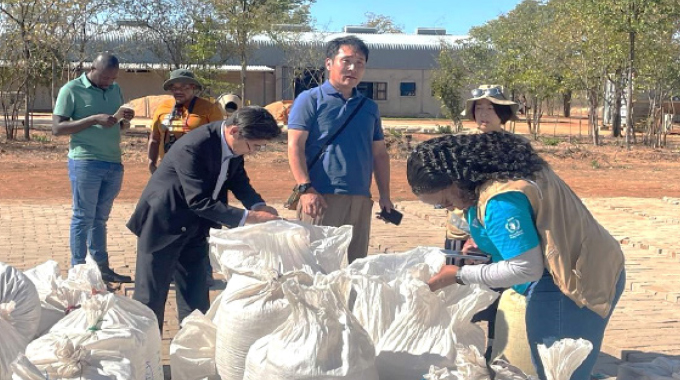
Lingani Nyika, in Masvingo, [email protected]
IN the face of El Nino’s devastating drought in the country, an unexpected hero has emerged — the drought-tolerant sesame plant.
The World Food Programme (WFP), in partnership with Japanese investment firm ITOCHU and Sustainable Agriculture Technology (SAT), is providing resources and training to 3 000 smallholder farmers in Mwenezi district to cultivate this resilient crop.
Sesame sourced from Rushinga is a valuable cash crop, offering the potential for financial stability, national food security and economic growth.
The collaboration extends beyond seed provision, with ITOCHU instrumental in creating an export market in Japan, ensuring a steady demand for the farmers’ produce.
Farmers are already yielding at least US$600 from their harvest and are sharing seeds with others in their community, contributing to the programme’s growth.
The success of the sesame project highlights the importance of investing in climate-smart agricultural solutions for mitigating the effects of extreme weather events and promises long-term food security and resilience for the communities involved.
The initiative began last year with each farmer receiving a starter batch of 1,5kgs of sesame seeds. Thanks to careful planning and leveraging favourable weather forecasts, the harvest of the crop planted in November last year has started.
This early success story is proof of the programme’s effectiveness and the potential of sesame as a sustainable solution for the region.
“The sesame crop has been a game-changer for us. While our other crops have withered, the sesame has thrived, ensuring that we have a reliable source of income and food for our families,” said Janet Musoniwa (39), lead farmer in Ward 2.
Konias Mugwadi (48), a farmer in Ward 1, echoed Musoniwa’s sentiments.
“The WFP’s initiative has brought a sense of sustainability, nutritional benefits, and increased productivity to our community. We are grateful for the introduction of this drought-tolerant crop, which has helped us weather the storm,” he said.
Mugwadi anticipates a yield of one ton of sesame per hectare from his 2,5-hectare field.
Esther Goremushandu (34), from Ward 2 said: “The sesame crop is nutritious, which improves our health and well-being, especially for women and breastfeeding mothers.”
The initial 1,5kgs of sesame seeds provided a big boost. Each farmer can now expect to earn at least US$600 from their harvest. This success story doesn’t stop there. Farmers generously share 1,5kgs of their seeds with others in the community, ensuring the programme’s growth and continued prosperity.
SAT plays a crucial role by purchasing the sesame at a fair price, guaranteeing a stable market for the farmers’ efforts. The harvested crop is then transported to a local processing plant in Mwenezi, where it’s cleaned, processed, and even turned into sesame oil.
During a recent visit to the Neshuro area, representatives from WFP, ITOCHU, and SAT applauded the farmers’ enthusiasm and commitment to the project. They pledged their continued support to ensure long-term food security and resilience for these communities.
Mwenezi’s District Development Co-ordinator, Isaac Mutambara, welcomed the groups and urged them to continue their projects with honesty and integrity. He stressed the importance of serving the community and avoiding any misuse of their hard-earned success.—@NyikaLingani



 Online Reporter