Online Reporter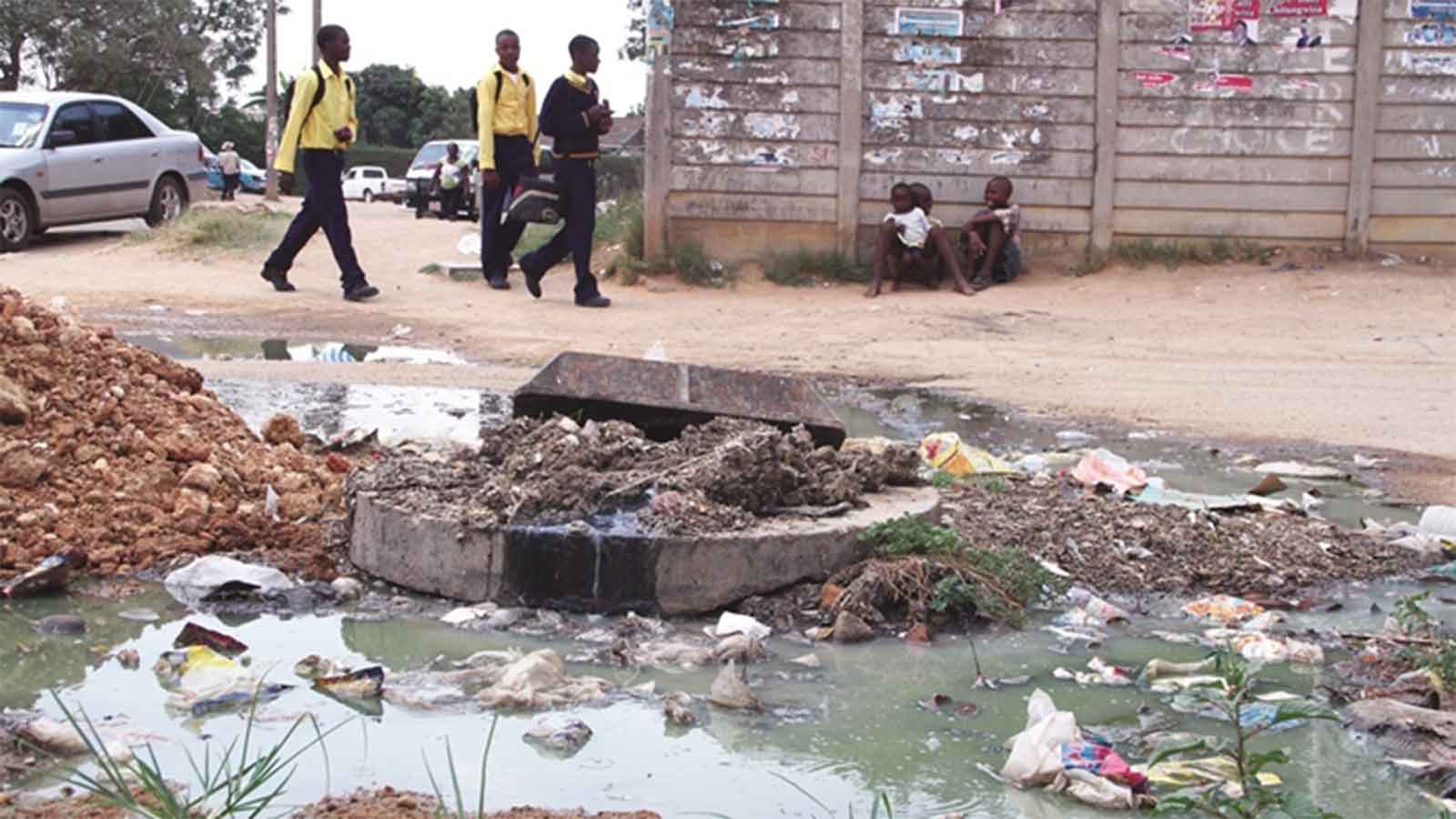
Ivan Zhakata-CheckPoint Desk
PERSISTENT sewage bursts in several Harare suburbs have laid bare the collapse of the capital’s wastewater system, with raw effluent flowing through residential areas amid chemical shortages, ageing infrastructure and opaque maintenance arrangements at the city’s main treatment plants.
In Kuwadzana, Glen View, Budiriro, Sunningdale and Dzivaresekwa, residents said sewer pipes had been bursting repeatedly for months, sometimes years, with little or no lasting repairs.
Raw sewage has flooded roads, yards and open spaces, contaminating shallow wells and stormwater drains and heightening the risk of waterborne diseases.
“We now live with sewage in the streets,” said Mr Tonderai Mupatsi, a Glen View resident whose house lies close to a frequently blocked sewer line.
“City workers come, unblock it, and within days it bursts again. Nothing permanent is done.”
The recurring bursts point to a broader systemic failure linked to Harare’s two main wastewater treatment plants — Firle Sewage Works and Crowborough Treatment Plant — which are said to be operating far below capacity.
The Environmental Management Agency (EMA) has on several occasions accused the City of Harare of discharging partially treated or raw sewage into the environment, including rivers that feed into Lake Chivero, the capital’s main water source.
EMA has issued multiple environmental protection orders and fines against the municipality.
“The continued release of untreated sewage poses a serious environmental and public health risk,” EMA said in a previous notice, warning that non-compliance could result in further legal action.
Investigations into the causes of the breakdown point to chronic underfunding, ageing infrastructure and shortages of critical treatment chemicals particularly at Firle and Crowborough.
Waste water treatment requires chemicals such as chlorine to neutralise pathogens but Council has previously acknowledged that supplies were erratic due to foreign-currency constraints.
A senior council official, speaking on condition of anonymity said the plants “cannot consistently meet treatment standards without chemicals,” adding that even when mechanical equipment is functional, “the process fails if chemicals are not available.”
Questions have also been raised over maintenance contracts for sewer reticulation and plant operations.
Council records and past audit reports have highlighted concerns about delayed maintenance, repeated emergency repairs and procurement processes that lack transparency.
Residents and civic groups argued that large sums have been spent on short-term fixes while the underlying infrastructure continues to deteriorate.
In Budiriro, one of the suburbs hardest hit by past cholera outbreaks, residents fear history could repeat itself.
“We survived cholera before, and we are afraid it will come back,” said Ms Tanatswa Ndoro.
“The sewage is everywhere.”
Public health experts warned that the convergence of sewage overflows and reliance on untreated water sources significantly raises the risk of outbreaks of cholera, typhoid and dysentery particularly during the rainy season.
The Ministry of Health and Child Care has previously linked disease outbreaks in Harare’s western suburbs to poor sanitation and contaminated water and called for urgent investment in sewer and water infrastructure.
Despite repeated warnings, the situation on the ground remains largely unchanged.
In Dzivaresekwa and Sunningdale, residents reported fresh sewage spills in recent weeks, with some flowing for days before council crews responded.
Harare Mayor Councillor Jacob Mafume has acknowledged the challenges facing the wastewater system, citing population growth, vandalism, power outages and limited revenue.
However, critics argued that mismanagement and failure to prioritise long-term rehabilitation have deepened the crisis.
As sewage continues to run through neighbourhoods, residents said the problem has moved beyond inconvenience to a full-blown public health emergency.
“This is no longer just about bad smells,” said Mr Trust Mhundwa a Glen View community leader.
“It is about our health, our water and our lives.”