admin
admin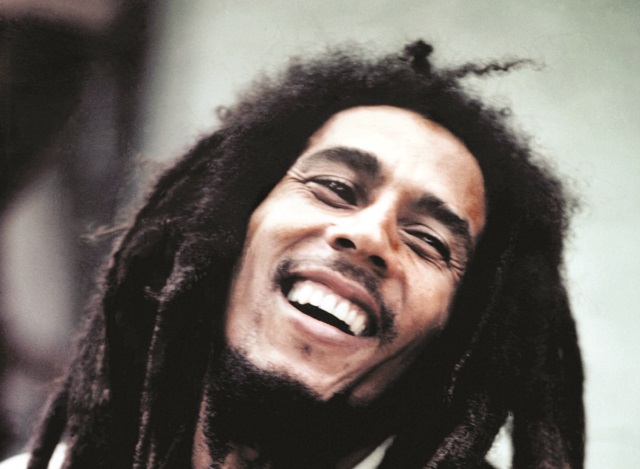
Bruce Ndlovu
When Rita Marley told the world in 2004 that her beloved and iconic husband, Bob Marley had forced himself on her back in 1973, the world reacted with incredulity.
a�?Bob wouldna��t take no for an answer. He said to me, a�?No, youa��re my wife and youa��re supposed to.a�� So he forced himself on me, and I call that rape,a�? she said at the time.
To fans of the legendary reggae musician, the allegations levelled on him posthumously by his widow were scarcely believable.
Here was a man after all, who had sung loud and passionately about peace and equality, at a time when Western imperialism had a cruel foot on the necks of black people and a greedy hand in the pockets of resource-rich African nations.
It hardly seemed possible that the man who had sung so passionately about the desire for black freedom had in his way denied a black woman the same right.
The story sent shockwaves around the world in March 2004, and its reverberations were felt as far as Zimbabwe where the reggae icon still has a large following. Fast-forward 12 years later and Zimbabwe is grappling with another high profile abuse story, only this time one born on home soil. Man of the moment Jah Prayzah has been embroiled in a damaging sexual abuse scandal involving his former dancer Gonyeti.
While all attention has been rightly trained on Jah Prayzah, whose guilt or innocence is yet to be proven, some have ignored the vital under-currents that are at play beneath the wave that is threatening to submerge the Watora Mari hit-maker.
Reactions to both incidents, 12 years apart, were similar. At first, fans expressed shock and then when the gravity of what their favourite musician was being accused of dawned on them, they lashed out at the victima��s perceived opportunism.
It was even worse for Gonyeti, in this day and age of social media, where the rabid mob camped on her Facebook wall and hurled insult after insult.
The incident has been viewed in isolation, when in fact it speaks louder about largely unreported sexual abuse in the music industry. One of the main reasons for this is the complicity of fans and the general public at large. The former are driven by the love of their hero, while the latter still views issues through patriarchal lenses.
Some music lovers worship at the altar of celebrity hence most musicians become deities that are beyond reproach.
For fans it is hardly conceivable how a singer who hit notes that they hardly thought possible or the guitarist whose riffs made them lose their marbles on the dance floors might be responsible for a heinous act.
When an artiste reaches stratospheric heights of fame, the sky is no longer the limit, but they can be seen to be dancing with God himself.
That is perhaps why in this day and age, a selfie with a star is a treasured possession, just like the autograph was back in the day. A piece of signed paraphernalia or picture shows that the fan was also in that brief moment in heaven, and brought evidence to prove it.
How then can fans see any human flaw in their chosen deity?
While most dismissed Gonyetia��s cries of abuse, women in the music industry acknowledge that they practise their craft under conditions in which higher ranking men are the apex predators.
a�?We do face a lot of sexual pressure from men,a�? says Bulawayoa��s DJ Liz. a�?I for one make sure that everything I do is handled through my manager because otherwise trouble follows. For example, a promoter will book you for a show outside town and tell you that you are booked at a hotel for that night but when you get there he takes you to his home and tells you thata��s where you are going to sleep.a�?
a�?That is why as female DJs we struggle to get gigs because most of us refuse these advances,a�? she said.
A veteran in the music industry, Sandra Ndebele also acknowledges that sexual advances are the order of the day, but also says that the stakes are never high enough for one to give in.
a�?There have been such incidents in my career yes, but it all boils down to onea��s morals. Unless ita��s outright rape then one can turn down these advances,a�? she said.
However, the Jah Prayzah incident should not be viewed in isolation as it exposes a much deeper seated problem of work-related abuse in Zimbabwe, a plague whose tentacles stretch far beyond the seedy world of music showbiz.
Earlier this year, Zimbabwe Banks and Allied Workers Union (ZIBAWU ) and Zimbabwe Congress of Trade Unions (ZCTU) ran a sexual harassment campaign across various banks in which 31 percent of the women indicated that they had been victims of sexual harassment or had witnessed sexual harassment in the workplace. Out of the individuals who indicated that they had been victims of sexual harassment, only 34 percent had reported these cases.
In a country where the Labour Code has no sufficient regulation for sexual harassment and there are no sanctions and no labour inspections to ensure enforcement, tougher legislation might be the way to go in stamping out this ill.
Dancing away on stage as she famously does, Gonyeti might be a long way from the world hustle and bustle of finance but her struggles have a striking resemblance to women in that and other sectors.
.



 Online Reporter