Online Reporter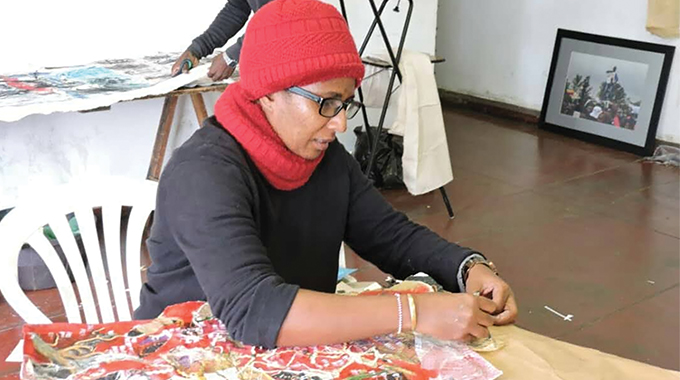
Gift Moyo, [email protected]
Shamilla Aasha has steadily carved a distinctive path in Zimbabwe’s contemporary art scene, emerging as a powerful voice for the future of fine arts in Bulawayo. Of Indian and Shona descent, she has been recognised multiple times at the National Arts Merit Awards (Nama), including two wins, and continues to make her mark both locally and internationally.
From her early days training as a textile designer at the polytechnic to navigating the challenges of a near-collapsed industry, Aasha has remained steadfast in her artistic vision. Her formative years at the Bulawayo Art Gallery, surrounded by luminaries such as Tomy Ndebele, Stella Ndebele, and under the mentorship of Dr Yvonne Vera, provided her with an immersive environment that shaped her craft and inspired her to return to art professionally after a brief hiatus.
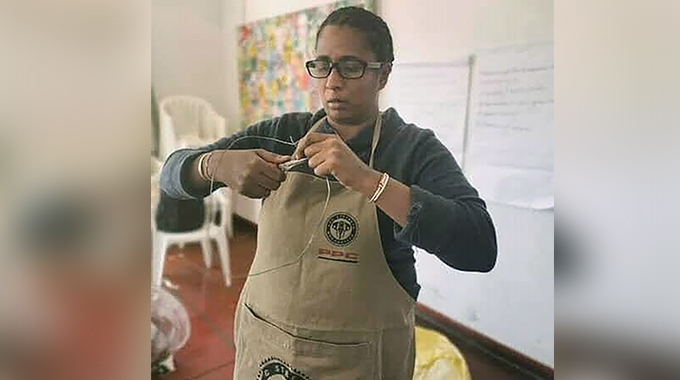
Today, her work spans painting, mixed media, embroidery, and soft sculptures, offering a rich exploration of sisterhood, the female experience, and intergenerational storytelling.
In this exclusive interview with the Zimpapers Arts and Entertainment Hub, Aasha shares her creative process, insights on the challenges and opportunities facing artists in Zimbabwe, and practical advice for young talent eager to make their mark.
Q: What inspired you to begin your journey as an artist?
A: Art is something I’ve always wanted to do. Even when I stepped away from it in 2011, I never completely left. I taught art for a few years before returning to it professionally in 2015. I initially trained as a textile designer at the Polytechnic, but by the time I finished my studies, the industry had almost collapsed, so there were no jobs available.
After about six months, I applied for a studio at the Bulawayo Art Gallery. At the time, artists like Tomy Ndebele, Stella Ndebele, MaKhumalo, Abigail Nonny, Anne Hutton, Dumi Ndlovu, Rashid Joggee, Berry Bickle and Sithabile Mlotshwa were regulars there, while Dr Yvonne Vera was the gallery director. Being around such prominent figures and their work was an incredible learning experience for me. I spent much of my youth at the gallery, often sitting by the window watching and chatting with the artists.
Eventually, I got my own studio, and that’s when Yvonne Vera began mentoring me. Two years later, I had my first child and felt the need for financial stability, so I took up a teaching job at a high school. I still practised art occasionally, but not as much as I would have liked. In 2011, I held my first solo exhibition with the National Gallery of Zimbabwe in Bulawayo. Unfortunately, I didn’t sell a single piece, which left me discouraged. I gave away most of the works and stepped away from art for about five years while focusing on financial stability. In 2015, after my teaching career ended, I slowly returned to art. Around that time, I connected with First Floor Gallery in Harare, where I later held a residency and my solo exhibition titled The Ties That Bind in 2019. I also participated in several exhibitions at the National Gallery in Bulawayo and Harare, as well as independent projects. After my second solo exhibition, Breathing Space, at First Floor Gallery in Victoria Falls in 2021, I was eventually signed by the gallery.
Q: Tell us more about your art.
A: I have always worked with mixed media. Painting is the form I’ve practised since school, so you could say it’s my inner voice when it comes to art. With embroidery and soft sculptures, I explore stories of sisterhood and the broader female experience. Text also features strongly in my work, largely inspired by my love of reading. Sometimes a single sentence from a book will inspire an entire series and even become its title. I’m deeply interested in women’s stories.
They are often presented as fiction, yet I enjoy discovering how closely they connect to real life. At the heart of my work is the belief that our experiences as humans are shared. Regardless of race, religion, or background, people go through similar struggles and emotions — and within that lies a sense of community.
Q: What is your creative process when creating art?
A: My work usually happens in my domestic space, often surrounded by the chaos of everyday life. I don’t have a separate studio, so I’ve learnt to be disciplined with my time. Sometimes that means doing embroidery on the couch after the children have gone to bed, which creates a sense of urgency to use the time wisely. While each piece follows a different process, all my work begins with research and building a narrative. For example, my last painting project centred on grief, trauma, and healing. I was exploring how people process grief, especially when it doesn’t appear in the ways we usually expect. Creating that piece helped me process the death of my mother, which is why the work was titled Healing Alchemy. In that case, research involved a lot of introspection, though at other times it can mean reading extensively and gathering different sources depending on the project.
Q: Do you have a favourite piece from your career?
A: Recently, I’ve been particularly fond of the work I created for the Investec Cape Town Art Fair. The Sorority series was especially personal. It reminded me of my school days when I used to braid my sister’s hair, which made me reflect on how women pass knowledge and care from one generation to the next. The exhibition was titled Generations, and it explored how information and wisdom are shared across generations of women. Sometimes that exchange happens between mother and daughter, but when that connection is broken, it may pass from sister to sister or from aunt to niece. I was inspired by the way women braid and groom each other, simple acts that create space for bonding and connection.
Q: Much of your recognition came after you returned to art. What changed in your approach during your time away?
A: Before 2011, I was already exhibiting regularly at VAAB and at the National Gallery of Zimbabwe exhibitions in both Bulawayo and Harare. When I later joined First Floor Gallery, my work began reaching regional and international audiences. The gallery opened doors for me that I would not have been able to access on my own.
Q: How important is it for artists to have that kind of support or platform?
A: In the past, it could mean the difference between surviving in the industry or fading into obscurity. However, a lot has changed since Covid-19, especially with the rise of digital art spaces, which have opened up new opportunities for artists. That said, it can still be difficult to access certain spaces without representation, although in some contexts, independent artists are now preferred. Gallery representation, once considered the gold standard for success, is increasingly becoming a choice rather than a rule. Even so, supportive spaces remain extremely valuable. For me, they provided the confidence to produce work that is true to my voice while also giving me access to markets and opportunities I might not have reached on my own. Creative hubs, galleries and residencies offer artists safe environments to grow, experiment and produce work, and that support brings a great deal of peace of mind.
Q: Do you think Zimbabwe has adequate infrastructure and platforms for artists to grow?
A: Harare is fairly well serviced in that regard. There is a clear sense of what needs to be done, and you can see it in the artists coming out of the city and the quality of work they produce. Bulawayo, however, is not as fortunate. Much of the art produced there tends to cater more to the tourist market rather than the contemporary fine arts space, and there are very few institutions left that actively teach contemporary fine art.
Q: How can established artists like yourself help address this infrastructure gap?
A: Artists are already beginning to create platforms that encourage dialogue and development. For instance, Clifford Zulu has established the Centre for Contemporary Art Bulawayo, which hosts discussions addressing some of these challenges. The space provides an avenue for artists to critically engage with their work and the broader arts landscape.
However, more still needs to be done, particularly in the area of art education. There is a need for a dedicated fine arts school where artists can learn contemporary fine art techniques. Without a strong educational foundation, it becomes difficult to build sustainable infrastructure for the arts sector.
Q: What advice would you give to a young artist who comes across this interview?
A: For young artists, particularly women, I would strongly encourage them to attend at least two or three artist residencies early in their careers. Residencies usually last between one and three months, and they can be harder to pursue later when one has family commitments. I would also advise young artists to invest in art education in whatever form they can. If they want to pursue contemporary fine arts, they should seek out institutions or spaces where those skills are taught. It’s not just about creating art; artists must also be able to discuss their work and understand the language of art. AI is also becoming a great equaliser in the industry. It has the potential to break down traditional gate-keeping and open new opportunities for young artists. Above all, artists must be purposeful in their work and learn how to present and market themselves. Even social media requires strategy; it’s not just about posting randomly, but understanding how to use it effectively.