

 admin
admin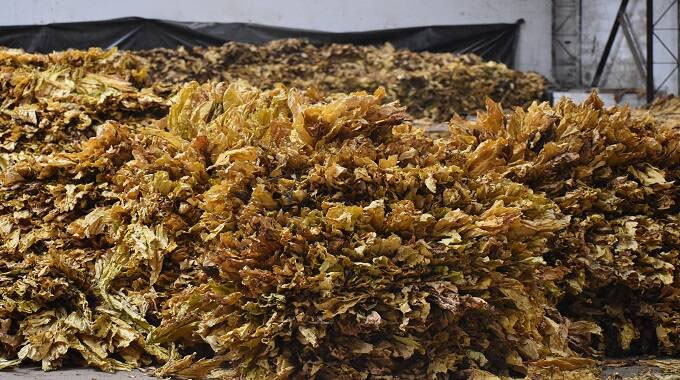
Agriculture Reporter
A HOOKAH or water pipe! The smoker uses this single or multi-stemmed instrument to heat, vaporise, then smoke tobacco.
The smoker pulls smoke from a pipe. The smoke passes through a water basin, often glass-based, before it’s inhaled. This is the reason some people refer to shisha as pipe tobacco.
After debuting in Manicaland during the 2022/23 seasons, production of the shisha tobacco brand has now been officially introduced to the country’s tobacco producing regions, thanks to the crop’s similar agronomic and curing requirements to those of Virginia tobacco.
The Tobacco Industry and Marketing Board (TIMB) has since licenced Cavendish Lloyd Tobacco to contract and support shisha tobacco production.
Shisha is a type of combustible tobacco that has low nicotine content differentiating it from the traditional flue-cured Virginia tobacco. Unlike cigarettes, this type of tobacco is consumed using a hookah or water pipe.
It is cultivated in almost the same way as traditional Virginia tobacco with minor differences in agronomy. It uses staggered low amounts of fertiliser and it is not topped (apical bud removal) to minimise nicotine amounts in the leaf.
Chemical applications for pest and insect control and growth period are just the same as other tobacco cultivåçars such as Virginia tobacco.
The crop is reaped when the leaves have completely lost all the nitrogen and have fully ripened. It is cured using the same flue-curing barns, temperature and humidity regimes for the Virginia flue-cured tobacco and it takes four to five days to complete curing.
The cured leaf has to have low nicotine content to protect the smoker from inhaling huge amounts of nicotine since the variety is about constant smoke inhalation in huge quantities.
The cured leaf is preferred light and thin textured necessitated by low basal fertiliser applications.
Compared to flue-cured tobacco, shisha tobacco is easier to grow. The crop requires less fertiliser than flue-cured tobacco and has fewer field operations making it cheaper to produce. It is not topped (apical bud removal), suckers are allowed to develop and the curing days are less than those for Virginia flue-cured tobacco. However, strict management of the crop as well as pest and disease control should be done to avoid negative effects on yield and quality since this is a precious kind of tobacco with high value.
Shisha tobacco (the end product) is usually a combination of tobacco prepared in molasses and flavoured with fruit flavours. The water in the hookah does not remove any toxins and the fruit flavours do not make it a healthy choice, smokers are still prone to cancerous diseases.
It is important to note that shisha is not burley tobacco, neither is it cigar wrapper. It performs best in high-temperature zones and also does well in cold regions if planted early just like other tobacco cultivars.
It will be processed locally. The crop has lucrative markets for the produce across Africa and Europe. It presents huge opportunities for Zimbabwean farmers. Its addition to the stable of tobaccos will help tobacco growers earn more and improve their livelihoods. This is in line with the Tobacco Value Chain Transformation strategy, which seeks to increase tobacco value addition and beneficiation and grow the tobacco industry into a US$5 billion industry by 2025.



 Online Reporter