

 daniel chigunwe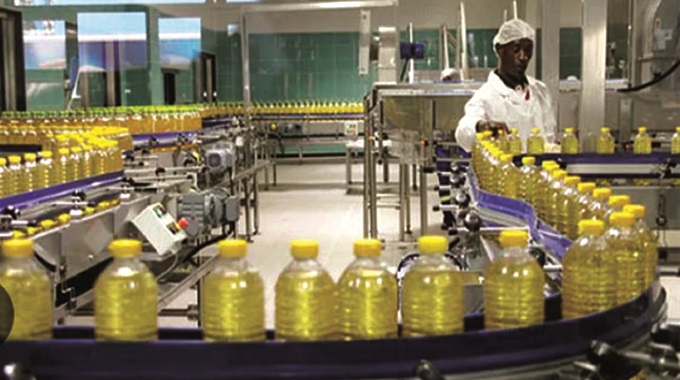
Economy Uncensored with Tapiwanashe Mangwiro
The Zimbabwe National Statistics Agency (ZimStat) recently highlighted significant challenges faced by the country’s manufacturing sector.
The report points to three primary factors affecting production: low demand, cash flow difficulties and uncertainty regarding the economic environment.
These constraints have far-reaching effects on production capacity and the overall growth prospects of the sector, which is crucial to driving economic development. In this analysis, we explore the causes and consequences of these factors and suggest solutions that could help increase capacity in the manufacturing industry.
One of the key constraints to production cited by respondents is low demand for goods, a factor that reflects deeper structural issues in Zimbabwe’s economy. Low consumer demand is linked to several variables, including weak disposable incomes, rising inflation and high unemployment.
The purchasing power of Zimbabweans has been severely eroded by high levels of inflation, making it difficult for consumers to buy locally manufactured goods.
This, in turn, has a cascading effect on production, as firms are unable to sell enough goods to justify maintaining or expanding their production capacity.
For many consumers, imported goods (despite the exchange rate challenges) offer more value for money due to perceived higher quality or competitive pricing driven by economies of scale in larger markets.
Low demand means that manufacturers cannot sell their goods in sufficient quantities to cover production costs. As a result, firms often operate below capacity, which leads to inefficiencies and higher unit costs. Additionally, businesses may be forced to lay off workers or shut down production lines, further exacerbating unemployment and reducing household incomes.
This creates a vicious cycle where low demand leads to reduced production, which in turn leads to even lower demand as more people find themselves out of work or with diminished earnings.
The second major constraint affecting production is cash flow difficulties. Many businesses in Zimbabwe’s manufacturing sector struggle to access working capital, with liquidity constraints impeding their ability to purchase raw materials, pay wages, or invest in new technologies.
The shortage of long-term financing means that most firms have to rely on short-term loans or informal lending arrangements, which are both expensive and unreliable.
Cash flow difficulties directly limit a firm’s ability to scale up operations. Without the necessary funds to purchase inputs, businesses cannot increase their production, even if they identify potential markets.
Furthermore, the lack of working capital means that companies are unable to invest in productivity-enhancing technologies, leaving them trapped in a low-productivity, high-cost cycle. This hampers competitiveness, both domestically and internationally.
The final constraint identified by ZimStat is the prevailing uncertainty in Zimbabwe’s economic environment.
The country has long been mired in policy unpredictability, frequent changes in currency regimes, fluctuating exchange rates and inflationary pressures.
Businesses find it difficult to plan for the future, given the volatility of the macroeconomic landscape.
For manufacturers, this uncertainty can manifest in various ways. Fluctuations in the exchange rate make it hard to predict the cost of imported inputs, while inflation erodes the value of profits, making long-term investments appear risky.
Policy changes, such as shifts in taxation or subsidies, can also have sudden and unpredictable impacts on a firm’s cost structure.
Uncertainty leads to a cautious approach from businesses. With the future of the economy unpredictable, many firms avoid making significant investments in expanding production or adopting new technologies.
While the challenges facing Zimbabwe’s manufacturing sector are significant, they are not insurmountable.
A combination of policy interventions, financial reforms, and targeted support for businesses could help address these issues and boost production capacity.
To address the issue of low demand, policies aimed at boosting household disposable income should be prioritised.
This could be achieved through tax reforms, such as reducing personal income taxes or providing tax credits for low-income families.
Additionally, the government could introduce targeted subsidies for locally manufactured goods, encouraging consumers to buy Zimbabwean products.
At the same time, initiatives to improve wages and create employment in other sectors (e.g., agriculture or services) could have a positive knock-on effect on demand for manufactured goods.
By improving the purchasing power of the population, manufacturers would find a larger domestic market for their products, allowing them to scale up operations.
To mitigate cash flow difficulties, there needs to be a concerted effort to improve access to affordable finance for manufacturers. The government could partner with financial institutions to create dedicated loan facilities for manufacturing firms, offering lower interest rates and longer repayment terms.
At the same time, a more stable macroeconomic environment, particularly one with predictable exchange rates and inflation, would reduce the financial risks that come with borrowing and investing.
Reducing economic uncertainty requires a stable and predictable policy environment. The government must commit to long-term, consistent policies regarding currency management, fiscal policy, and taxation.
Clear communication from policymakers and transparency around major decisions would help restore confidence in the economy.
The challenges of low demand, cash flow difficulties, and economic uncertainty are interconnected issues that stifle Zimbabwe’s manufacturing potential. However, with targeted reforms in fiscal and monetary policies, improved access to finance, and a stable economic framework, the sector could rebound.
Tapiwanashe Mangwiro is a resident economist with the Business Weekly and writes this in his own capacity. @willoe_tee on twitter and Tapiwanashe Willoe Mangwiro on LinkedIn



 Online Reporter