


 admin
admin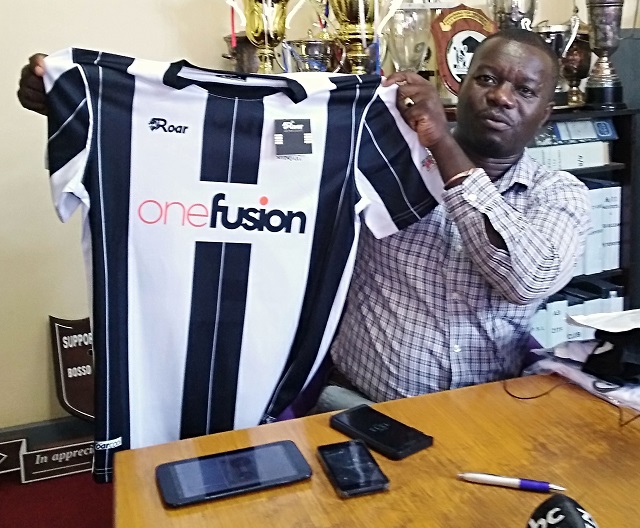

Ngqwele Dube, Sports Correspondent
FOOTBALL has evolved over the world from a simple social past time to a viable commercial business generating huge profits.
The sport has become a mammoth industry on its own worldwide, generating millions although in Zimbabwe it is still to turn the corner. As the sport grew and evolved over the years, the need to create various income streams to meet the ever ballooning expenses and also ensure a profit became apparent.
Although gate-takings were initially seen as the main income for clubs, player trading, shirt sales, sponsorship, shirt sales, broadcasting rights and branded merchandise have become the core of earnings for football teams abroad.
With local football seeking to emulate developed nations, clubs have increasingly been advised to turn commercial and exploit more revenue streams beyond gate-takings, which have been thinning due to a depressed economic situation and sponsorship, which clubs are struggling to attract.
Football kits have grown to become one of the biggest revenue streams for international clubs as fans have adopted it as one of the sought after items to identify with their favourite clubs.
In line with international trends, fans have come to yearn for the club’s jersey as a way of associating with the club and top clubs have been hard to come by.
In an article that appeared on theguardian.com on 26 July 2017, Niall McVeigh’s statement: “The humble football shirt has evolved to become both big business and high fashion, with culture, politics and cutting-edge design all playing a part . . .” highlights how the shirt has changed from just being used to distinguish teams on the pitch.
While the game is way ahead in Europe, shirt sales is something that has caught on in Zimbabwe with hugely followed clubs such as Highlanders, Dynamos and Caps United attracting fake replicas on the market as the clubs were late in producing alternatives.
The market for imitations is big as they come cheap and with a logo of their favourite teams, fans have easily latched onto these and are buying them in droves.
Highlanders and Dynamos’ partnership with BancABC that began in 2011 saw them donning Adidas kits and replicas flooding the market, whose price of $50 however, did not find favour with supporters most of whom opted to continue buying imitations.
The move to avail replicas was applauded as it was seen as one of the biggest revenue streams the country two biggest clubs, by support-base, had been struggling to exploit.
In the case of Highlanders, fans either bought imitations or wore other teams’ kits that were in sync with the club’s black and white colours. The release of Highlanders’ 2018 kit a fortnight ago raised a lot of debate among the club’s supporters with some saying the jersey strays from the club’s traditional stripped kit while others felt it was simply ugly.
The Bosso 2018 home jersey is a black and white stripe which differs from the previous year’s shirt mainly in the design of the stripes. While many of the club’s faithful voiced their concern on social media saying the stripe design should not have differed much, clubs world over are changing shirts almost every year as a way of encouraging fans to buy a new jersey each season and also to catch up with the fashionable designs that emerge.
Fashion changes almost every year as people seek new trends and hence want to be seen to be stylish.
McVeigh goes on to state that: “Football kits old and new are big business, high fashion and bona fide gallery pieces. They can be politically charged, feature cutting edge design and stand as cultural reference points every fan can relate to. Whichever one you wear, one thing is for sure: it is more than just a football shirt”.
Football shirt fanatic, Neal Heard has gone on to write a book on shirts titled “The Football Shirts Book”.
The book features “over 150 original and super rare shirts from the greatest game on earth. Covering everything from the iconic to the unusual, even the most hard-core fans will find out something new about the kit of their favourite team”.
The football shirt cannot remain static and as time moves commercial realities will dawn on fans that they would be unable to hide behind tradition for a team to wear the same kit year in year out with changes being only on the collar, cloth texture and sponsor’s logo.
Highlanders chief executive officer, Nhlanhla Dube said tradition cannot be used in absolute terms, particularly if it is to stifle fashion and commercial success adding it would be folly to have a similar black and white stripes, that measure the exact same centimetres in between them year in, year out.
“The traditional amawaba, where we take the stripes is black and white but we cannot have the black measuring the same two centimetres and white two-and-a-half centimetres each year. I think we have to allow for the growth and also enable fans to pride themselves in collecting different kits that over the years they can fish out and wear with real distinction,” he said.
In another article in theguardian.com, on 21 September 2010, Mehreen Khan notes that: “kit changes are necessitated less by market research and more by commercial realities, including the need to find new sponsors”, a fact that local football fans would have to accept.



 Bongani Ndlovu
 Online Reporter