

 Online Reporter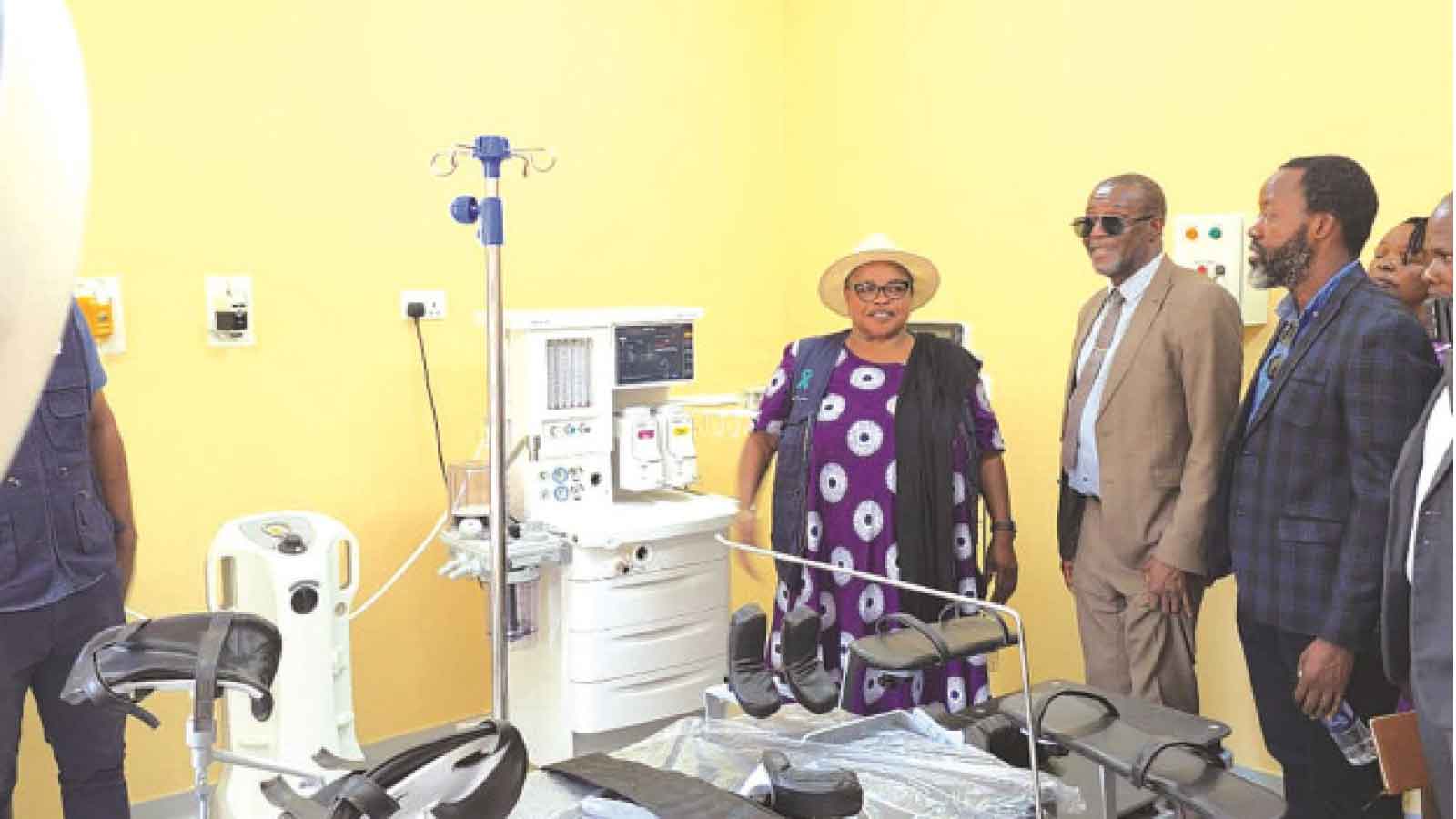
Conrad Mupesa-Features Writer
For decades, Siakobvu existed more as a name on administrative maps than a functional rural service centre.
Tucked deep in Nyaminyami District, Mashonaland West Province, the area bore all the hallmarks of abandonment; dusty roads, inadequate public services and a stressed health system that forced thousands of villagers to travel more than 200 kilometres to access basic amenities in Kariba or Karoi.
However, today that narrative is rapidly changing.
A wave of infrastructure development sweeping across the country under the Second Republic is steadily reshaping Siakobvu into a vibrant service hub, bringing renewed hope to communities that had long felt forgotten.
At the centre of this transformation is the long-awaited Siakobvu Government composite building, a project that had stalled for years before being revived in 2019.
Once completed, the complex will house all Government departments in Kariba District, decentralising critical services that were previously out of reach for many villagers, in line with the devolution agenda.
During a recent tour of the facility, Mashonaland West Minister of State for Provincial Affairs and Devolution, Marian Chombo, said the project is now 76 percent complete, with only finishing works remaining.
“The project is nearing completion, with approximately 76 percent of the work done.
“Outstanding works include electrical and plumbing installations, partitioning, installation of specialised equipment such as heating, ventilation and air conditioning systems, security systems, as well as painting and interior fittings.”
Minister Chombo revealed that about US$1,7 million was required to complete the remaining works, with an expected timeline of three months once funding is secured.
“This project is critical in ensuring that the people of Siakobvu and the surrounding areas can conveniently access Government services. It speaks directly to the Second Republic’s thrust of leaving no place and no one behind,” she added.
For residents like Ms Egifa Amos, the development is long overdue.
“We used to travel to Kariba for almost everything, from processing national documents to accessing agricultural services. It was costly and exhausting. This building will change our lives,” she said.
The transformation is also evident in the health sector, where Siakobvu District Hospital, once a symbol of underdevelopment, is undergoing a remarkable turnaround.
Previously operating without adequate equipment and struggling to retain qualified doctors due to its remoteness, the hospital is now emerging as one of the best-equipped rural health facilities in the province.
Through support from the Clinton Health Access Initiative (CHAI), the hospital has been equipped with a modern cervical cancer screening unit, significantly improving early detection and treatment for women in the district.
Mrs Tabeth Nkongobwe from the Nebiri area said the development has come as a huge relief.
“In the past, we had to travel long distances to get screened. Many women avoided it because of the costs. Now we are getting help here, and lives are being saved,” she said.
In addition, funding from the World Bank under the Essential Health Services Fund has brought sweeping upgrades to the hospital, including a fully equipped operating theatre, improved maternity wards, modern laboratory equipment and a mobile clinic.
These upgrades now enable the hospital to carry out critical procedures such as caesarean sections locally, a development that is already helping to reduce maternal and infant mortality rates.
Kariba District Medical Officer, Dr Godwin Muza, said the improvements have transformed service delivery.
“We used to refer many complicated cases to Kariba or Chinhoyi, and sometimes patients would not make it in time. Now we can handle most emergencies here. This has greatly improved our response and saved lives,” he said.
Beyond health, private players have complemented Government efforts through the construction of the Siakobvu Police Station, which is now more than 90 percent complete.
The area had operated as a police base for over four decades without a fully developed station.
Its construction demonstrates strong collaboration between the Government and the private sector in improving public infrastructure.
“We applaud the private sector for complementing Government efforts in infrastructure development. This is exactly what the ‘Nyika inovakwa nevene vayo’ mantra is all about citizens and corporates working together with the Government to build our nation,” said Minister Chombo.
“The construction of a modern police station in Siakobvu will enhance security in the community while improving working conditions for our law enforcement officers.”
Only minor finishing works, including wiring and flooring, remain.
Traditional leader Chief Nebiri welcomed the development, saying it will significantly improve law enforcement in the area.
“This police station is a major milestone for our community. For years, we have faced challenges related to poaching, human-wildlife conflict and other security issues that require police intervention,” he said.
“With a fully-fledged police station in Siakobvu, response times will improve and communities will feel safer. We are grateful to the private sector for supporting this initiative.”
Road development is also playing a key role in redefining Siakobvu’s outlook.
In response to President Mnangagwa’s call for accelerated infrastructure development, Nyaminyami Rural District Council has channelled its 2025 allocation from the Zimbabwe National Road Administration (ZINARA) towards the construction of tarred roads within the service centre.
Council chief executive, Mr Peter Chinodakufa, said the project has already begun to transform the area.
“The roadworks have significantly improved the outlook of Siakobvu. We are not just enhancing accessibility, but also creating an environment that can attract investment and stimulate local economic growth,” he said.
Traditional leadership has also welcomed the developments, with Chief Nebiri describing them as a turning point for the community.
“For years, our people felt left behind. What we are seeing now is a clear commitment by the Government to uplift this area. Development is finally coming to Siakobvu,” he said.
The growing significance of Siakobvu is further underscored by its selection as the host venue for this year’s provincial Independence Day celebrations on April 18, a milestone residents view as both symbolic and transformative.



