admin
admin

Stanley Gagisa Nleya
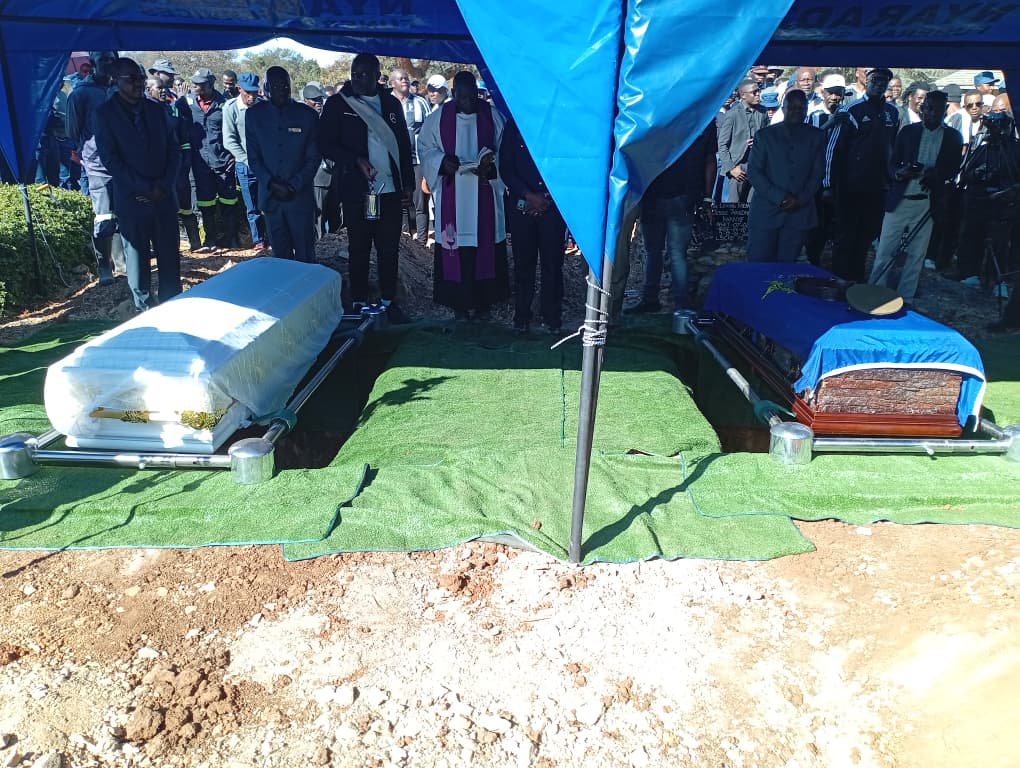
THE former Zipra member of the High Command and a colleague in the armed struggle of this country, Retired Lieutenant-Colonel Eddie “Sigoge” Mlotshwa quietly passed on at the Catholic-run Mater Dei Hospital here in Bulawayo on 25 June at around 5am. Death as they say comes like a thief and it did not give him time to bid his colleagues, friends and relatives goodbye.
As a tribute to Eddie I decided to write something about his exploits during the armed struggle and I must say Sigoge was a brave son of the soil who worked so hard for the freedom of this country. Hundreds of comrades who went through his hands during their military training would vouch for me that indeed Sigoge loved his country and fought hard for its emancipation from the yoke of colonialism. He never wavered during the armed struggle which he served with valour and distinction.
Eddie Sigoge joined the liberation struggle in 1969 coming from a Zimbabwean family which had moved to Zambia. I first met him when he joined us at Chakwenga and he was in the company of Enoch Tshangane (late Retired Major-General Jevan Maseko), Dubhu (Retired Brigadier-General Tshile Nleya). Our group then grew up with other comrades such as the late national hero Colonel Masala Sibanda, Nyamakopo, Pondayi and Gutu. In Tanzania we were to join other comrades that we trained together such as now Retired Brigadier-General Abel Mazinyane.
When I first met Sigoge I found him as a sort of a weird character as he was very quiet, used to wear very tight fitting clothes and what with his very light complexion and very tall frame. He kept to himself too much for my liking and we used to wonder what kind of a person he was. The first time to hear Sigoge say something was when now Cabinet Minister Obert Mpofu and other comrades who had already completed their military training in
Tanzania gave us zebra meat when we were still in Zambia.
We used to receive rations on Tuesdays but the meat would be quickly finished and so Cde Mpofu came to us and gave orders that we go and collect the game meat. When we got there we started having questions about what type of meat it was. This was because it had very yellow fat. Cde Obert Mpofu and his other trained colleagues had removed the tail, head and other parts that could have given away that it was a zebra. When we asked them what type of animal it was, Cde Mpofu and his other trained colleagues said it was “ingugama”, an animal that we had never heard of. So we thought it was one of the Zambian animals that were edible. Looking at the meat Tshile outrightly vowed that he would not it eat and true to his word he did not.
Sigoge just picked the big chunk and said “tiyeni,” a Nyanja word which means “let’s go”.
It was Sigoge’s nature to mix iSiNdebele with Zambian languages and that is how he earned the nickname Sigoge. As a man of few words when he found people blocking his way he would just say “sigoge” which in one of the Zambian languages that I am not sure which one, means “excuse me”.
We then left Zambia together for Tanzania and his first pseudo name was Cassius Moya. After we completed military training at Morogoro we were selected to join Sam Mfakazi, Lameck Mafela (Lookout Masuku), Jordan Gampu (Philip Maphosa ) as instructors at the same camp. Among those who were selected as instructors in our group besides Sigoge and myself were Tshangane, Tshile Nleya and we were later to be joined by Elias Ndlovu (Tshaloba), Richard Dube (Gedi) and Jack Mpofu (Daki). Sigoge’s speciality as an instructor were tactics, military engineering, topography and marksmanship.
I should mention that after our training we did what in military terms is called manoeuvring. This is an exercise where you leave the camp and go and stay in the bush, it is a mock operation. So during that exercise our group which had trained in Tanzania was joined by comrades who had just completed their training in the then Soviet Union, Bulgaria and North Korea. During manoeuvring you do all military operations and when it came to conventional warfare Sigoge was part of the commanders together with the late national hero Rex Nhongo (Solomon Mujuru).
During that exercise I was part of the team that was commanded by Rex and we were supposed to fire mortar bombs but our team was left behind by the team that was commanded by Sigoge because Rex as someone who stammered would say “fa fa fa fayaaa”. When our team realised that the infantry would move in for assault without us finishing our bombs we gave the three remaining bombs to Sigoge’s team and there was laughter after that.
It should be noted that Sigoge and some of us joined the armed struggle under Zapu’s Special Affairs, which then was what the armed wing of Zapu was called. So Sigoge was a founder member of ZPRA. He was one of the less than 100 cadres including the top leadership of Zapu who remained when the party faced the internal problems or political crisis. He stuck to Zapu and worked hard for the intensification of the armed struggle.
As for his stint as an instructor he supervised eight training packages in Tanzania. The packages included the following groups, the group of 10. This group I believe was the most difficult to train as there was little support from the OAU and the Liberation Committee. This group had the likes of Elias Moyo (Zwafa), Situlo, Makanyanga, Ntatshana, Chibhoyi and others.
The other group had the likes of Todd Mpisi, Kwela, Magwaza, Marshal Mpofu, Phinda, Rodwell Nyika and Jonas Sibanda. The next had comrades like Robin Khumalo, Siphilanzima, Livas Gondo, Fredyy Tapera, Patson Male (George Mlala) and Sikhanda Mayezi. Other cadres that went through Sigoge’s hands were the likes of Zidaka, current army commander Philip Valerio Sibanda (Ananias Gwenzi), John Nyamupingidza (Col Tshipa) who later on became the commander of NF1.
Others were Gilbert Khumalo (Nicholas Nkomo), Phebion Mutero (Ernest Sibanda) NF2 commander, Major-General Sibusiso Moyo and Air Vice-Marshal Elson Moyo. Others whom I cannot mention because of space have gone on to become senior Government officials and also corporate heads in the private sector.
During the formation of Zipa, Sigoge also became a military instructor at Morogoro together with our Zanla colleagues such as the late national hero Major-General Amoth Chingombe. They were under the command of the then chief of training, Rtd Brigadier-General Ambrose Mutinhiri and Parker Chipowera.
Later on during the later stages of the armed struggle Sigoge was promoted into the ZPRA High Command as chief of reconnaissance, which he later swapped with Lt-Gen Philip Valerio Sibanda for chief of training. I had also been promoted to become the deputy chief of operations and my duties involved being on the field and back at the rear in Zambia. In my duties as deputy chief of operations I moved around a lot, especially in the NF3 region which covered Karoi, Hurungwe, Chinhoyi and other areas in Mashonaland West Province.
After the ceasefire Sigoge became camp commander of Papa Assembly Point in Mashonaland West Province where ZPRA had more than 7 000 troops, a majority of whom had operated in Mashonaland. I was to join him at Papa as his chief of staff. We were to part ways when we joined different units in the newly formed Zimbabwe National Army.
Hamba kuhle qhawe lenkululeko. You did your part in the fight for our freedom and history is the best judge on that.


 Online Reporter