Chronicle Editor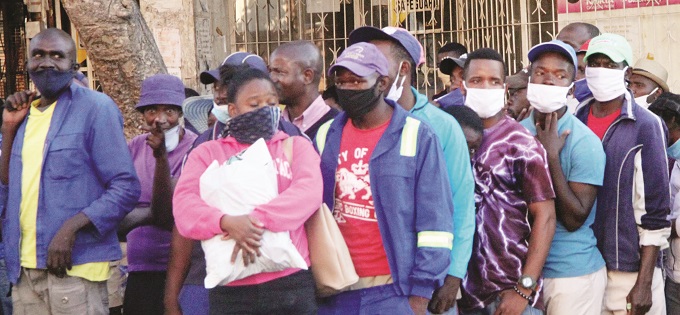
Patrick Chitumba, Midlands Bureau Chief
Opportunities sometimes emerge in times of difficulty.
Because of Covid-19, there’s a new business opportunity not only in Zimbabwe but also in other countries — production of the face mask.
The face mask is becoming a staple in everyday life. When history looks back on the pandemic of 2020, those white and blue rectangles that cover the mouth and nose is what they will see. The masks began appearing almost immediately after the start of the spread of Covid-19. Many Asian countries have already been wearing masks, as a fashion statement and to protect their health. Now, the masks are everywhere.
Since its creation in the mid-1890s, the mask has become a staple in hospitals. When performing surgery, doctors and nurses always have one on. What used to be a foreign object in fashion may become a must-have in everyday society.
In the country, wearing masks in public places is legally required in terms of new public health regulations recently gazetted and those who fail to wear them when they leave home attract a $500 fine.
The masks can be improvised in terms of the regulations.
Health and Child Care Minister Dr Obadiah Moyo said masks could be anything from doeks to anything that could be used for purposes of being a barrier between the nose and mouth to the direct world.
“We also want to see and encourage small businesspeople coming up with their own businesses and making masks at home. We want the country to be able to be self-sustainable in terms of masks in the public,” he said.
“Every time you leave home, you have to don that mask without fail because we want to reduce the infection. That is the whole purpose. We’re doing it in two ways; staying indoors or you don’t go out. When you do go out, you must reduce the chances of getting infected so you have to wear the mask. We’re encouraging all the supermarkets or wherever in the industry to make sure that you don’t serve people who don’t wear masks. We don’t like a situation where supermarkets end up with hundreds of people inside so they have to control the people who come in.”
Attorney-General Advocate Prince Machaya said those who did not wear a mask in public places would be fined and could even be jailed.
As the demand for face masks rockets, residents and business owners have been coming up with solutions.
Designers, entrepreneurs and influencers sense opportunity. During this quarantine time, people are taking the time to make cute masks for people in need.
Many companies, big and small are now producing face masks getting substantial amounts of money as a result. Universities and colleges are also in that business.
Health and Child Care permanent secretary Dr Agnes Mahomva said in a statement recently that the masks are effective when used in combination with good personal hygiene.
“The Ministry would like to advise the nation that masks are effective only when used in combination with frequent hand-cleaning with alcohol-based hand rub or soap and water. If you decide to use a mask, cover your mouth and nose, and make sure that there are no gaps between your face and the mask. Avoid touching the mask while using it; if you do, clean your hands with alcohol-based hand rub or soap and water. If masks are not used correctly, they can be a source of infection,” she said.
According to the World Health Organisation persons with respiratory symptoms or those caring for Covid-19 patients at home must use masks more.
In addition, WHO recommends keeping a distance of at least one metre from anyone coughing or sneezing to avoid the risk of infection.
It emphasises, as Dr Mahomva said, that masks are only effective if combined with frequent hand-washing and used and disposed of properly.
WHO advice for avoiding spread of the virus include, hygiene advice:
- Clean hands frequently with soap and water, or alcohol-based hand rub.
- Wash hands after coughing or sneezing; when caring for the sick; before, during and after food preparation; before eating; after using the toilet; when hands are visibly dirty; and after handling animals or waste.
- Maintain at least 1 metre distance from anyone who is coughing or sneezing.
- Avoid touching your hands, nose and mouth. Do not spit in public.
- Cover your mouth and nose with a tissue or bent elbow when coughing or sneezing. Discard the tissue immediately and clean your hands.
Medical advice
- Avoid close contact with others if you have any symptoms.
- Stay at home if you feel unwell, even with mild symptoms such as headache and runny nose, to avoid potential spread of the disease to medical facilities and other people.
- If you develop serious symptoms (fever, cough, difficulty breathing) seek medical care early and contact local health authorities in advance.
- Note any recent contact with others and travel details to provide to authorities who can trace and prevent spread of the disease.
- Stay up to date on Covid-19 developments issued by health authorities and follow their guidance.
Mask and glove usage
- Healthy individuals only need to wear a mask if taking care of a sick person.
- Wear a mask if you are coughing or sneezing.
- Masks are effective when used in combination with frequent hand cleaning.
- Do not touch the mask while wearing it. Clean hands if you touch the mask.
- Learn how to properly put on, remove and dispose of masks. Clean hands after disposing of the mask.
- Do not reuse single-use masks.
- Regularly washing bare hands is more effective against catching Covid-19 than wearing rubber gloves.
- The Covid-19 virus can still be picked up on rubber gloves and transmitted by touching your face.



 Online Reporter