Online Reporter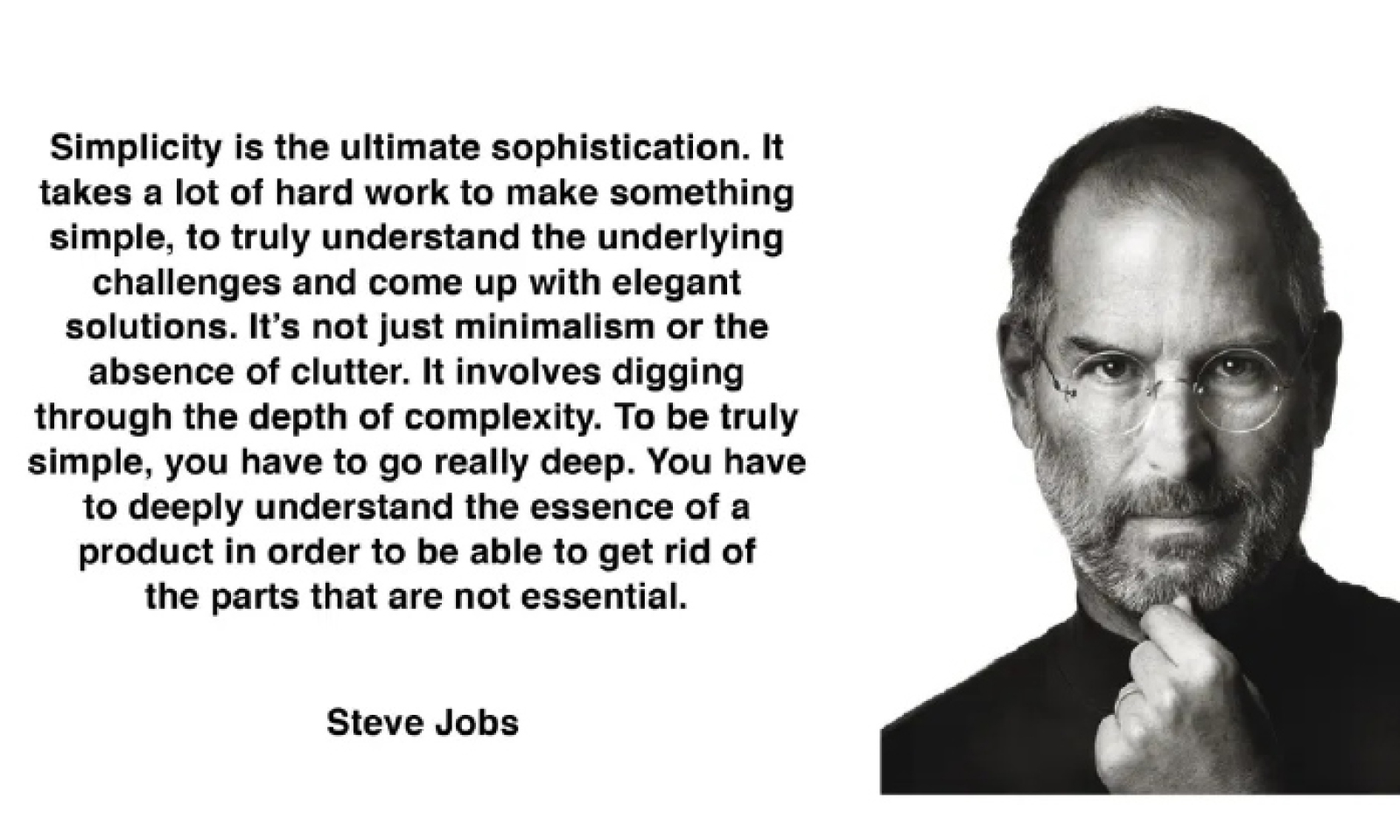
Arthur Marara-Point Blank
We have been taught that power lives in accumulation — in swollen portfolios, crowded calendars and bursting closets.
But in the still spaces between breaths, we sense a deeper truth: that real sovereignty begins not with expansion, but contraction. Simplicity is not deprivation; it is the reclamation of territory stolen by noise. It is not emptiness, but sacred space — the kind where seeds take root and souls remember their shape.
While the world shouts more, simplicity whispers: what remains when all that is unnecessary falls away?
The alchemy of less
Consider the Japanese concept of ma — the purposeful void between objects, the pregnant silence between notes. In that absence, meaning blooms.
A monk’s cell contains only a mat, a bowl, a single candle. Yet within those bare walls, entire universes of thought unfold. Modern neuroscience confirms this ancient wisdom: Princeton researchers found physical clutter reduces cognitive capacity by overloading visual cortex pathways.
The mind, flooded with stimuli, becomes a shallow puddle reflecting only fragments of the sky.
But strip away the excess — clear the desk, empty the schedule, silence the notifications — and consciousness deepens into a well capable of holding stars.
Steve Jobs understood this. His iconic black turtleneck and jeans were not a fashion statement but a cognitive fortress. By eliminating daily wardrobe decisions, he preserved mental bandwidth for world-changing ideas.
“I didn’t want to think about what to eat or wear,” he confessed. “Life is about more important things.”
Here lies simplicity’s first power: clarity emerges only when distraction dies.
Freedom of unburdened
Henry David Thoreau retreated to Walden Pond not to escape life, but to live deliberately.
“Our life is frittered away by detail,” he wrote. “Simplify, simplify!”
In his 10×15 foot cabin, with three chairs (“one for solitude, two for friendship, three for society”), he discovered an astonishing reality: that cutting physical possessions unlocks metaphysical liberation.
The modern “tiny house movement” echoes this revelation — 68 percent of tiny homeowners own their dwellings outright, compared to 29 percent of conventional homeowners. Without mortgage chains, they work less, travel more, and report stress levels 47 percent lower than the national average (“The Tiny Life Journal”).
This is not mere minimalism. It is psychological sovereignty. The weightless person moves through the world like a dancer — agile, responsive, unafraid of falling. Debt cannot shackle them. Market crashes cannot shatter them. Job losses cannot unmoor them. Their power lies not in what they own, but in how little they require to feel whole.
Architecture of meaning
Simplicity’s deepest magic lies in its inversion of value: it shifts worth from objects to essence. The Danish practice of hygge — often mistranslated as “coziness” — is actually a philosophy of curated presence: the warmth of wool socks, the scent of rain on soil, the shared silence between old friends.
It asks: What minimal elements evoke maximum aliveness?
In relationships: One true confidant who sees your shadows and stays; 500 Instagram followers applauding your mask.
In creativity: A blank page and a quiet hour; a studio filled with untouched supplies.
In spirituality: Ten minutes of true silence; a library of unread enlightenment texts.
The minimalist painter Agnes Martin distilled existence to pencil lines on raw canvas. Her work whispers: Look how much lives in the space between.
Poet Mary Oliver carried only a notebook into the woods. Her legacy thunders: Attention is the beginning of devotion. These artists reveal simplicity’s secret — it is not about having less, but making room for what matters to expand.
Courage to cut
Beneath our clutter lies terror — of emptiness, of invisibility, of confronting who we are without our props. We fill shelves to avoid facing the hollow places within. We say “yes” to drown out the inner “no.”
Simplicity demands brutal courage:
To donate heirloom china you never use (freeing space for Sunday pancakes with grandchildren).
To quit the committee draining your soul (freeing evenings for stargazing).
To block the news channel feeding your despair (freeing mental space for local action).
This is where minimalism transcends aesthetics: letting go becomes spiritual surgery. Each release severs an invisible thread tethering you to others’ expectations.
The Japanese organising guru Marie Kondo understood this at a cellular level: “Discard everything that does not spark joy.” But joy here is not mere pleasure — it is the resonant hum of alignment with your deepest self.
Physics of enough
Nature thrives on elegant economy. A spider spins just enough silk to catch sustenance. A maple tree drops every leaf in autumn to conserve winter energy. No excess, no waste — only perfect sufficiency. Human flourishing follows the same laws:
A Yale study found people with “sufficiency mindsets” (believing they have enough) show 32 percent higher life satisfaction than those chasing “abundance.”
Neurologists confirm gratitude practice — noting three daily “enoughs” — rewires the brain for contentment within 8 weeks.
Anthropologists document that indigenous societies practicing communal simplicity (like the Kung San) spend just 15 hours weekly on survival needs — leaving abundant time for storytelling, ritual, and rest.
This is not regression; it is evolutionary wisdom. The frantic hoarding, the desperate scrolling, the hungry accumulation — these are aberrations. Simplicity is our native language.
The invitation
Tonight, stand before your closet. Before your calendar. Before your soul. Ask:
What armour have I mistaken for abundance?
What if ‘enough’ is not a limit but a liberation?
What magnificent emptiness might I cultivate?
Simplicity is not a destination. It is a homecoming — to the uncluttered heart, the unbounded moment, the unadorned self that existed before the world told you to want more.
“Perfection is achieved not when there is nothing more to add, but when there is nothing left to take away” — Antoine de Saint-Exupéry.
To be continued. . .
Arthur Marara is a corporate law attorney, keynote speaker, and leadership expert. Known for his humour, energy, and real-life insights, he captivates audiences while empowering individuals and organisations to reach their full potential. With a strong background in leadership development and coaching, Arthur delivers practical strategies that inspire confidence and lasting impact. He is the author of “Toys for Adults”, a book on entrepreneurship, and “No One is Coming”, which challenges leaders to take charge. For feedback, email bookings@arthurmarara
attorneys.com. Website www.arthurmarara.com or call +263 772 467 255.