Chronicle Editor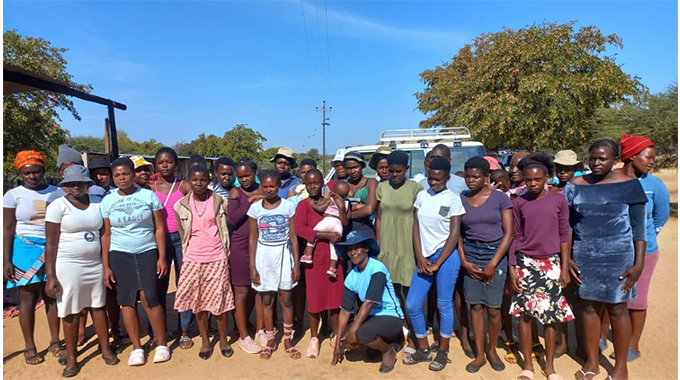
Sukulwenkosi Dube-Matutu, [email protected]
MS Anny Mbedzi (21), a mother of a two-year-old is one of 50 young women from Beitbridge that have just completed a 10-month training on HIV-related issues which she says will protect her from sexual risks.
She and 49 others enrolled under the National Aids Council (Nac) led Sister to Sister programme last year.
The programme seeks to reduce HIV prevalence among vulnerable girls and young women and to ensure they are empowered.
It also seeks to end child marriages and early teenage pregnancies. Topics which were tackled during the trainings include HIV and Aids prevention, teenage pregnancies, gender-based violence, family planning and financial literacy.
Ms Mbedzi said lack of knowledge is what caused her to have an unplanned pregnancy.
“At the time I fell pregnant, I didn’t know much about using family planning methods. I now know about how to prevent HIV through use of condoms and how to prevent unwanted pregnancy. We have been going for regular HIV testing so that we know our status. I’m now using the knowledge I have gained to live a better life and I will ensure that I protect myself so that I can take care of my child,” she said.
Ms Mbedzi said she has been empowered on how to make responsible reproductive health decisions such as delaying indulging in sexual activities, standing up against child marriages and reduction in teenage pregnancies and reporting sexual abuse.
Ms Ruth Sibanda (20) who also completed her training said she does not have a child yet and the knowledge she has gained will help ensure that she has a baby when she is ready. She said she has gained vast knowledge on HIV related issues adding that she also received economic empowerment knowledge.
“I have received training on various income generating projects such as goat rearing, poultry and detergent making. With this knowledge, I can embark on several projects in order to earn an income. As young women, we sometimes get desperate and resort to illegal or harmful methods of making money which put us at risk. Some grown men take advantage of the vulnerability of young women and they exploit them in exchange for cash.
“I’m grateful for this empowerment and eye opening opportunity which will enable me to stand on my own feet. Some of us dropped out of school because of financial challenges but that does not mean I can’t make a living as I can embark on various projects,” she said.
Their mentor, Ms Christine Moyo said she has a new class of 50 members that has just started their sessions.
She has mentored hundreds of young girls since she became a behaviour change mentor in 2007.
Ms Moyo said there is significant change in the behaviour of young women that pass through the Sister to Sister mentorship programme. She said these youngsters were being encouraged to influence their peers upon completing the programme.
Ms Moyo said the target is to empower young girls in order to protect them. She said a number of girls have fallen victim to teenage pregnancies and child marriages out of desperation for money.
“Some youngsters fall victim to elderly men because they will be in need of resources. Under the Sister to Sister programme, we train young women in various livelihood projects such as poultry and gardening. We have a poultry project where we keep indigenous chickens. We talked to the parents of the youngsters who are in the mentorship programme and each contributed a bird. The girls have also been empowered with other skills,” she said.
Ms Moyo said there was a need for stakeholders who could partner with the youngsters and assist them with resources to embark on various projects at large scale now that they have received training.
She said having a source of income can significantly contribute to the empowerment of the young women.
The Sister to Sister programme which was introduced by Nac in 2006 aims to reduce HIV prevalence among the vulnerable group of the ages between 10 and 24 years old.
Girls and young women have been equipped with knowledge about their sexual and reproductive rights.
The Sister to Sister programme also looks at what contributes to new HIV infections while also grouping the girls and young women into clubs where they are taught on self awareness, sexual reproductive health matters, financial acumen and family issues.
Vulnerable girls are recruited into clubs and taken through a 40 week session. The Government through its relevant ministries, technical and financial partners gives priority to issues of education, health and well being of adolescent girls and young women. — @DubeMatutu


 Online Reporter