Online Reporter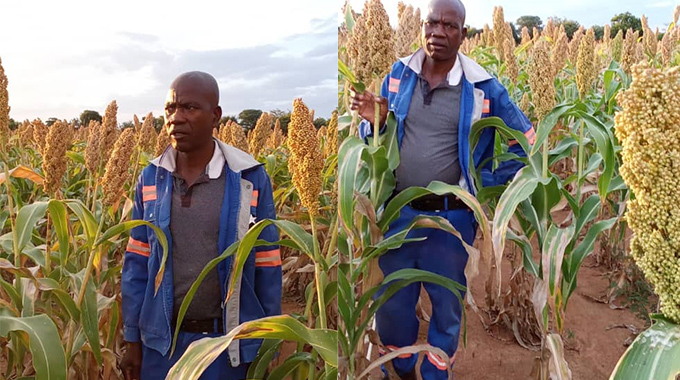
Nqobile Bhebhe,Zimpapers Business Hub
BULILIMA farmers are engaged in a robust seed multiplication programme in Ward 4 of Bulilima District, Matabeleland South, in a significant stride towards enhancing food security and climate resilience.
The initiative led by the Sisonke Working Together Trust in collaboration with Agritex and the Matopo Research Institute empowers smallholder farmers to grow and multiply drought-tolerant small grain varieties supported by a dynamic community-managed seed bank that is steadily transforming rural agriculture in the region.
Rooted in the “farmer-first” philosophy, the programme leverages farmer field schools to instil sustainable agricultural practices as rural communities battle the effects of climate change.
“Sisonke is working hand in glove with Agritex in small grains production in the district,” said Ms Sipho Malebegwa, senior coordinator for Ward 4 in Tokwana and Sisonke Volunteer Coordinator.
“Through the seed bank, which is manned by farmers themselves, we are distributing climate-resilient seed varieties to strengthen local seed systems.”
Small grain seed banks are increasingly recognised as essential assets in dryland farming.
They help conserve genetic diversity, reduce reliance on commercial seed markets, and ensure that farmers have timely access to affordable climate-adapted seed.
The community-managed nature of the Bulilima seed bank enhances ownership, knowledge sharing and sustainability among farmers.
In a recent milestone, Ms Malebegwa and Agricultural Extension Officer Mr Lenny Tshuma led a seed distribution exercise, drawing from the community managed seed bank, a critical step in building local seed sovereignty and boosting resilience among smallholder farmers.
One of the flagship successes of the programme is lead farmer Mr Mfazo Tshuma, who planted 20kg of the PVK 801 small grain variety using regenerative agricultural methods.
“This trial was planted in early December and performed exceptionally well with minimal challenges,” said Ms Malebegwa.
“Midway through the season he encountered a minor aphid infestation, but managed to control it effectively. The crop thrived despite being on Kalahari sands and friable loams, which are usually considered marginal soils.”
Mr Tshuma’s success story has resonated widely.
This season alone, he donated seed to 90 fellow farmers in his ward, playing a catalytic role in spreading the uptake of small grains across the district.
“From day one, Mfazo has been preaching the gospel of growing small grains as an adaptation measure,” Ms Malebegwa noted.
“He has scored a resounding success this year and his generosity has helped expand the reach of the programme.”
The seed multiplication initiative is not only helping to reduce dependency on commercial seed suppliers but also promoting biodiversity, conserving indigenous varieties, and ensuring farmers can grow crops suited to their specific ecological conditions.
“His plot serves as a live demonstration of how local solutions, supported by sound agronomic advice and appropriate technologies, can lead to transformative change,” Ms Malebegwa added.
Central to the initiative’s success is the community seed bank, which allows farmers to access, store and share climate-adapted seed varieties reinforcing resilience in the face of erratic rainfall patterns.
Close collaboration with scientists at Matopo Research Station ensures that the varieties being propagated are well-suited to the region’s semi-arid conditions.
The overarching aim is to foster seed sovereignty ensure food security, and maintain agricultural productivity amid shifting climate realities.
The programme has already yielded several successful trials across Bulilima District, underlining the viability of farmer-led seed systems as a cornerstone of sustainable agriculture.
As climate change continues to intensify, initiatives such as this are becoming increasingly critical in equipping rural communities to feed themselves conserve natural resources, and preserve indigenous knowledge for future generations.
Matabeleland South districts including Bulilima, Matobo, Gwanda and Beitbridge remain drought-prone, and agricultural experts have consistently urged the widespread adoption of small grain farming as a strategic response to persistent food insecurity.