Online Reporter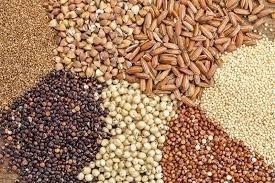
Martin Kadzere
DISTRIBUTING small-grain seeds – such as sorghum, millet, cowpeas and drought-tolerant maize – can safeguard national food security and insulate agricultural production against the predicted El Niño this year, a food systems expert has said.
The weather phenomenon is expected to cause drought and lower the yields of rain-intensive crops.
Agriculture is the cornerstone of Zimbabwe’s economy, anchoring the economy and the National Development Strategy (NDS 2) and Vision 2030 targets.
The sector contributes 11–20 percent of the gross domestic product, provides livelihoods for 60–70 percent of the population, and supplies over 60 percent of raw materials required by local industries
University of Zimbabwe lecturer and food systems specialist Dr Kingstone Mujeyi urged authorities to scale up climate-smart agriculture, promote conservation farming and strengthen rural extension services to ensure water-efficient methods are adopted.
His advice comes as the southern African region, including Zimbabwe, braces for an El Niño drought that scientists have upgraded to a ‘‘Super El Niño,’’ indicating it will be far more intense than a typical occurrence.
The expected weather phenomenon comes hard on the heels of the devastating 2023/24 season – the worst in 40 years – which decimated crops across the region and reduced Zimbabwe’s economic growth from 5.3 percent in 2023 to 2 percent in 2024.
A massive rollout of small grains, Dr Mujeyi said, will help insulate farmers from the poor rains associated with the phenomenon and significantly improve crop yields.
“Immediate interventions should focus on protecting agricultural production, reducing food losses, safeguarding livelihoods, and ensuring vulnerable households maintain access to food,” he said.
Dr Mujeyi emphasised that relying solely on rainfall was no longer viable and called for immediate investment to rehabilitate existing irrigation schemes, sink community boreholes, roll out solar-powered irrigation and implement micro-irrigation systems for Pfumvudza conservation plots.
He noted that meteorological forecasts must be translated into “actionable advisories” for farmers through radio, SMS platforms, extension officers and digital applications.
“Early warning only creates value when communities understand what actions they should take,” he said.
Dr Mujeyi said there was a need to strengthen strategic grain reserves while simultaneously investing in improved grain storage, hermetic technologies, cold chains and community warehouses.
“Food security is not only about increasing production but also about minimising losses after harvest,” he said.
“Government, commercial banks and insurance companies should introduce affordable weather-indexed insurance, concessional credit facilities and emergency recovery funds targeted at smallholder farmers.
Financial resilience enables farmers to recover more quickly after climate shocks.
On livestock production, Dr Mujeyi said strategic fodder production, supplementary feeding programmes, livestock vaccination, water provision and controlled destocking should be implemented before grazing conditions deteriorate.
To strengthen social protection, cash transfers, food assistance, school feeding programmes and nutrition support should be expanded in districts projected to experience severe food insecurity.
These interventions protect vulnerable households from adopting negative coping strategies such as selling productive assets.
Dr Mujeyi said the private sector has a critical role in ensuring the timely availability of quality seed, fertilisers, irrigation technologies, mechanisation services, storage facilities and agricultural finance.
Public-private partnerships can significantly improve the speed and scale of preparedness.
Investments in agro-processing, food preservation and local markets reduce dependence on external food supplies while creating employment and improving the resilience of rural economies.
An effective response requires coordinated planning across the Ministry of Agriculture, Mechanisation and Water Resources Development, the Department of Civil Protection, Meteorological Services, private agribusinesses, development partners, local authorities and farmer organisations. Climate shocks require a whole-of-government and whole-of-society approach.
“The key lesson from previous El Niño events is that preparedness costs significantly less than emergency response,” Dr Mujeyi said.
“Zimbabwe should therefore shift from crisis management to anticipatory action by investing in resilient food systems, climate-smart agriculture, irrigation infrastructure, post-harvest management and inclusive financing mechanisms.
“These measures will not only reduce the immediate impacts of El Niño but also strengthen the country’s long-term resilience to increasing climate variability.”
The International Monetary Fund has projected Zimbabwe’s economic growth to moderate to 4,2 percent in 2027.
However, the global lender believes that if the projected El Niño materialises, growth could moderate further to the 2–3 percent range, with additional downside risks from a stronger-than-expected El Niño and escalation of the Middle East war.