

 admin
admin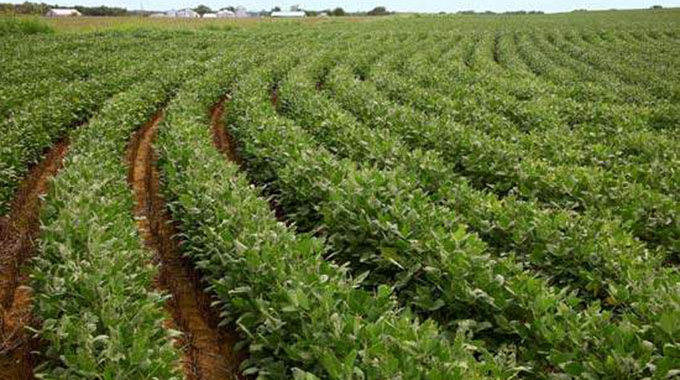
Enacy Mapakame
From small grains to maize, ground nuts, soya beans and traditional vegetables, these are all seen at the Muchenje homestead’s small piece of land that has been transformed for vibrant agriculture production. That explains why villagers from Ward 4 in Domboshava last week gathered at the Muchenjes to witness excellence in agriculture at small holder level.
Ketina Mutangakuwawa Muchenje’s field was chosen for a field day, where both men and women were taught on sustainable methods to improve their yields, adoption of smart farming methods, conservation as well as value addition.
“I have learnt that it is not the size of the land that matters, even if it’s small, if you apply the right methods, you harvest more and then you can expand from there,” said the 52-year-old Muchenje at her field, during a field day hosted at her homestead.
“As women smallholder farmers, we have also been capacitated in increasing yields to improve our livelihoods. We now do value addition of the vegetables that we grow, especially the traditional vegetables, this year we did well because we applied the knowledge we have been getting from our trainers and agriculture extension officers,” she said.
For Kerina Muchenje and over 100 other women from the Domboshava Livelihoods, a group of women who came together to economically empower themselves using the available resources in their area, life has never been the same again.
With the assistance of non-governmental organisations such as the Zimbabwe Coalition on Debt and Development (ZIMCODD), the Domboshava Livelihoods has seen families transform, becoming more food secure and self-sufficient.
According to Susan Mujati, who leads the grouping, these women were already into agriculture but lacked knowledge in smart agriculture as well as marketing skills.
But ZIMCODD chipped in with an exchange programme between Domboshava women and those in Gokwe, which served as an eye opener, especially on value addition and marketing of commodities.
“The exchange programme helped us a lot as women in the Domboshava Livelihoods and it was a great opportunity to learn from our counterparts and this served as proof that we can do it.
“We can change our lives by using the resources that we have here in our communities. One key aspect that was lacking here is value addition, but now women are making a living out of drying vegetables, herbs, fruits and our traditional vegetables by packaging and selling them.
“Our products are now more appealing to the market and we are growing,” said Mujati.
In addition to practicing sustainable agriculture, the budding women entrepreneurs now understand the importance of branding their products and registering companies as they look at formalising their businesses and growing markets. One of the key objectives is to venture into export markets.
To this end, three new brands were created and registered within the group, that is Mumubooker, Taita and Blamaka that are into value addition and drying of vegetables, herbs as well as field crops.
These three brands have helped the women entrepreneurs exhibit their products to international audiences at the Harare Agriculture Show as well as the Zimbabwe International Trade Fair (ZITF).
“We now know that nothing goes to waste, we value add everything, for instance, we dry cassava leaves and package them, we also dry the tubers and value add them into pulp,” said Lizzy Gonye who heads the Taita brand that dries and packages vegetables as well as field crops.
Gonye also runs a nutritional garden with fruits and vegetables ranging from granadillas, strawberries, blackberries, cauliflower, broccoli, brussel sprouts, egg plants, cherry tomatoes, garlic chives, sweet potatoes, beet root, bell peppers, Chinese cabbage and rape among others.
Said Gonye: “We believe we can do more if we get assistance in acquiring more driers for our vegetables.”
One of the agriculture extension officers for the area, Samuel Nyatowa said for the 15 years he worked with the Domboshava community in Ward 4, there has been massive improvements in agriculture production by small holder farmers in the past five years.
This, he said, was achieved through knowledge sharing by farmers as well as stakeholders such as seed companies and NGOs.
“Small holder farmers here are beginning to accept new technologies especially in value addition and sustainable farming methods and we are seeing improvements in yields,” he said.



 Online Reporter