Online Reporter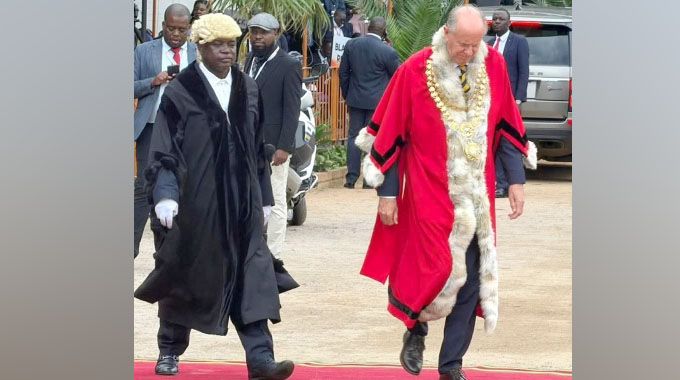
Bruce Ndlovu, Sunday News Reporter
WHEN Mayor David Coltart walked towards the podium after the City of Bulawayo was adjudged the best exhibiting local authority at the 66th edition of the Zimbabwe International Trade Fair (ZITF), it ought to have been the city’s defining moment.
Bulawayo, a city that takes pride in cleanliness, order and administrative discipline, outperformed its counterparts from across the country, clinching the top accolade for its contribution to connected economies and competitive industries as it continues to position itself as a smart and sustainable metropolitan centre.
Its exhibition had stood out as a testament to foresight and innovative thinking from a city visibly embracing technological progress in an increasingly fast‑changing world.
Judging by the presentation alone, Bulawayo appeared to have fully embraced the challenge of transforming itself into a fully-fledged smart city in the near future.
Even the decision to depart from long‑standing tradition and exhibit at Hall 3 instead of the familiar City Pavilion seemed bold, deliberate and forward‑looking.
As Mayor Coltart made his way to receive the city’s trophy, however, one could be forgiven for momentarily questioning whether he represented the same local authority that had impressed visitors and fellow exhibitors with its modern outlook.
Clad in the red mayoral gown — a vestige of colonial‑era tradition — Mayor Coltart appeared more a symbol of the past than an emissary of the future.
As he accepted the award from Botswana President Advocate Gedion Duma Boko, Mayor Coltart cut a rather dishevelled figure, with the striking red gown appearing oddly incongruous amid the relative glamour of the ceremony.
City of Bulawayo Town Clerk Mr Christopher Dube, fared no better aesthetically, with his own gown — complete with a matching wig.
At a trade fair where calls to embrace the present and prepare for the future reverberated from hall to hall and stand to stand, Bulawayo’s mayoral regalia felt like yet another attempt to cling stubbornly to a fading and threadbare past.
Comprising a red robe trimmed with black velvet and mock sable fur, worn alongside a lace frill, a hat and gold chains, the mayoral attire traces its origins back to the reign of England’s Edward III, when livery companies and civic leaders adopted distinctive ceremonial uniforms.
Those companies, born out of merchant and craft industries with economic influence and organisational strength, eventually embedded ceremonial robes into systems of local governance — a tradition that became a hallmark of the British Empire.
That tradition endured through the centuries before finding its way to Bulawayo in 1960, when the city’s then mayor and town clerk were issued with the ceremonial outfits from England at a cost of £240,19 (approximately US$482), with an anticipated lifespan of at least 50 years.
Sixty‑six years later, those same outfits have clearly exceeded their intended shelf life, yet they continue to be retrieved for the city’s most formal occasions, often attracting debate and, at times, outright ridicule from observers subjected to their sight.
In a Zimbabwe that has been independent for 46 years, questions continue to be raised about whether such regalia still represents the best of what the city can offer, particularly as it appears culturally misaligned with the vision of a modern Bulawayo.
In the characteristically warm and sunny climate of the city, the heavy gown and accompanying wig appear especially out of place.
Following the mayor’s slightly cringe‑worthy appearance on Thursday, fashion and culture‑conscious observers renewed calls for change, with Zana Kay of A Tribe Called Zimbabwe promptly producing an AI‑generated design suggesting what could constitute a more appropriate mayoral outfit.
This was not the first time the red relic from the mayoral wardrobe has provoked debate. At the start of 2025, the City of Bulawayo announced that Ganu Designs had been identified to lead the development of a new mayoral outfit.
According to Dube, the proposed design should incorporate the city’s colours, Ndebele patterns and cultural elements, while possibly retaining the colour red to maintain alignment with the city’s crest.
The new gown, he said, should also draw inspiration from Bulawayo’s architecture and cultural heritage, with the traditional hat giving way to the Ndebele umqhele.
“It was noted that to do so, there would be a need to engage designers who could work with the municipality to design the new mayoral gown. The new gown must reflect the inclusivity of Bulawayo’s residents, drawing inspiration from the region’s rich arts, history and culture while celebrating diversity as a strength.
It is anticipated that the new gown will also boost tourism, with the old gowns being showcased at the Natural History Museum to illustrate their historical evolution,” said Dube at the time.
More than a year later, however, it appears that progress has stalled, with no visible changes having been made to the proposed garment. Mayor Coltart has since suggested that efforts to break from tradition have encountered resistance within council chambers.
“I am still pushing for it, but there was pushback,” Mayor Coltart said in response to a question from an X user on why the city continues to hold on to the old gown.