admin
admin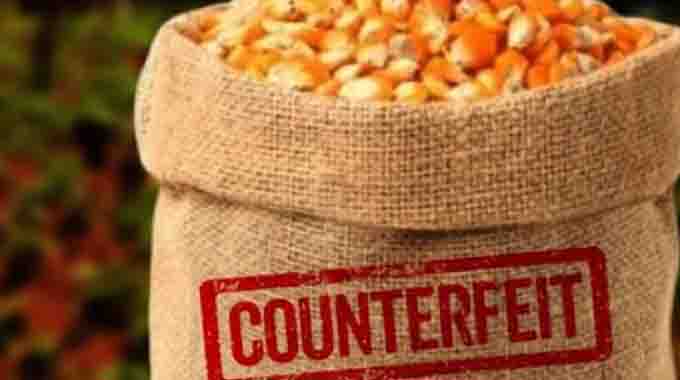
Obert Chifamba
Agri-Insight
EVERY year, an immeasurable tonnage of illegally imported agricultural inputs finds its way into Zimbabwe. The targeted consumer is always the desperate, resource-constrained farmer.
In essence, the issue has fast metamorphosed into a clear and present danger not only to the agriculture industry and its biggest player – the farmer – but the entire national economy. So rampant is the problem that the Government has since activated all its relevant departments and arms to ensure the illicit trade is not allowed to flourish.
Just recently, the Agricultural Research, Innovation and Specialist Services Directorate warned the public against falling for the usually cheap, and sometimes fake inputs, and urged the peddlers of the said inputs to stop their illicit trade forthwith.
The directorate is responsible for the administration of the Seed Act, the Fertilisers, Farm Feeds and Remedies Act and the Plant Pests and Diseases Act.
The illegal trade in smuggled inputs has, in fact, been happening season after season and it will obviously take a lot of effort on the part of Government, businesses and the farmers to suppress it.
Farmers on their part need to appreciate the fact that the inputs (seed, fertilisers and chemicals in most cases) are not certified fit for their requirements.
This includes verifying and confirming the agro-ecological and climatic factors under which the farmers operate.
Some chemicals, fertilisers and even seed thrive under particular climatic and soil characteristics, which require them to be assessed by experts before use.
Farmers and the generality of Zimbabweans must appreciate that imports of seed, fertilisers and agro-chemicals from other jurisdictions is done by licenced and authorised seed houses and agro-dealers following due processes.
It is also advisable for farmers to ask for trading licences from dealers as proof of registration.
Agro-dealers operating without proper documentation must be reported to authorities for prosecution. Registered products should be sold in sealed, clearly labelled packaging.
The labels should be written in English or local languages and should bear the brand name of the product, name, address and contact details of the local manufacturer or distributor.
The nutrient composition for products like fertilisers, for instance, should be written on the package or label with directions for use, safety precautions and net weight of the product. For easy traceability of the products, labels should contain information on date of manufacture, batch number, expiry date and should bear a registration number.
Some of the illicit traders are so crafty that they take advantage of some farmers’ socio-economic situation and repackage their fake products in smaller quantities that will become more appealing and affordable.
To avoid this, farmers should not buy pre-packed or rebagged inputs that do not have labels.
Repackaging has become a common practice among many traders as a way of ensuring products appear affordable to consumers when they are not.
Minus this criminal element, the practice is not bad, but is now being manipulated by fraudsters, hence the need for farmers to make sure they double check the authenticity of products before parting with their hard-earned cash.
Imported seed, fertilisers and agro-chemicals are subjected to the appropriate due-diligence quality assurance, phytosanitary and environmental risk analysis.
This will help ensure compliance to the specifications of the relevant regulatory quality assurance and biosecurity frameworks.
There is always a high risk that illegally imported seed may come in with pests and diseases from other dominions and compromise the country’s biosecurity in the process. Contaminated seed may appear perfect to the unsuspecting customer, but later prove to be costly when the subsequent crop does not perform to optimum levels.
It is always proper for farmers to check out and verify labels that indicate where the product was produced, processed and packaged. Information on the variety of the seed should also be displayed.
It is crucial to ascertain this because some of the unapproved varieties smuggled into Zimbabwe’s may not be suitable for local agro-ecological conditions and expose farmers to economic losses.
Other than exposing farmers to serious potential losses, besides the obvious harm to the environment, human and animal health, smuggled fertilisers and agro-chemicals also violate the country’s quality assurance regulations.
They also violate intellectual property rights, which negatively impact the country’s reputation as a safe destination for investment.
The disadvantage of using fake and illegally imported seed, for instance, is that it can contaminate crops from adjacent fields that would not have used the counterfeit products through cross-pollination, which ultimately compromises yields.
This means efforts to attain food self-sufficiency will be jeopardised.
When this happens, the Government will be forced to step in and save its people from starvation, which means it will have to pump out money to import food.
Obviously, this will have a negative impact on the fiscus, and ultimately the gross domestic product.
Money that was supposed to be used for other developmental projects will have to be redirected to deal with the emergency of securing food and saving people from hunger.
Local seed producers, fertiliser and chemical manufacturers will also bear the brunt of unfair competition from the fake and cheaply priced products, which many people unfortunately cannot resist even if they know the risks associated with using them.
The Government on its part has been doing a lot including the recent signing of the Southern African Development Community (SADC) seed charter for plant variety protection, paving way for regional trade harmonisation.
The charter is a demonstration of commitment by member states to addressing the problem of illegal seed trade and movement, which compromises efforts to boost food security.
It is, however, important for the country to improve monitoring at ports of entry – both designated and undesignated – to ensure there is no smuggling of unregistered and unapproved products into the country.
This monitoring should also be extended to the national highways where police should conduct random checks on haulage trucks and buses.
Police should demand paperwork for products in transit from outside the country to ensure there is no violation of biosecurity regulations given that some people avoid using designated entry points before hiring transporters inland.
All the current efforts being made by the Government and other stakeholders may count for nothing if imports of agricultural inputs are not effectively regulated and monitored.



 Online Reporter