admin
admin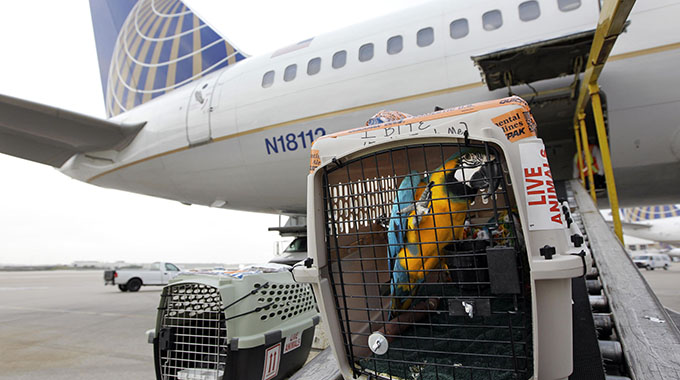
There has been a shift in how wildlife is being smuggled on planes, according to Paul Steele, senior vice president for member external relations at the International Air Transport Association.
The smuggling of wildlife often has links to organised crime.
Due to improved scanning of cargo, smugglers are increasingly opting to conceal the wildlife on their bodies when flying. It is estimated that in the US aviation industry, there are around seven seizures a day of illegal wildlife products. Recently, at OR Tambo International in Johannesburg, a man was arrested after 22 rhino horns were found in his baggage.
According to Steele, passengers have also been found with exotic birds hidden in their coats and monkeys hidden under their hats.
Through its Wildlife Task Force, Iata aims to increase awareness of the unlawful transport of endangered species. Steele gave an example where airport staff found a passenger carrying illegal ivory, but were initially unsure what it was. Creating more awareness will help employees recognise illegal wildlife products, he said.
“Unfortunately, we have criminal elements who use aviation as a vector to carry out their trade.
“The aviation industry takes the issue very seriously,” said Steele.
“We want to make sure we are playing our role to identify issues and work closely with enforcement agencies to try to stamp out the illegal wildlife trade as much as we can.”
Lack of feedback
In response, Iata has made a range of guidance materials available, as well as developing new tools to tackle the problem.
Iata has developed an illegal wildlife trade (IWT) assessment linked to its Environmental Assessment Programme (EnvA). This allows an airline to demonstrate their implementation of the Buckingham Palace Declaration Commitments aimed at tackling the illegal wildlife trade. Iata aims to convert these commitments into standards that can be assessed.
Iata is working on a pilot project for aviation security X-ray screening, which includes the collection of a library of suitable IWT images. If successful, the concept could be rolled out for a number of different endangered species.
“This could significantly increase the detection rates of illegal wildlife products without compromising aviation security screening procedures or airline operations,” said Steele.
“The key issue remains the lack of feedback from enforcement authorities when wildlife is seized on board an airline’s aircraft, or when aviation security procedures have been breached,” he noted.— Fin24.



 Online Reporter