Chronicle Editor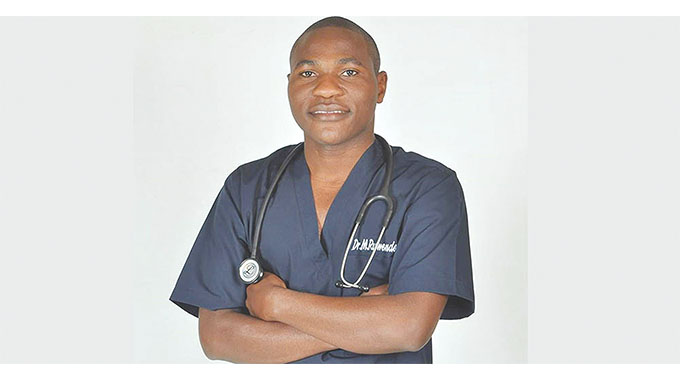
Nqobile Tshili, [email protected]
DR Micheck Ruwende , a dedicated physician, carries a deeply personal commitment to saving women’s lives, driven by a heartbreaking story of loss and compassion. Tragically, he lost his mother just a year before completing his medical studies in 2018, and this loss has profoundly shaped his mission.
Dr Ruwende is known for his active presence on social media, where he conducts campaigns aimed at educating the public on self-care and health. However, his unwavering dedication to women’s well-being shines brightest in his medical practice.
Having experienced the loss of his father at the tender age of four, Dr Ruwende was raised by his mother, who battled ill health throughout her life. When he embarked on his journey through medical school, his primary motivation was to heal and care for her. Sadly, his mother passed away in 2018, just as he was about to graduate. His dream of treating his parents never materialised.
“It was difficult for the bigger part of my life because my mother was unwell. She got blind in 2010 and it was difficult seeing her lose her sight. It wasn’t a good experience and she passed in 2018 when I was in my final year. It was my wish and it is the wish of every medical student to treat his or her parents but for me I didn’t get that opportunity,” said Dr Ruwende.
“Up to today I’m still heart broken and the only way that I’m recovering is I see everyone as my mother.
I do my best when dealing with every patient, but when I see a female patient, I see them as if I’m treating my mother. What I was supposed to be doing to my mother is what I’m doing to mothers. That is why I’m concerned with maternal health issues.”
He said many times, he is celebrated for impacting other people’s lives to an extent that some even say “your parents should be proud of you” sometimes he said he brushes off failing to tell them that both his parents and deceased.
Dr Ruwende’s determination to save women’s lives came during the peak of the Covid-19 pandemic where maternal health was threatened. He said at the time he was attached at Mpilo Central Hospital’s maternity wing and he realised the lives of women being threatened by depleted blood stocks as the Zimbabwe National Blood Service (NBSZ) could not restock as schools were closed.
“There was a critical shortage of blood not just in Bulawayo but Matabeleland and Zimbabwe at large as schools were closed and NBSZ usually gets blood from schools. So, I asked myself where I can get a large number of people who could donate blood. So, I said we are in a hospital and it is one of the places where I could get a large number of people to donate blood. So, I went back and spoke to superiors, doctors, nurses, drivers and NBSZ to come and we donate blood and donated blood and our mothers got blood,” he said.
Government’s interventions have seen a decline in maternal mortality ratio from 655 per 100 000 births in 2011 to 203 per 100 000 live births by 2020. The interventions include construction of clinics in rural areas, waiting shelters while free medical health care is extended to expecting mothers.
Dr Ruwende said while delivering a baby might seem simple it can be life-threatening and, in some cases, fatal and one of the things that can save mothers is having blood, especially when they lose it. He said while only a few can be medical doctors it takes the community to save lives and one of them is through blood donation.
“Someone can die and one way that someone can die is when they lose blood and they lose it fast and they can die there and there. The only way to restore that blood is by getting blood, we cannot manufacture blood, Government cannot manufacture blood and it is solely our responsibility to donate it,” he said.
“That is why I say we may not all treat patients but surely we can contribute to their living. Each pint that you donate can save three people and that is how we can come together and assist everyone.”
In addition to his work in blood donation, Dr Ruwende is dedicated to preventing diseases by disseminating life-saving information to the public. He laments that some people succumb to treatable ailments due to a lack of knowledge. Engaging with the public through social media, like X (former Twitter), is one of his methods to bridge the gap between doctors and patients, promoting transparency and accessibility.
“I believe we don’t have to create a gap between a patient and a doctor. Yes, there is a need for professionalism but a doctor needs to be in touch with patients. I discovered that you have to be as social as possible to patients which helps even patients to open up. Some of them would have defaulted on medication but are afraid to disclose this information but when you loosen up, they are also able to open up,” said Dr Ruwende.
Dr Ruwende also expressed concerns about drug abuse and risky sexual behaviours among young people, highlighting the need for education and intervention. Moreover, he stressed the importance of returning to basics in healthcare, particularly in addressing chronic diseases like diabetes and cancer, emphasising the significance of early screening and detection for treatment.
“I will give an example of cervical cancer, which is the common kind of death for women in Africa. Yet is it most preventable. It is the most understood cancer and the only way to prevent it is to screen it. Most African countries conduct screening and early detection for early treatment. Not this 10 to 11 percent that we are screening. We are saying every woman must visit the hospital for them to be treated,” said Dr Ruwende.


 Online Reporter