Online Reporter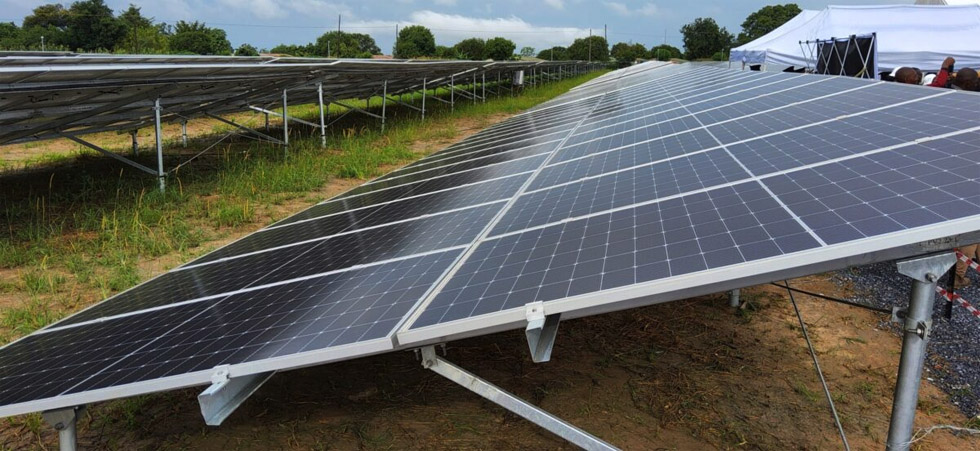
Samuel Kadungure
News Editor
A GROUNDBREAKING 153-kilowatt solar project – valued at US$700 000 – is nearing completion at Nzvimbe in Makoni South as Manicaland continues to take the lead in green energy investments, contributing immensely to rural development and economic growth.
The project, whose scope includes the installation of a 153kw solar generator, construction of 10 kilometre low-voltage line, and connecting essential institutions, is being implemented by the Rural Electrification Agency (REA), with funding from the Rural Electrification Fund (REF).
Nzvimbe area, famous for its extreme hot temperatures, had no electricity since independence, and it took the Second Republic’s initiative to install the solar plant as part of its mantra to leave no one and no place behind.
Director of Infrastructure Planning and Environmental Management in the Minister of State for Manicaland Provincial Affairs and Devolution, Engineer Timothy Rukuni on Wednesday, said the project will lead to the electrification of Nzvimbe Secondary School, Nzvimbe Primary School, Nzvimbe Clinic, the local business centre, two community boreholes, telecommunication base station and 60 community homesteads.
Engineer Rukuni, under whose portfolio the project falls, said it is scheduled to be completed by October 31, 2025, with commissioning set for November 14, 2025.
Engineer Rukuni said in addition to the solar project, 30 biogas digesters, each with a capacity of nine cubic metres are also being constructed to provide sustainable energy to 30 homesteads that could not be connected to the solar project.
The beneficiaries are only required to contribute about 1500 farm bricks, among other locally available materials, for the construction of the biogas digesters.
He said the biogas digesters project is scheduled to be completed by November 30, with commissioning set for December 15.
“This integrated approach to energy provision will, not only transform the lives of the Nzvimbe community, but also contribute to rural development and economic growth. The project is budgeted at a cost of US$700 000, and being funded by the Rural Electrification Fund (REF). We are also constructing 30×9 cubic metre biogas digesters to supply 30 homesteads not benefiting from solar electricity, and able to contribute mostly locally available materials towards the construction of the biogas digesters.
“Construction of low voltage line is 100 percent complete, while the wiring of public institutions is 96 percent complete.
Construction of drainages for the solar generator plant is in progress after which the laying of panels will commence. The powerhouse construction is in progress and awaiting delivery of some outstanding materials. At least five of the 30 biogas digesters are at various stages of construction,” said Engineer Rukuni.
The project, though slightly smaller, compares well with the 200 kilowatt solar mini grid, which has transformed the lives of people in Hakwata Village in Chipinge.
Engineer Rukuni said similar projects are envisioned in the province, and will be guided by the Rural Energy Master Plan (REMP) and Energy Policy.
REMP is a strategic document guiding the provision of modern energy services in rural areas, aiming for universal access and economic development, while the energy policy sets the broader legal and regulatory framework, often emphasising the prioritisation of renewable energy, sustainable resource management, and efficient electricity systems.
Makoni District Development Coordinator, Mr Edwin Mashindi said the solar project will have far-reaching economic benefits for the local community, improving access to quality education, healthcare, and agriculture, ultimately transforming rural livelihoods for the better.
“The solar project’s economic impact will be significant, as it will enable the establishment of small industries, create jobs, and increase income levels within the community. By providing electricity to homesteads, we are contributing to the national Vision 2030 goal of achieving 75 percent access to electricity.
“The electrification of homes and community boreholes will also facilitate irrigation, given the area’s favourable agricultural soils and climate. Furthermore, the connection of schools to the grid will ensure equal access to quality education and digital resources, putting rural school on par with their urban counterparts. The electrification of the clinic will improve healthcare services, enabling the storage of medicines and enhancing overall access to medical care. Additionally, the presence of reliable electricity will attract other essential Government services, such as veterinary care, reducing travel distances for farmers,” said Mr Mashindi.
Makoni Rural District Council representative for Ward 31, Councillor Ignatius Garanewoko said the project is nearing completion, with about 90 percent of the work done, adding that the community has enthusiastically accepted the project.
“We extend our gratitude to President Mnangagwa for this initiative, which aligns with Vision 2030, the National DevelopmentStrategy (NDS1), and his commitment to leaving no one and no place behind.
“The community has overwhelmingly embraced the solar project, having waited for such development in the area for decades. In fact, some residents have already begun wiring their homes in anticipation of the project’s completion. Wiring individual premises is a contribution from the benefiting members.
“We would have liked every homestead to be connected, but it is not possible, and to make up for that, there has been an over subscription for biogas digesters, and the current budget will cater for 30 units,” said Councillor Garanewoko.